
Author: Tanishq Bodh
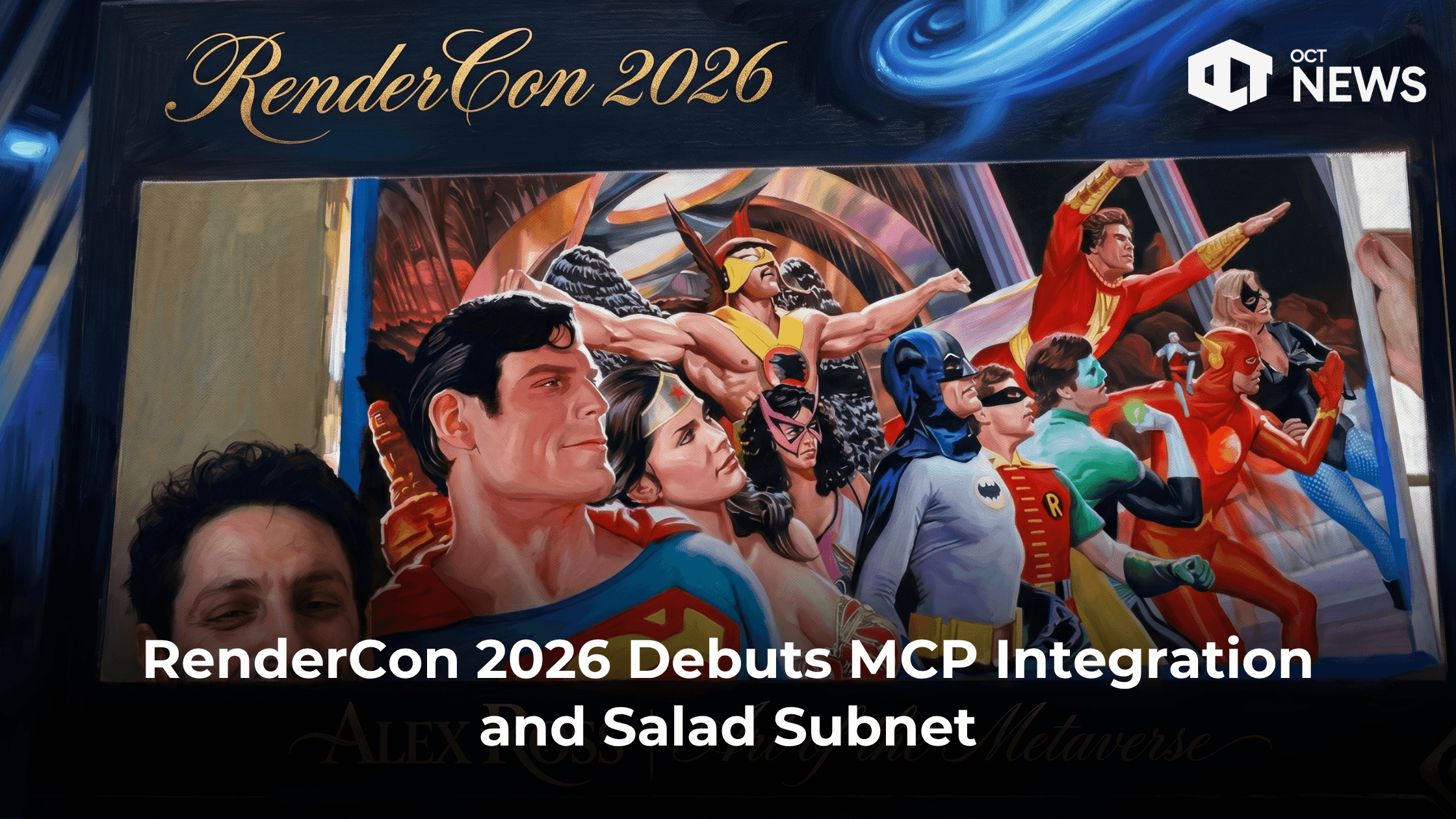
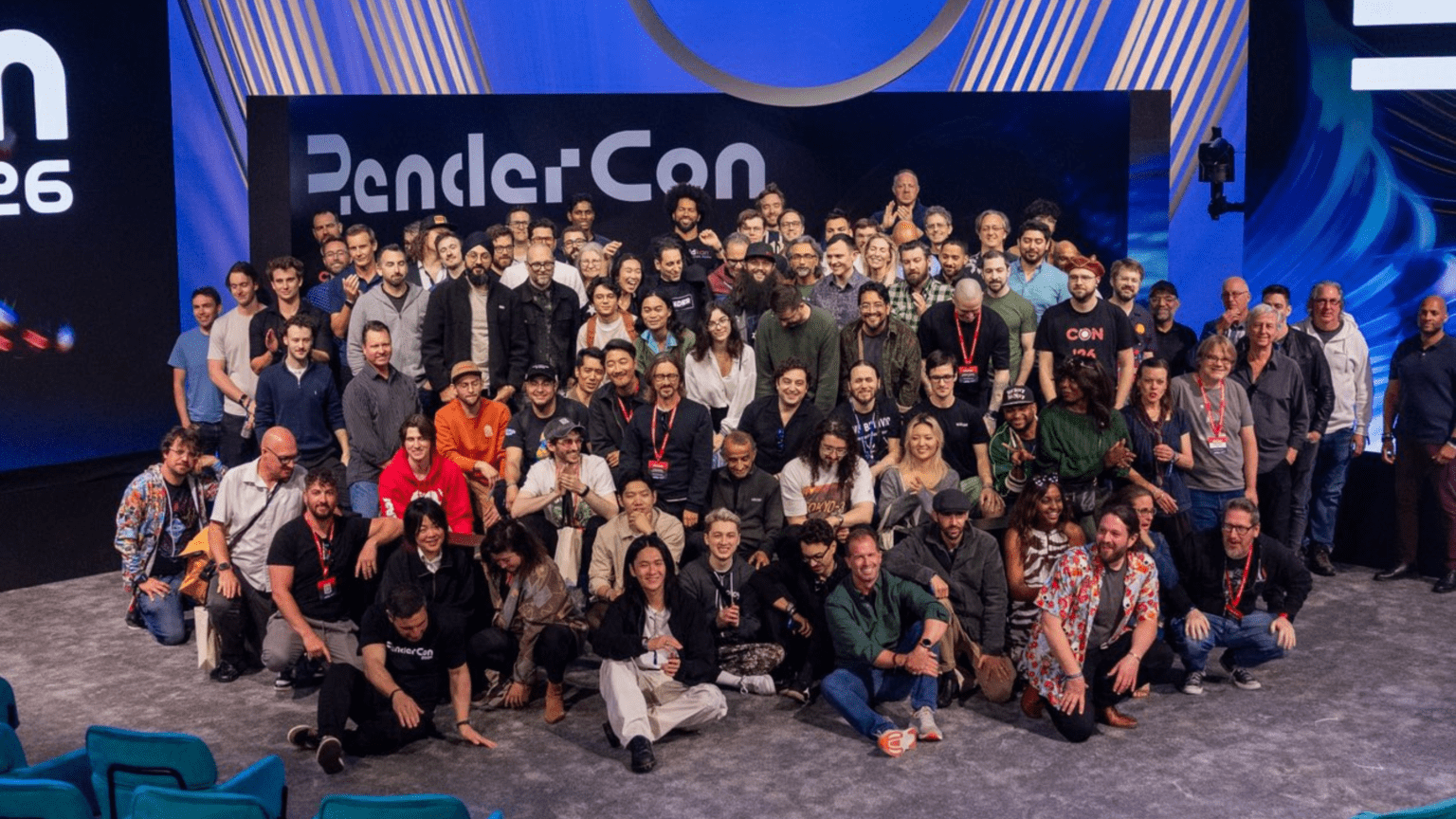
18th April 2026 – RenderCon 2026 wrapped up two days of keynotes and workshops at Nya Studios in Hollywood on Thursday. The Render Network Foundation’s flagship event drew hundreds of artists, VFX studios, and technologists.
High Signal Summary For A Quick Glance
The conference ran April 16-17 and focused on practical pipelines over theoretical demos. In addition, speakers stressed production realities like consistency, scalability, and cost predictability. Several sessions also contrasted AI concepts with tools already powering Super Bowl-level CGI.
The event opened with a keynote from Render Network founder Jules Urbach and WME Group Executive Chairman Ari Emanuel. Together, they examined how AI is reshaping IP, media, and creative workflows.
NVIDIA’s Richard Kerris and director Fede Alvarez then presented a session on neural rendering for cinema. Blender Foundation CEO Francesco Siddi also spoke about community-driven 3D tools. Meanwhile, comic artist Alex Ross explored preserving authorship in an AI-driven landscape.
Later, Peter Diamandis and Rod Roddenberry discussed democratizing sci-fi storytelling through the Vision XPRIZE. Refik Anadol and Emad Mostaque then closed Day 1 with talks on world models.
The biggest announcement came during the Foundation Updates session. COO Trevor Harries-Jones and Head of Operations Tristan Relly confirmed the network’s shift into the “Agentic AI era.”
As a result, the team now offers live Model Context Protocol (MCP) integrations for Blender, OctaneRender, and the Dispersed AI compute subnet. MCP is an emerging standard that connects AI agents to external tools.
Because of this integration, AI agents can now trigger decentralized GPU rendering jobs from within creative software. So an AI assistant in Blender could send a rendering task to the Render Network directly.
This is significant for DePIN projects more broadly. According to The Agent Times, it represents one of the first production uses of MCP in decentralized infrastructure.
The team also confirmed full approval of governance proposal RNP-023. This proposal integrates Salad Network as an official exclusive subnet.
As a result, Salad Network brings roughly 60,000 additional daily active GPUs online. All payments within the subnet settle on-chain in RENDER tokens.
Revenue from Salad’s operations feeds directly into the network’s burn mechanism. Over time, this could create deflationary pressure on the token supply. According to Brianne Frey, the integration ties real-world compute demand directly to token economics.
Day 2 shifted to production updates and technical workshops. Dino Muhic, Director of Product for 3D Rendering, and Danny Newman of Dispersed presented shipped features and API improvements.
Workshops then covered Gaussian splats for 3D capture and VFX pipeline integration with hybrid compute. In addition, a session on virtual production with LED walls showed how studios blend physical miniatures with AI tools.
These sessions highlighted a consistent theme: the tools are not prototypes. Studios already use them under real production deadlines.
Throughout the event, the Render Network showcased partnerships with major industry players. The event featured NVIDIA, Blender, and Kling AI as collaborators across hardware, open-source software, and AI-native creative tools.
For the DePIN sector, Render Network’s Hollywood positioning stands out. Most decentralized compute projects target developers and data centers. Render, by contrast, focuses on creative professionals who need GPU power for rendering and visual effects.
That focus on creative industries could accelerate mainstream adoption. Professionals care about reliability and cost, not decentralization for its own sake. If the network delivers on performance, the underlying infrastructure matters less.
Organizers posted full schedules and select recordings on rendercon2026.com. The Render Network Foundation plans to release further ecosystem updates in its monthly reports.
With MCP integrations live and 60,000 new GPUs from the Salad subnet, Render’s next focus will likely be scaling under real production loads. The conference made one thing clear: Render Network’s shift from “promising” to “shipping” is already underway.
Our Crypto Talk is committed to unbiased, transparent, and true reporting to the best of our knowledge. This news article aims to provide accurate information in a timely manner. However, we advise the readers to verify facts independently and consult a professional before making any decisions based on the content since our sources could be wrong too. Check our Terms and conditions for more info.