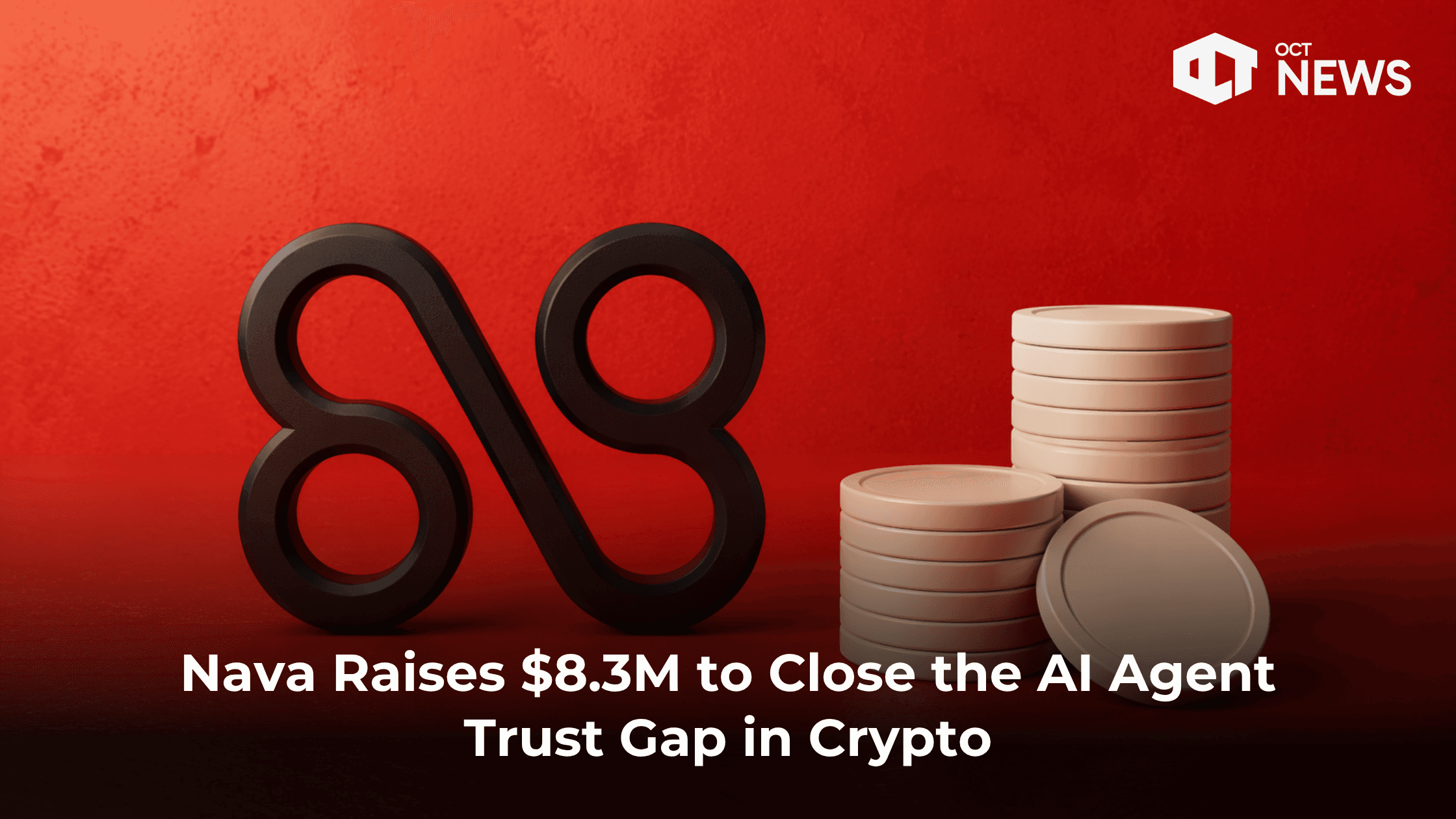
Nava AI agent trust gap narrows as the startup raises $8.3M to build on-chain verification and escrow rails for AI agents.

Author: Kritika Gupta
Steady attention without excessive speculation.
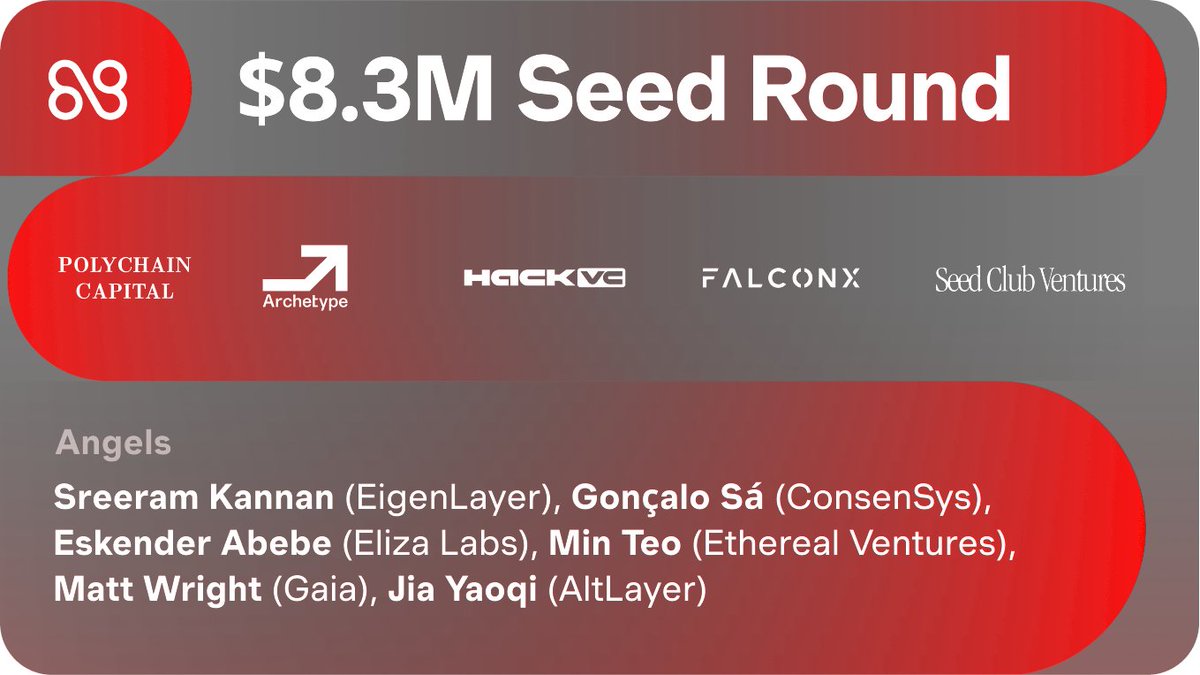
15th April 2026- The Nava AI agent trust gap has quickly become one of the most important issues in crypto’s next growth phase. Nava, a New York-based startup building trust rails for the agentic economy, has emerged from stealth with an $8.3 million seed round co-led by Polychain Capital and Archetype. The funding highlights how urgently the market wants solutions for the Nava AI agent trust gap, especially as autonomous agents begin moving real capital across DeFi protocols.
High Signal Summary For A Quick Glance

Crypto Next 🧗♀
@cryptonexxt

🪂🪂 Nava AI Waitlist for Private Testnet! @navaai • Funding: $8.3M • Cost: $0 (FREE) • Backed by: Polychain, Archetype, Hack VC & Top tier 1 Vc '"*"* Nava provides arbiter-based verification for AI agent blockchain transactions. It combines escrow, safety analysis, and https://t.co/KP4AxIv6Kp
06:12 AM·Apr 15, 2026

hottiebabegem 💜
@HottieBabeGem
Nava AI ~ Join Waitlist for Testnet! @navaai provides arbiter-based verification for AI agent blockchain transactions. It combines escrow, safety analysis, and financial coverage to make autonomous execution reliable and institution-ready. 💰 Funding: $8.3M from Polychain, https://t.co/EMOIWDQwFk

11:08 PM·Apr 14, 2026

Danny Sursock
@DannySursock
We’ve long believed that at AI’s core, there are two foundational and interdependent fields of progress: - The Intelligence Substrate itself (ie: model capability) - Security, Control, Guardrails You can’t have one without the other. As the base intelligence layer grows, https://t.co/4dwXczemWy
Nava is transforming agents from unpredictable intermediaries into trustworthy collaborators. Working with AI agents still feels like working with contractors: you don’t know them too well, they need context, and their output quality varies. So to set them up for success, and https://t.co/i688x1Tf8l https://t.co/hIazhiUfO9
03:10 PM·Apr 14, 2026
Over the past year, AI systems have rapidly evolved from simple chat assistants into autonomous economic actors. Increasingly, these agents now hold wallets, execute trades, and manage DeFi positions across protocols such as Uniswap, often with minimal or no direct human oversight. At the same time, the broader crypto industry has actively pushed the concept of agentic commerce forward. Standards such as Coinbase’s x402 and Stripe-backed Tempo’s Machine Payments Protocol have started enabling machine-to-machine transactions.
However, this rapid progress has also exposed a major weakness. Consequently, even a single prompt misinterpretation, parameter mismatch, or adversarial input can lead to irreversible fund loss. Moreover, these failures often leave behind limited accountability and no clear audit trail.
Earlier in 2026, several startups raised capital to tackle adjacent parts of this trust problem. For instance, Overmind secured £2 million to build real-time monitoring and intervention tools for live AI agents. Similarly, t54 Labs raised $5 million to develop verifiable identity and accountability infrastructure for autonomous systems.
Meanwhile, larger technology and payments players have also entered the space. Google introduced its Agent Payments Protocol (AP2), while Mastercard developed its Verifiable Intent framework, both focused on cryptographic authorization and trust. In this context, Nava stands out because it is among the first teams building a blockchain-native verification stack.
Investor sentiment around AI-agent infrastructure has remained strongly positive. In fact, the intersection of AI and crypto continues to attract significant venture capital, reinforcing the market view that verification and trust layers are essential for the next phase of autonomous commerce.
At the core of the platform is a three-step workflow designed to directly address the Nava AI agent trust gap. First, the agent submits a proposed action through agent.propose(trade). Next, Nava’s Arbiter independently verifies that proposal.
To do this, the platform uses a Graph-of-Thought framework that breaks the transaction into multiple layers of checks. These checks focus on intent alignment, protocol safety, parameter validity, and potential adversarial manipulation. Importantly, each verification node produces an auditable output. In addition, the system records the full reasoning trail on-chain as an encrypted but verifiable trace.
Only after both the agent and Nava’s Arbiter reach agreement does the system release funds from escrow through escrow.execute(). If the system rejects the transaction, capital remains safely locked in escrow. Therefore, the framework directly reduces the risk of accidental or malicious fund loss.
Technically, Nava has built the stack as a Layer-3 blockchain on Arbitrum, with planned support for Tempo. Furthermore, the team is offering both TypeScript and Python SDKs to simplify integration for agent developers. Another important feature is the feedback loop. Every verified or blocked transaction strengthens the Arbiter’s model, which in turn improves the quality of future checks.
The founding team also brings strong infrastructure credentials. CEO Vyas Krishnan previously served as the first employee and Product Lead at EigenLayer, while COO Brianna Montgomery previously worked in strategy and growth at the same firm.
Nava’s investors view this funding round as a strong signal that verification is becoming a foundational requirement for the agent economy.
More importantly, the platform’s public on-chain verification ledger could unlock new financial primitives. These may include agent-specific insurance markets, programmable dispute resolution systems, and eventually a payment-grade stablecoin called NavaUSD designed for machine-to-machine settlements. For retail users, the platform offers protection against hallucinations, rogue execution paths, and unintended fund movements.
For institutions, it provides a much clearer view of intent versus execution, which is critical for compliance, internal controls, and risk management. Looking ahead, Nava has already opened early testnet access through a waitlist. The roadmap includes initial policy testing on Uniswap and a full escrow lifecycle rollout in the coming months.
Ultimately, as AI agents continue evolving from copilots into autonomous financial participants, Nava is positioning itself as a foundational trust layer for the next phase of crypto infrastructure. In short, the company is betting that the agent economy will continue to grow, and that safe verification rails will determine whether that growth becomes sustainable at scale.
Our Crypto Talk is committed to unbiased, transparent, and true reporting to the best of our knowledge. This news article aims to provide accurate information in a timely manner. However, we advise the readers to verify facts independently and consult a professional before making any decisions based on the content since our sources could be wrong too. Check our Terms and conditions for more info.