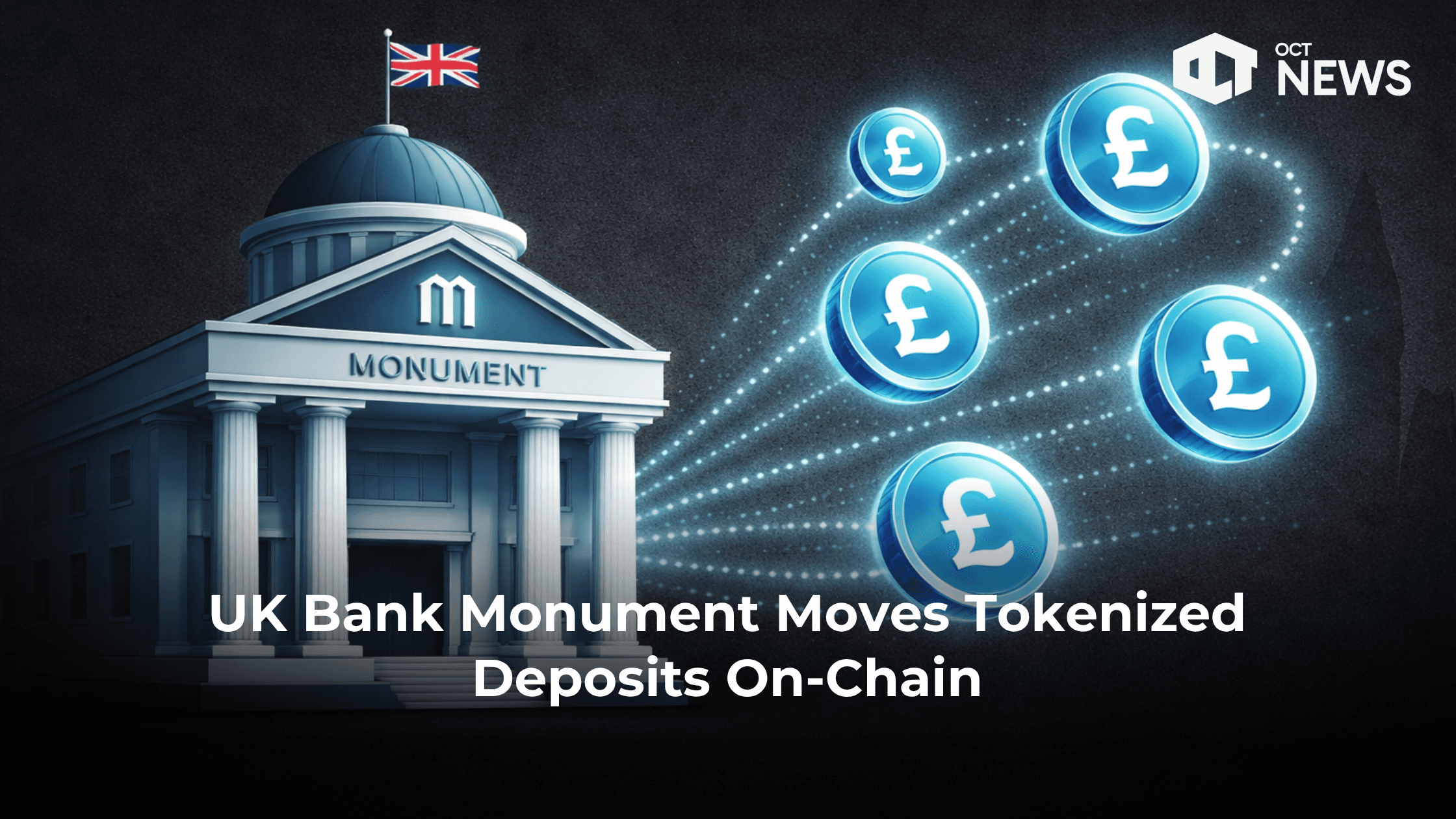
Monument tokenized deposits bring £250M in retail savings on Midnight blockchain with FSCS protection, and instant GBP redemption.

Author: Kritika Gupta
High attention and emotional sentiment detected.
26th March 2026- In a major step for the convergence of regulated banking and blockchain infrastructure, Monument tokenized deposits are set to bring up to £250 million of retail customer savings onto the Midnight public network. This initiative marks one of the first time a Bank of England regulated institution has placed everyday savings balances on a permissionless blockchain. It maintains full Financial Services Compensation Scheme protection, ongoing interest accrual, and one to one redeemability in pounds sterling. Monument aims to serve mass affluent clients with investable assets between £50,000 and £5 million by transforming traditional savings accounts into programmable digital tokens.
High Signal Summary For A Quick Glance

Tim Warren
@TimWarrenTrades

🚨BREAKING: UK cbank Monument to tokenize up to £250M in retail deposits on the Midnight Network. -Cardano founder Charles Hoskinson said: 👉"One of the largest deals we've ever done," projecting it could bring hundreds of millions to billions in TVL to the Midnight ecosystem. https://t.co/JrrdgbxDr5
11:07 PM·Mar 25, 2026

Kcat
@E_KRIS
Monument is the first bank in the world to go direct to retail with tokenized deposits and pay interest with guarantees of the Bank of England in partnership with Midnight . This is HUGE!! https://t.co/ZpWvaQw8C7
"Monument is the first bank in the world to go direct to retail with tokenized deposits and pay interest with guarantees of the Bank of England in partnership with Midnight." $NIGHT source: Coindesk https://t.co/1MjWrBcifi
04:52 PM·Mar 25, 2026
Monument’s tokenization strategy builds on its founding objective to deliver modern, technology driven financial services to underserved mass affluent customers. As a digital first challenger bank launched in 2022 with a cloud native operating model, Monument has actively pursued partnerships that extend its Banking as a Service capabilities. In this case, the bank has collaborated with the Midnight Foundation and London venture studio The Building Blocks to deploy privacy preserving blockchain infrastructure that integrates with its regulated deposit platform.
This initiative reflects a broader industry shift toward tokenized deposits as a practical and lower risk pathway for blockchain adoption. Regulators and financial institutions increasingly view tokenization as a way to enhance payment efficiency, settlement speed, and access to financial assets without introducing systemic instability or moving activities outside existing regulatory perimeters. Global projections suggest tokenized financial assets could reach between $4 trillion and $16 trillion by 2030. The banks continue to explore how on chain technology can support both retail and institutional use cases.
Although UK banks such as Barclays, HSBC, Lloyds, NatWest, Nationwide, and Santander have already participated in pilot programs like the Great British Tokenised Deposit initiative, those projects focused primarily on institutional workflows or permissioned environments. Lloyds completed a tokenized deposit transaction linked to gilt purchases earlier in 2026. Monument’s program differs because it directly targets everyday retail savings accounts on a public blockchain while preserving statutory deposit protections.
Under the proposed structure, Monument tokenized deposits will mirror customer savings balances as digital tokens on the Midnight network. These tokens will not function as new crypto assets or independent liabilities. Instead, they will represent regulated GBP deposits held on Monument’s balance sheet. Customers will continue to earn interest at existing rates and retain full redemption rights. In addition, FSCS protection will remain unchanged, covering eligible deposits up to £85,000 per depositor.
The Midnight network incorporates zero knowledge proof technology to maintain financial confidentiality. Transaction data remains visible only to the bank and the individual customer, which addresses a key barrier to public blockchain adoption among regulated institutions. At the same time, blockchain settlement infrastructure can enable faster transfers, programmable financial services, and improved interoperability with tokenized investment products. Monument plans to run blockchain operations seamlessly within its regulated environment so that customers do not need to manage wallets or interact directly with crypto interfaces during the initial phase.
Monument has structured the rollout in multiple stages to gradually expand on chain financial capabilities. After completing the initial £250 million deposit tokenization phase, the bank plans to introduce tokenized real world assets such as private equity exposures, commodity funds, and structured investment products through its mobile application. This step could broaden retail access to asset classes that traditionally required higher wealth thresholds or institutional channels.
In addition, Monument intends to offer Lombard style lending services that allow clients to borrow against their portfolios without liquidating investments. Such financing solutions have historically catered to ultra high net worth individuals. Integrating them into a mass affluent banking platform could reshape how liquidity management and portfolio optimization function in retail wealth segments.
From a broader industry perspective, Monument Technology also aims to license its tokenized deposit model through its Banking as a Service platform. This strategy could enable other banks and fintech firms to adopt similar frameworks, potentially accelerating sector wide experimentation with regulated blockchain infrastructure.
Our Crypto Talk is committed to unbiased, transparent, and true reporting to the best of our knowledge. This news article aims to provide accurate information in a timely manner. However, we advise the readers to verify facts independently and consult a professional before making any decisions based on the content since our sources could be wrong too. Check our Terms and conditions for more info.