

Author: Tanishq Bodh
Steady attention without excessive speculation.
April 19, 2026 – Attackers exploited a vulnerability in KelpDAO ‘s rsETH cross-chain bridge on April 18, 2026, draining more than $280 million from DeFi lending markets on Ethereum and Arbitrum. The breach ranks among the largest DeFi exploits on record.
High Signal Summary For A Quick Glance

Luca
@0xlucaeth

@DegenerateNews @kingarthurrweb3 @zachxbt Tell me the victim here is CZ 💀👀 https://t.co/PJXmFaaCg9

NEW: @zachxbt SAYS “A VICTIM APPEARS TO HAVE HAD $280M+ STOLEN FROM VARIOUS DEFI PROTOCOLS ONE HOUR AGO ON ETHEREUM AND ARBITRUM” SOURCE: https://t.co/QE58mabEqM https://t.co/TTzfAuVM7l
08:10 PM·Apr 18, 2026

Branxi
@OG_Branxi
@DegenerateNews @zachxbt Just a normal day in crypto
NEW: @zachxbt SAYS “A VICTIM APPEARS TO HAVE HAD $280M+ STOLEN FROM VARIOUS DEFI PROTOCOLS ONE HOUR AGO ON ETHEREUM AND ARBITRUM” SOURCE: https://t.co/QE58mabEqM https://t.co/TTzfAuVM7l
07:15 PM·Apr 18, 2026

Jampzey
@Jampzey
@DegenerateNews @chainyoda @zachxbt one single person/entity lost 280m? man I pray for their metal
NEW: @zachxbt SAYS “A VICTIM APPEARS TO HAVE HAD $280M+ STOLEN FROM VARIOUS DEFI PROTOCOLS ONE HOUR AGO ON ETHEREUM AND ARBITRUM” SOURCE: https://t.co/QE58mabEqM https://t.co/TTzfAuVM7l
07:05 PM·Apr 18, 2026
The incident unfolded around 17:35 UTC. Attackers minted roughly 116,500 rsETH tokens, worth approximately $290 million at prevailing prices, through a flaw in the protocol’s bridging logic. On-chain researchers believe the attack involved a manipulated lzReceive call targeting a LayerZero OFT contract used by KelpDAO’s bridge.
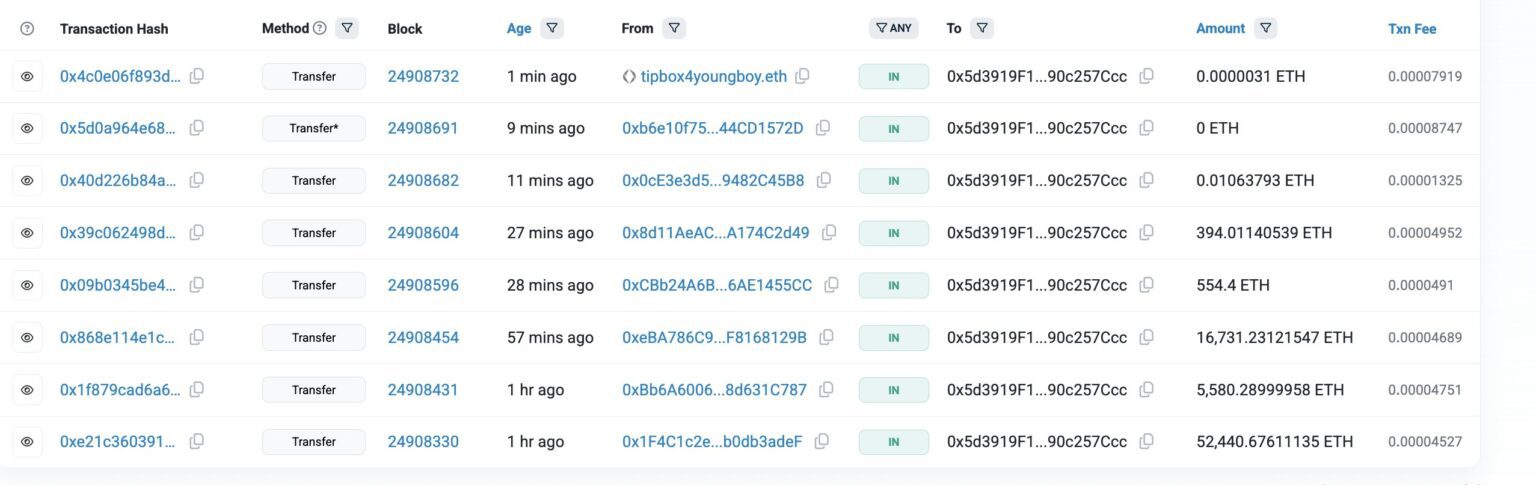
KelpDAO’s rsETH is a liquid restaking token built on EigenLayer. It lets users stake ETH or liquid staking tokens like stETH into EigenLayer while keeping liquidity. In return, holders earn restaking yields and Kelp Miles points.
Before the rsETH exploit, KelpDAO held over $1.3 billion in total value locked. The token had also become one of the most widely accepted collateral assets on Aave, particularly across its V3 and V4 deployments. The protocol operated on multiple chains and had undergone audits.
According to on-chain analysis and community researchers including ZachXBT, the attacker first minted fake rsETH through the bridge vulnerability. They then deposited the tokens as collateral into Aave lending markets on both Ethereum and Arbitrum.
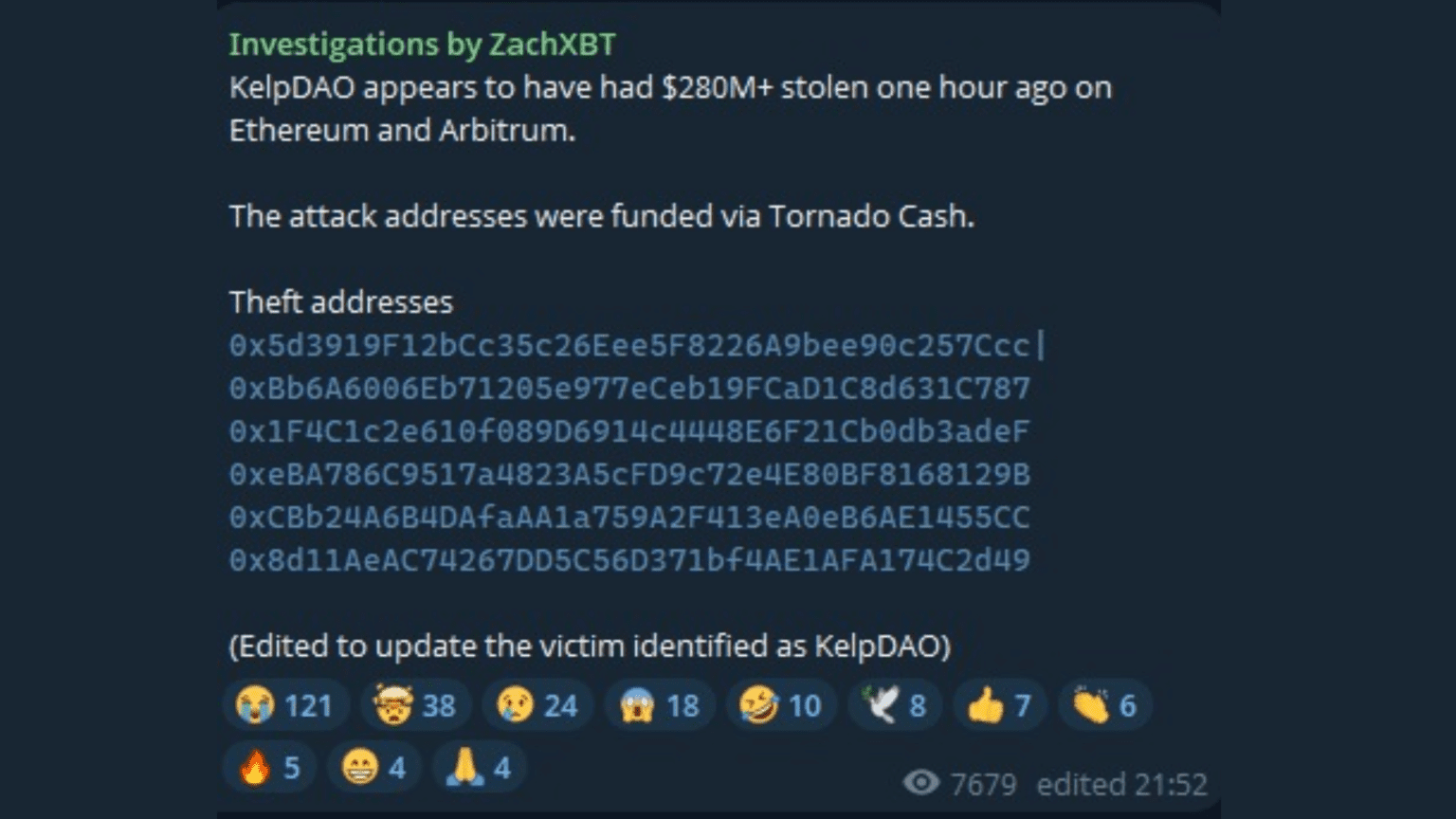
From there, the attackers borrowed the maximum possible amount of real assets against the inflated collateral, primarily WETH and ETH. They moved fast enough to extract the funds before liquidators could close the positions.
This left Aave with substantial bad debt. Some estimates place impaired WETH reserves in the hundreds of millions. After the extraction, the attackers routed funds through Tornado Cash to obscure the trail.
Aave acted within minutes. The protocol’s multisig guardians froze all rsETH markets on both Aave V3 and V4. The freeze halted new deposits and borrowing against the asset.
“Aave’s contracts have not been exploited and this is an exploit related to rsETH,” the protocol stated. Founder Stani Kulechov confirmed that the freeze prevents further exposure while the team reviews post-exploit borrows.
Aave indicated it would tap its Umbrella backstop and reserves to offset any deficit. The mechanism protects depositors in bad debt scenarios. Depositors with unrelated positions on Aave should not face losses, according to the team.
KelpDAO’s public statement.
The rsETH price corrected sharply after the exploit. The broader AAVE token also dropped by double digits on market fears. Both tokens saw elevated trading volumes as holders rushed to assess their exposure.
KelpDAO’s core staking contracts appear unaffected by the rsETH exploit and the vulnerability was isolated to the cross-chain bridging component. Investigations into the exact mechanism and potential fund recovery are ongoing.
This incident highlights persistent risks in cross-chain bridging infrastructure. Bridges have historically been the most exploited component in DeFi. Notable examples include the Ronin Bridge ($625 million, 2022), Wormhole ($320 million, 2022), and Nomad ($190 million, 2022).
The rsETH exploit adds a new dimension to that pattern. Liquid restaking tokens exist for composability. They flow across chains and serve as collateral in lending markets. That composability amplifies the damage when attackers compromise a bridge.
In this case, the attacker did not need to steal existing tokens. They minted new ones through the bridge and used DeFi’s own infrastructure to extract real value. The combination of bridge vulnerability and lending market composability created a multiplied attack surface.
The breach comes amid rapid growth in the restaking sector. EigenLayer and its ecosystem of liquid restaking tokens have attracted billions in deposits over the past year. Protocols like Ether.fi, Renzo, Puffer, and KelpDAO compete for market share.
This rsETH exploit could trigger a reassessment of how lending protocols evaluate LRT collateral. Aave and other platforms may tighten risk parameters for restaking tokens. Bridge security audits across the LRT ecosystem will likely face increased scrutiny.
Users with exposure to rsETH or Aave positions have been advised to monitor updates closely. The full extent of recoverable funds and long-term impact on EigenLayer restaking remains unclear as investigations continue.
This is not financial advice. Readers should conduct their own research before making investment decisions.
Our Crypto Talk is committed to unbiased, transparent, and true reporting to the best of our knowledge. This news article aims to provide accurate information in a timely manner. However, we advise the readers to verify facts independently and consult a professional before making any decisions based on the content since our sources could be wrong too. Check our Terms and conditions for more info.


Kelsier Ventures Wallets Fall From $300M to Under $2M
Drift Protocol Exploit Sends $122M to Tornado Cash
CZ Warns on Critical PHP Vulnerability as Exploits Hit
Floyd Mayweather FLOYD Token Post Deleted After Dump
Kelsier Ventures Wallets Fall From $300M to Under $2M
Drift Protocol Exploit Sends $122M to Tornado Cash
CZ Warns on Critical PHP Vulnerability as Exploits Hit
Floyd Mayweather FLOYD Token Post Deleted After Dump