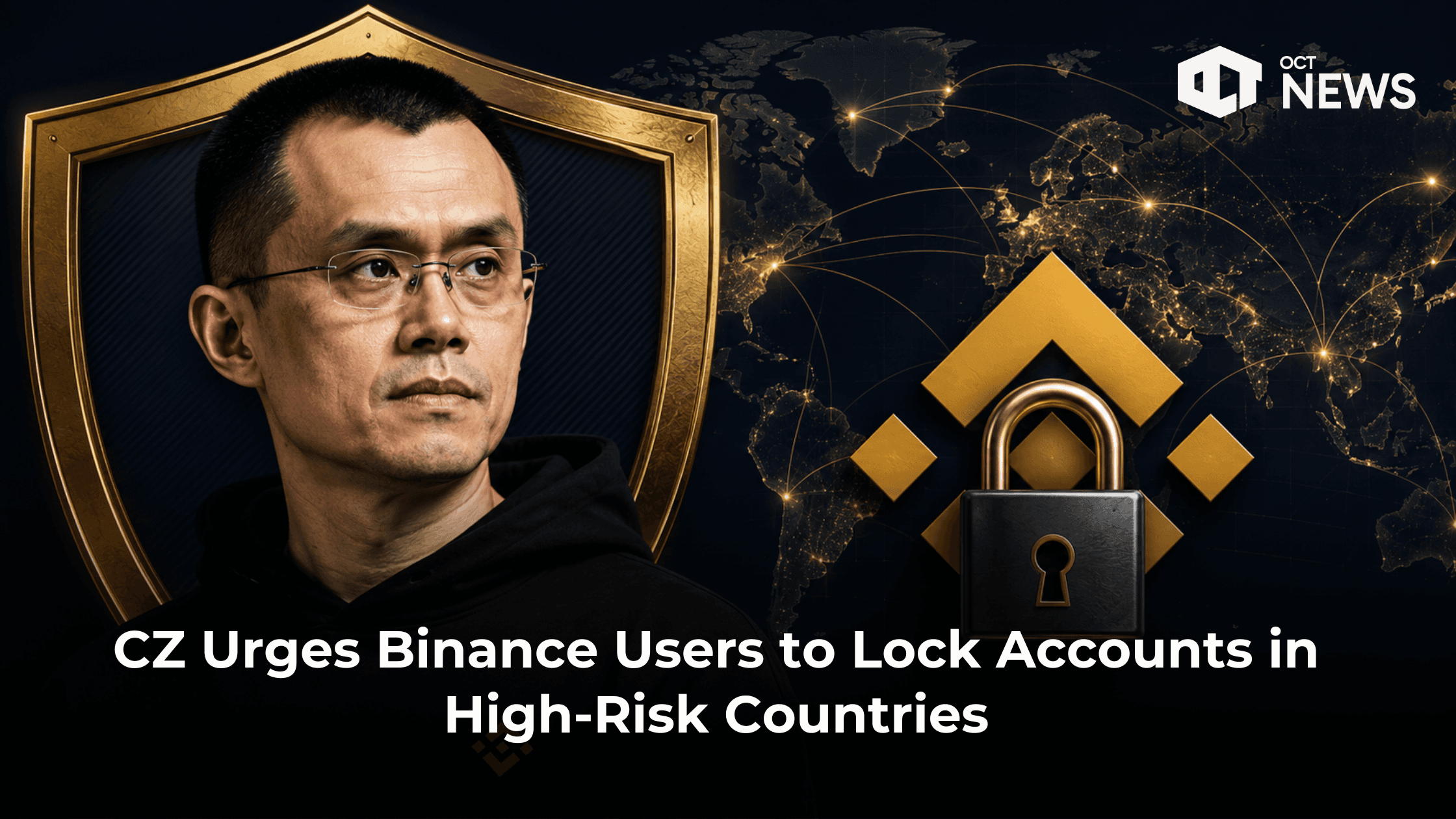
CZ urges Binance users in high-risk countries to secure accounts as threats rise, aiming to protect funds and prevent losses.

Author: Arushi Garg
6th May 2026 – Binance co-founder Changpeng Zhao (CZ) is urging users to lock their accounts before traveling to countries with high crypto kidnapping rates.
High Signal Summary For A Quick Glance

Dani R.Escudero
@DaniREscudero

@DegenerateNews @cz_binance @binance Great feature, scary reality. Best would be to self-custody and when you travel not being your hard wallet with you, then it's impossible. Additionally, it's smart to have a some crypto in an exchange to give to the kidnappers just to make them happy and let you go.
NEW: @cz_binance SAYS @binance USERS MIGHT WANT TO USE NEW "WITHDRAW PROTECTION" FEATURE TO LOCK THEIR ACCOUNT IF THEY ARE TRAVELLING TO A HIGH "CRYPTO KIDNAP" COUNTRY https://t.co/wwVsaep82M
07:45 AM·May 6, 2026

ebtre
@0xebtre
@DegenerateNews @cz_binance @binance whats the point? you will still end up dead. Is either you are dead rich, or dead poor.
NEW: @cz_binance SAYS @binance USERS MIGHT WANT TO USE NEW "WITHDRAW PROTECTION" FEATURE TO LOCK THEIR ACCOUNT IF THEY ARE TRAVELLING TO A HIGH "CRYPTO KIDNAP" COUNTRY https://t.co/wwVsaep82M
02:25 AM·May 6, 2026

AC
@uncensoredAC
@DegenerateNews @cz_binance @binance Keep your crypto but lose your fingers and maybe your life 👍🏿 If you get kidnapped, just give it up.
NEW: @cz_binance SAYS @binance USERS MIGHT WANT TO USE NEW "WITHDRAW PROTECTION" FEATURE TO LOCK THEIR ACCOUNT IF THEY ARE TRAVELLING TO A HIGH "CRYPTO KIDNAP" COUNTRY https://t.co/wwVsaep82M
02:20 AM·May 6, 2026
High attention and emotional sentiment detected.
CZ made the recommendation on May 5, 2026, in a post on X. He was responding to Binance’s official announcement of a new security feature called Withdraw Protection, which launched on May 4.
The feature lets users voluntarily freeze all on-chain withdrawals for a period of one to seven days. Even if someone gains access to the account, they cannot move funds off the platform during the lock window.
Withdraw Protection is a user-activated security setting inside the Binance app. Once enabled, it blocks all on-chain crypto transfers out of the account for a chosen timeframe.
Users can select a lock period between one and seven days. They also choose whether early unlock is available with extra verification or completely disabled.
During the freeze, login and trading still function normally. Users can view balances and place trades. They just cannot withdraw crypto to external wallets.
According to Binance’s support page, the tool differs from a full account lock. It targets only the withdrawal function, making it specifically designed for physical threat scenarios.
Binance has offered account security tools before. These include two-factor authentication, address whitelisting, and auto-lock for inactive sessions. Withdraw Protection is the first tool built to address a scenario where the user is physically present but under duress.
How major exchanges implement withdrawal and account protection features
CZ’s advice targets a specific threat: wrench attacks. A wrench attack is when criminals physically coerce a crypto holder into transferring assets. The term comes from the idea that no amount of digital security protects against a “$5 wrench.”
“This is another (requested) feature that I hope you don’t have to use too often, but it is still very important,” CZ wrote on X. “Eg, if you are traveling to a high ‘crypto kidnap’ country, you might want to lock your account for the duration of the trip. Stay SAFU!”
With the feature enabled, even a forced login would not allow an attacker to drain the account. The withdrawal freeze holds until the timer expires, regardless of who is logged in.
The launch comes during a sharp rise in physical attacks on crypto holders. France alone reported 41 wrench attack cases in early 2026, according to CoinDesk reporting from May 4.
In February 2026, Binance France president David Princay survived an attempted kidnapping. Armed attackers targeted Princay and a family member near their home. French authorities intervened before the attackers could complete the abduction.
That incident drew international attention. It showed that even senior executives at the world’s largest crypto exchange face physical threats tied to their positions in the industry.
Bloomberg reported in February 2026 that wrench attacks have become a growing concern across Europe and parts of Asia. Criminals target individuals known or suspected to hold large crypto portfolios. In several cases, attackers forced victims to transfer funds at gunpoint or under threat of violence.
The pattern is consistent. Attackers identify targets through social media activity, conference appearances, or public wallet addresses. Then they use physical force to bypass digital security entirely.
Before Withdraw Protection, Binance users had no way to preemptively block their own withdrawals. Standard security tools like 2FA protect against remote hackers, not against someone standing next to you with a weapon.
Timeline: The global rise of crypto-related physical attacks and Binance’s security response
Crypto-related physical coercion incidents surge globally, with France emerging as a major hotspot.
David Princay, president of Binance France, survives an attempted kidnapping, highlighting escalating risks to crypto executives.
Authorities report 41 crypto-related kidnapping and extortion incidents within the first months of 2026.
Multiple cases surface across Europe and Latin America, intensifying industry-wide security concerns.
Binance introduces a feature allowing users to temporarily freeze on-chain withdrawals for added security.
Changpeng Zhao advises users to lock accounts when traveling to high-risk regions to reduce kidnapping risk.
Reactions on X were mostly positive. Many users shared CZ’s post with comments calling it “smart advice” and “better safe than sorry.”
Some members of the crypto community raised a different point. They argued that self-custody remains the best protection. If funds sit in a personal wallet with proper operational security, there is no centralized account for an attacker to target.
Others noted a potential gap in the Binance Withdraw Protection feature. If an attacker holds a victim captive, they could wait for the lock period to expire. A locked account does not eliminate the threat entirely.
Still, most responses acknowledged that for users who keep funds on Binance, the tool adds a meaningful layer of defense during travel.
Binance has not disclosed how many users have already activated the feature. It is still new, having launched just two days ago on May 4.
CZ did not specify which countries he considers “high crypto kidnap” destinations. Binance has not published an official risk list either.
For now, the practical advice is straightforward. Users holding significant crypto on Binance who plan to travel to regions with known kidnapping activity can freeze withdrawals before departure. The lock takes effect immediately and requires no action during the trip.
This is not financial advice. Users should evaluate their own security needs and consider multiple layers of protection, including self-custody options, when managing crypto holdings.
Our Crypto Talk is committed to unbiased, transparent, and true reporting to the best of our knowledge. This news article aims to provide accurate information in a timely manner. However, we advise the readers to verify facts independently and consult a professional before making any decisions based on the content since our sources could be wrong too. Check our Terms and conditions for more info.


Securitize Stocks Launches Tokenized Equities on Solana
OCC GENIUS Act Final Rule Sets U.S. Stablecoin Rules
Stellar Settles First Institutional Repo Using Tokenized Treasury Collateral
Kelsier Ventures Wallets Fall From $300M to Under $2M
Securitize Stocks Launches Tokenized Equities on Solana
OCC GENIUS Act Final Rule Sets U.S. Stablecoin Rules
Stellar Settles First Institutional Repo Using Tokenized Treasury Collateral
Kelsier Ventures Wallets Fall From $300M to Under $2M