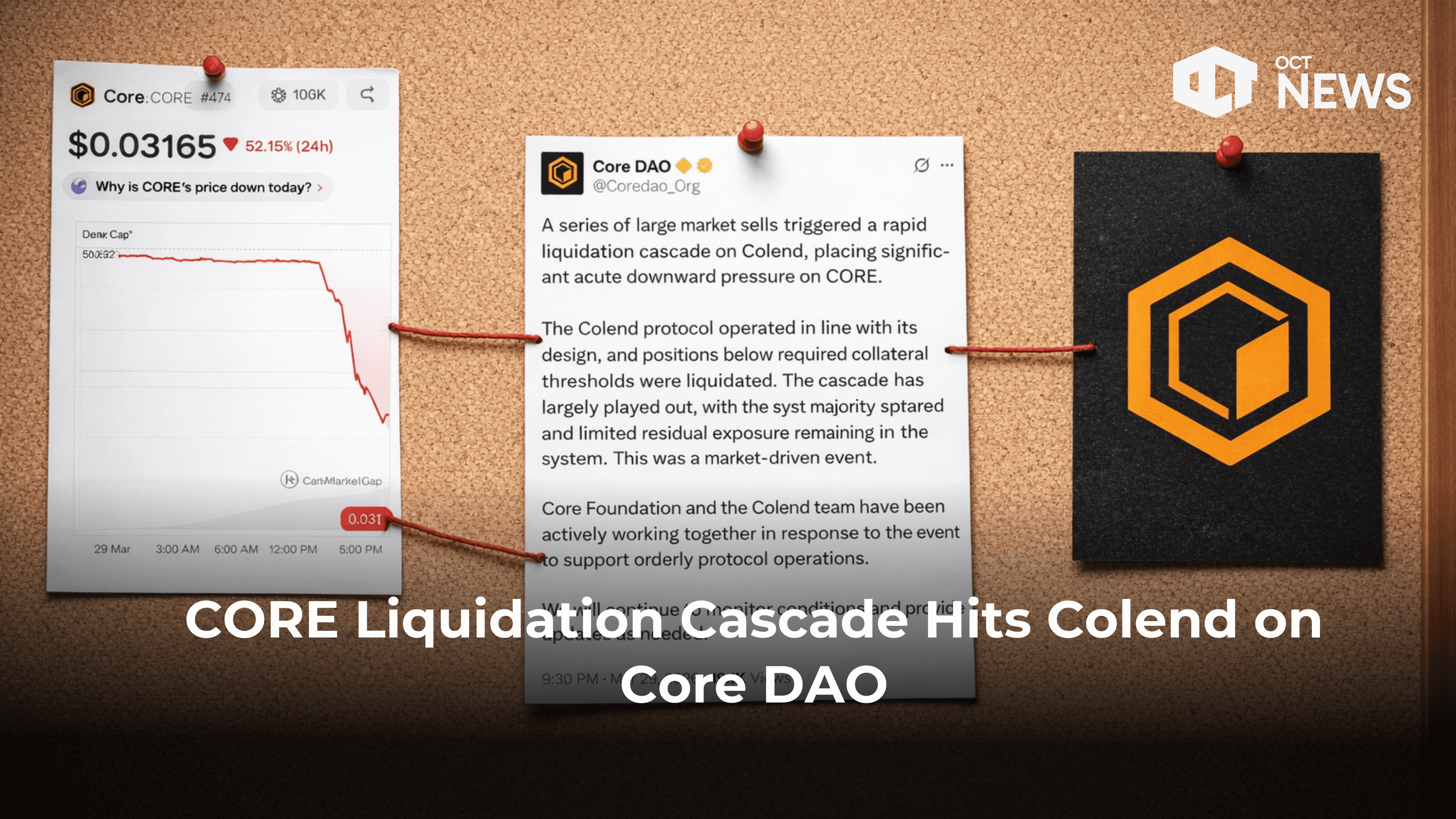
Core DAO addresses CORE liquidation cascade on Colend after large market sells triggered liquidations and price pressure.

Author: Akshat Thakur
Steady attention without excessive speculation.
March 29, 2026- CORE Liquidation Cascade hit Colend after a series of large market sells pushed the token lower, triggering rapid liquidations across the protocol. The event exposed how quickly leverage can unwind in emerging Bitcoin DeFi systems, even when the underlying protocol functions correctly.
High Signal Summary For A Quick Glance

cryptogift🔸💙
@Crypto4gift_

Dear #CORETOSHIS, raise your voice Retweet until we got answers , what's going on? @richrines $CORE 🔸❤️🔥 @Coredao_Org https://t.co/S9rleLqc0g

12:35 PM·Mar 29, 2026

DMC (Crypto Wala Dost)
@cryptowaladmc
👀 What happened with $CORE ? Anything wrong with the team @Coredao_Org !! ⚠️ Our portfolio rekt now .. 😢 https://t.co/rSCDbg9Vg7
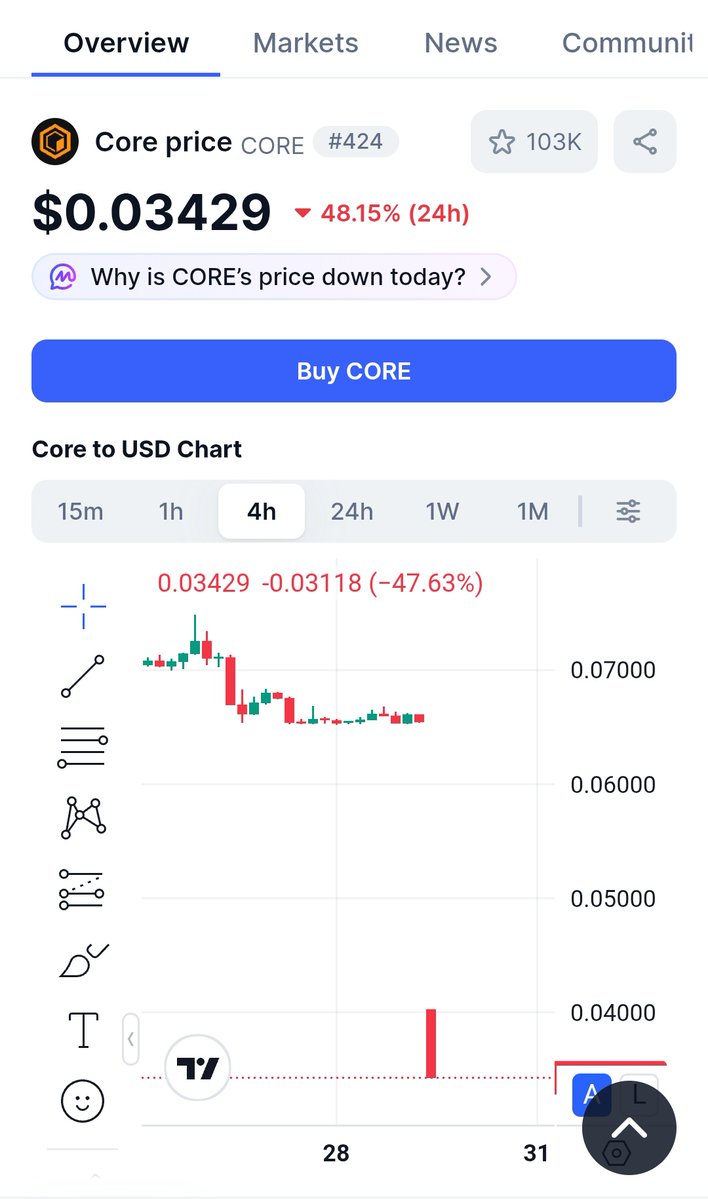
12:29 PM·Mar 29, 2026
Core DAO confirmed the incident through its official X thread, stating that aggressive selling pressure triggered the liquidation sequence, per Core DAO X announcement.
As the CORE price dropped, collateral values across Colend declined simultaneously. Positions that were previously safe quickly crossed liquidation thresholds, activating automated liquidations across the system.
The foundation emphasized that the protocol behaved as expected, with most under-collateralized positions already cleared and only limited exposure remaining.
Core DAO launched as a Bitcoin-aligned Layer 1 designed to combine Bitcoin security with EVM-compatible smart contracts. Its Satoshi Plus consensus model enables Bitcoin staking alongside DeFi applications, positioning the chain as a Bitcoin-focused alternative to Ethereum-based ecosystems.
Colend operates as the primary lending protocol within this system. It allows users to deposit assets, earn yield, or borrow against collateral in a fully non-custodial setup similar to established money markets.
CORE plays a central role across the ecosystem. It functions as gas, governance, and a widely used collateral asset, which makes its price movements directly impact lending activity on the chain.
The CORE Liquidation Cascade started with large sell orders hitting the market. As the price declined, the value of CORE used as collateral dropped in real time. Borrowers who had leveraged positions suddenly found themselves below required collateral thresholds.
The protocol responded instantly. Smart contracts initiated liquidations, allowing liquidators to repay debt and claim discounted collateral. This added more selling pressure to the market.
That pressure pushed prices lower again, triggering additional liquidations in sequence. The result was a rapid feedback loop typical of leveraged DeFi environments.
The event highlights a core structural issue rather than a technical failure. When a native token is heavily used as collateral within its own ecosystem, price volatility directly feeds into liquidation risk.
CORE is deeply integrated into Core DAO’s financial layer. That creates efficiency during stable conditions but increases fragility during sharp moves. In this case, the system did exactly what it was built to do. The problem is that the design itself amplifies volatility when market conditions turn.
Colend’s liquidation engine worked as intended throughout the event.
Positions were liquidated based on predefined thresholds, ensuring that bad debt did not accumulate. Liquidators stepped in to stabilize the system by absorbing risk and restoring collateral balance.
Core DAO has already resolved most of the affected positions and is now monitoring only minor remaining exposure. There was no downtime, no exploit, and no breakdown in execution. From a technical standpoint, the protocol passed the test.
The immediate focus will be on price stability and whether further liquidation pressure emerges. If the market stabilizes, the cascade likely ends here. If volatility continues, secondary effects could still appear.
Longer term, this event may push changes in risk parameters. Collateral factors could be adjusted. Greater diversification of collateral assets may become necessary. Additional liquidity buffers or insurance mechanisms could also be explored.
For users, the takeaway is straightforward. Leverage amplifies returns in calm markets, but it accelerates losses when volatility spikes.
Our Crypto Talk is committed to unbiased, transparent, and true reporting to the best of our knowledge. This news article aims to provide accurate information in a timely manner. However, we advise the readers to verify facts independently and consult a professional before making any decisions based on the content since our sources could be wrong too. Check our Terms and conditions for more info.