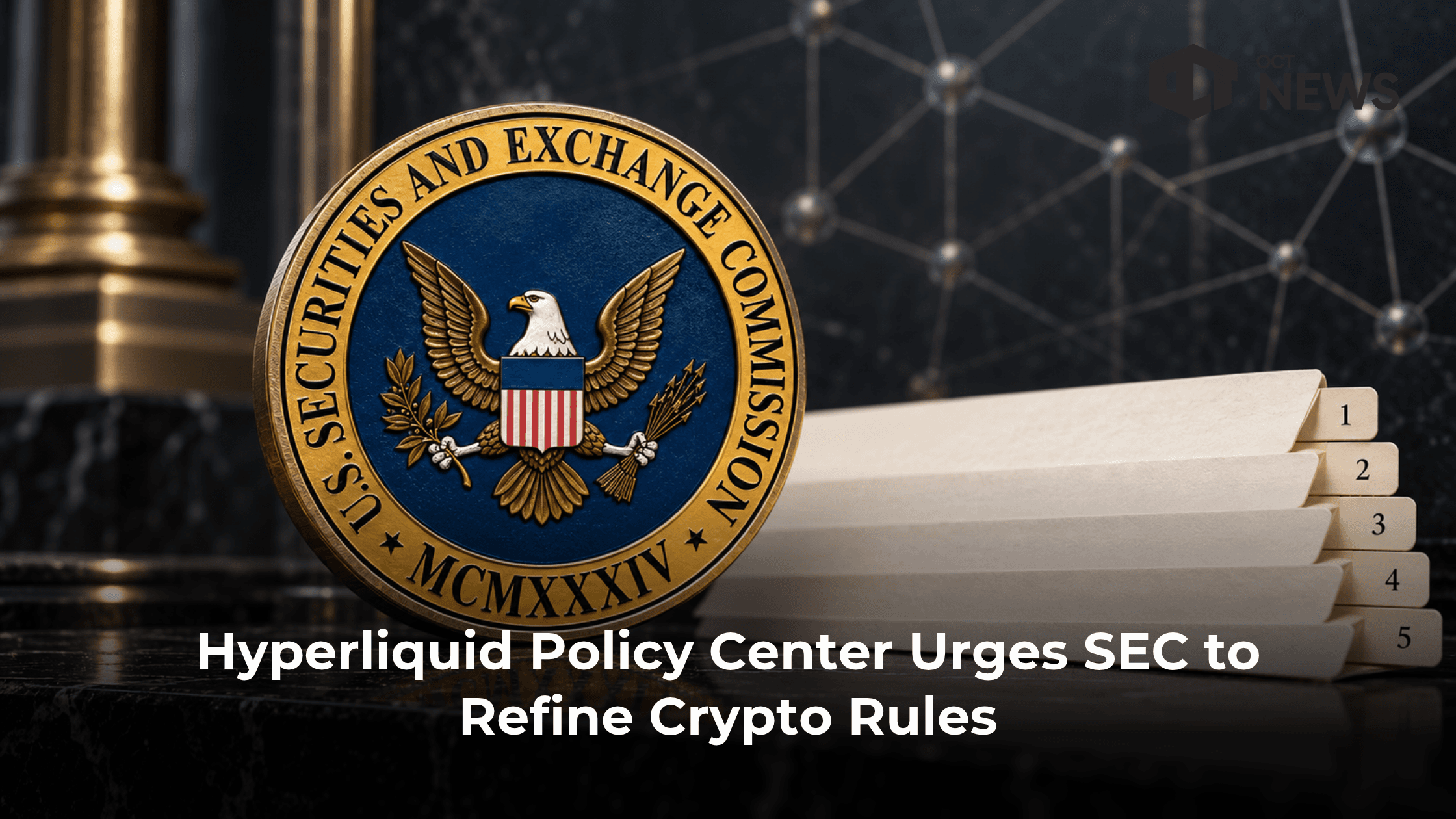
CFTC equity perpetual futures can begin trading on eligible U.S. exchanges, bringing stock perps under joint CFTC and SEC oversight.

Author: Kritika Gupta
3rd November 2026- The CFTC equity perpetual futures announcement opens the door for perpetual contracts on individual stocks to trade on eligible US-regulated exchanges for the first time. CFTC Chairman Michael S. Selig called these contracts “Equity Perps.”
High Signal Summary For A Quick Glance

romainlnm
@romainlnm

Today, perpetual futures contracts on individual equity securities (the ‘Equity Perps’) can begin trading for the first time on CFTC-registered exchanges. https://t.co/d0QL7z39Ia
@ChairmanSelig Releases Statement on Equity Perpetual Futures: https://t.co/aZAEa77sE7
02:56 PM·Nov 3, 2026

Chayon Roy
@ChayonRoy16246
CFTC just approved the first equity perpetual futures on U.S. registered exchanges That means traders can take positions on individual stocks with no expiry date under CFTC and SEC oversight $HYPE is already up and Hyperliquid HIP>3 markets could benefit as this space grows https://t.co/o4PKIA9ygT
🚨JUST IN: CFTC approves the FIRST equity perpetual futures for trading on U.S. registered exchanges. The contracts let traders take positions on individual stocks without a fixed expiry date, under CFTC and SEC oversight. Hyperliquid’s $HYPE rose 3.23% in an hour to $87.62 https://t.co/rXCm7IjPuo
02:53 PM·Nov 3, 2026

Conor Kenny
@conorfkenny
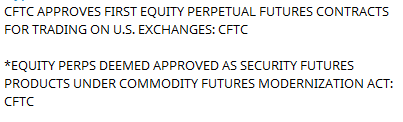
JUST IN: 🇺🇸 CFTC approves the first-ever equity perpetual futures contracts for trading on US exchanges! This is HUGE!🚀 https://t.co/67mRY15Rt3
02:10 PM·Nov 3, 2026
High attention and emotional sentiment detected.
The statement clears a path for equity perpetual futures to trade on designated contract markets. These exchanges must also hold dual registration with the SEC as notice-registered national securities exchanges. So both agencies now share oversight of the products.
The CFTC deemed the contracts approved under Commission Regulation 40.3. It treats them as security futures products under the Commodity Futures Modernization Act of 2000.
Importantly, this is not a new rule or a no-action letter. Instead, it is a path to trading under existing law. The products now sit under the Commodity Exchange Act and federal securities law at the same time.
As a result, both the CFTC and the SEC will supervise equity perpetual futures together. You can read the full statement on the CFTC website, alongside the official press release.
First, a quick primer. A perpetual future is a derivative with no expiry date, so a trader can hold the position indefinitely.
To keep the price close to the underlying stock, the contract uses a funding rate. This is a periodic payment between long and short holders. When the perp trades above spot, longs pay shorts, and the gap narrows.
Equity perps apply that same structure to single stocks instead of crypto assets. Also, these contracts are cash-settled, so no shares change hands. For now, the CFTC has not published margin, leverage, or funding parameters.
Crypto perpetual futures already dominate offshore venues. However, US traders have mostly been locked out of regulated versions. Selig wants to change that.
In his statement, Selig said the move lets US participants “avail themselves of the advantages of perpetual futures.” He framed these as tools for risk management and price discovery.
He also argued that regulated access beats the alternative. “American investors and traders can access these products within the protections of the CFTC’s proven regulatory framework, rather than being forced to turn to offshore, and often unregulated, venues,” he said.
Selig pointed to two foundations for the decision. First, the Commodity Futures Modernization Act of 2000. Second, the March 2026 CFTC-SEC Memorandum of Understanding. He said both ended a regulatory “no man’s land” that had stranded security futures.
This step did not appear out of nowhere. On May 29, 2026, the CFTC approved the first true bitcoin perpetual futures contract, KalshiEX LLC BTCPERP.
Alongside that order, the agency issued a policy statement outlining case-by-case reviews for other asset classes, including equities. The CFTC equity perpetual futures announcement follows that approach.
Selig took office on December 22, 2025, as the 16th CFTC Chairman. Since then, he has pushed to bring perps onshore and strengthen coordination between the CFTC and SEC.
Key milestones related to this development
CFTC staff request comments on perpetual derivatives and 24/7 trading.
The CFTC approves Kalshi’s bitcoin perpetual contract and outlines case-by-case review for other asset classes.
The Federal Register publishes Bitnomial’s proposal covering single-stock security futures, including perpetual contracts.
Chairman Michael S. Selig announces that equity perpetual futures can begin trading on eligible dual-registered U.S. exchanges.
Watch for exchange announcements on specific contracts and launch schedules. The statement sets no separate launch date or new rulemaking deadline.
Several firms filed for single-stock perpetual futures in September 2026. According to a review by Eversheds Sutherland, these included Kalshi, Coinbase Derivatives, Bitnomial, and Crypto.com’s OG.com.
Each filing triggered a 45-day Regulation 40.3 review window. Those windows pointed toward possible deemed approval in early November. The statement does not name which specific contracts are live.
Because of that, the exact launch list stays unclear for now. No product volumes or confirmed trades appear in the primary materials. In short, the door is open, but the first listings are still unannounced.
Plenty remains unknown. For example, margin limits, leverage caps, and funding schedules are not set out in the statement.
There are also structural puzzles. Crypto trades around the clock, yet equity markets do not. So funding and liquidation mechanics may clash with normal stock hours.
Market reaction data stays thin as well. Some traders on X claimed Hyperliquid’s HYPE token rose about 3.23% in an hour to roughly $87.62 around the news. That figure is unverified, and no clear move in COIN, HOOD, or CME has been tied to the announcement.
Pushback could still arrive. CME Group has previously challenged how the CFTC classifies crypto perps, arguing they resemble swaps. No fresh dissent specific to equity perps has surfaced yet.
The next signal will come from the exchanges themselves. Watch for the first dual-registered venue to list a named single-stock contract. That listing will reveal the real margin and funding rules.
If liquidity builds, equity perpetual futures could pull activity back onshore. Still, the structure is new, and the risks are real.
This article is for information only and is not financial advice. Always do your own research before trading leveraged derivatives.
Our Crypto Talk is committed to unbiased, transparent, and true reporting to the best of our knowledge. This news article aims to provide accurate information in a timely manner. However, we advise the readers to verify facts independently and consult a professional before making any decisions based on the content since our sources could be wrong too. Check our Terms and conditions for more info.