

Author: Tanishq Bodh
High attention and emotional sentiment detected.
March 29, 2026 – Governments are tightening election finance rules as concerns grow around foreign interference and opaque funding channels. Digital assets have now entered that debate, even in jurisdictions where their political use remains limited. Canada has introduced legislation that would block crypto donations across federal politics, signaling a stricter stance on digital payments in elections.
High Signal Summary For A Quick Glance
The Canadian government tabled Bill C-25, the Strong and Free Elections Act, on March 26, 2026. The proposal would prohibit political parties, candidates, and third-party groups from accepting donations in cryptoassets, money orders, or prepaid payment cards.
The rules apply broadly across the political system, including leadership contestants, nomination candidates, and organizations involved in election advertising or surveys.
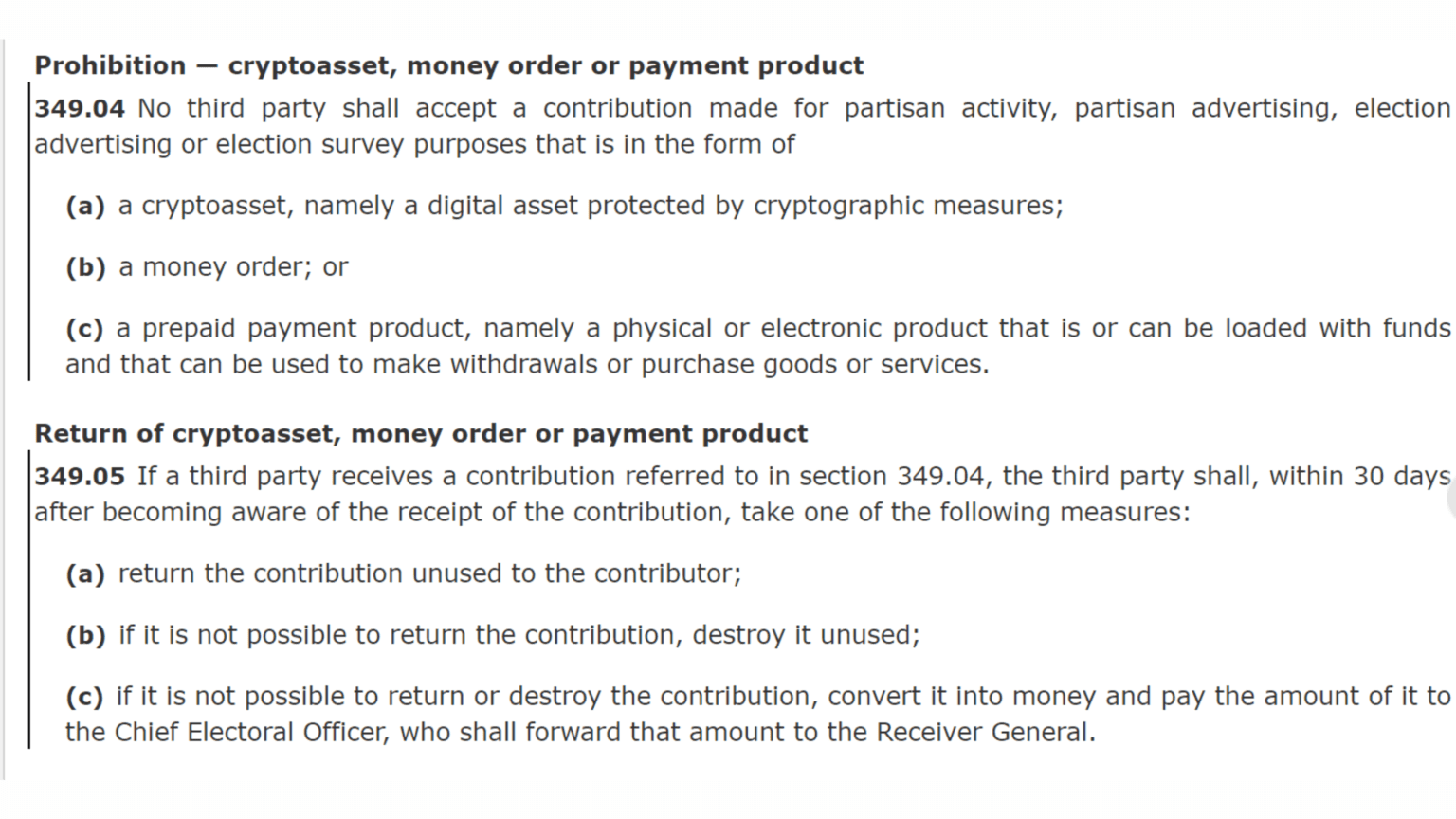
If a prohibited donation is received, entities must act within 30 days. They must return it, destroy it if return is not possible, or convert it to cash and transfer it to the appropriate authority.
The bill is currently at the first reading stage and forms part of a wider elections reform package.
Canadian officials argue that crypto’s pseudonymous nature makes it harder to verify the true source of political donations. This creates risks around undisclosed funding and potential foreign influence.
For the crypto industry, the move is more symbolic than disruptive. Crypto donations have been legal since 2019, but reported usage in federal elections has remained minimal.
However, the decision signals how governments view crypto in sensitive areas like political financing. Even limited perceived risk can trigger strict regulatory action.
Canada’s proposal follows similar moves in other jurisdictions exploring tighter oversight of digital assets in elections. The focus remains on traceability and transparency rather than banning crypto outright.
At the same time, broader crypto policy in Canada continues to evolve. Authorities are working on frameworks that balance innovation with financial oversight.
Critics argue that traditional donation methods, including cash, can also be difficult to trace. Supporters counter that crypto introduces additional layers of complexity in monitoring.
The bill reflects a wider global trend. Governments are moving cautiously when crypto intersects with national security and democratic processes.
Our Crypto Talk is committed to unbiased, transparent, and true reporting to the best of our knowledge. This news article aims to provide accurate information in a timely manner. However, we advise the readers to verify facts independently and consult a professional before making any decisions based on the content since our sources could be wrong too. Check our Terms and conditions for more info.