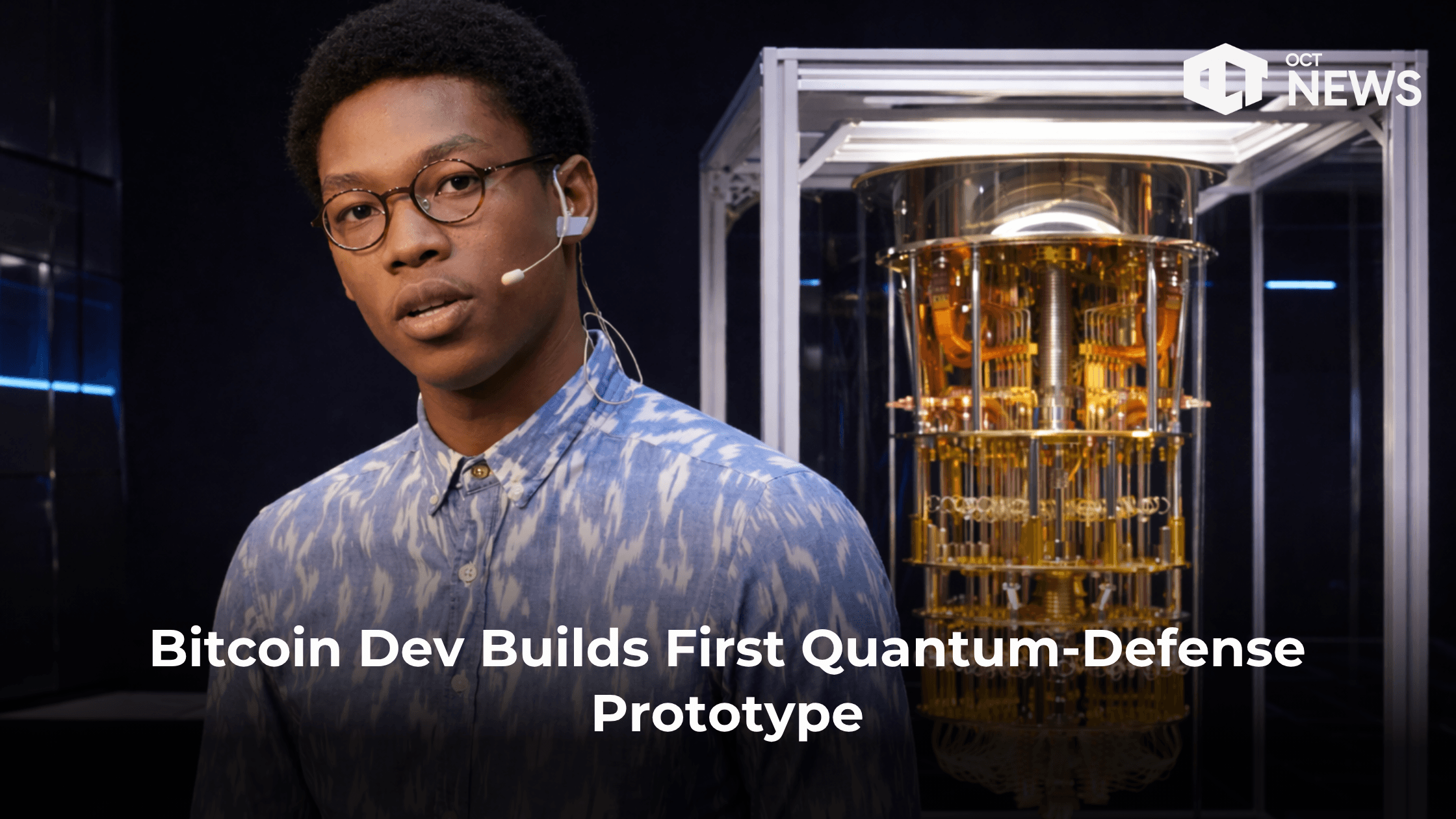
Bitcoin developer unveils first quantum-defense prototype, boosting wallet security and Bitcoin’s resilience against quantum threats.

Author: Arushi Garg
High attention and emotional sentiment detected.
10 April, 2026: Bitcoin core developer and Lightning Labs CTO Olaoluwa Osuntokun has built the first working quantum-defense prototype to protect Bitcoin wallets from future quantum computer attacks. The breakthrough introduces a practical recovery mechanism that lets users safely migrate their funds before quantum computers can break current ECDSA and Schnorr signatures, avoiding the need for disruptive emergency soft forks that could lock millions out of their BTC.
This marks the first concrete technical solution to one of Bitcoin’s longest-standing theoretical vulnerabilities.
High Signal Summary For A Quick Glance

Julia
@Yusanchik

@Cointelegraph Companies like these have been working in this field for years. I don’t know why lately there’s been so much hype around the idea that Bitcoin will “die” because of hacks or quantum computers. It feels like people assume developers will just sit and wait for it to happen. Of
🔥 NEW: Bitcoin dev Olaoluwa Osuntokun builds first quantum-defense prototype to protect Bitcoin wallets from future attacks. https://t.co/aMmfdK8gaL
03:59 PM·Apr 9, 2026

Linda Hamilton
@lindahams
@Cointelegraph That’s the kind of work that rarely gets hype but matters most. Building defenses before the threat becomes real is how systems stay strong long-term💯
🔥 NEW: Bitcoin dev Olaoluwa Osuntokun builds first quantum-defense prototype to protect Bitcoin wallets from future attacks. https://t.co/aMmfdK8gaL
12:09 PM·Apr 9, 2026

Catie Romero-Finger
@catieromero
@Cointelegraph This isn’t just a technical milestone. Strengthening wallets against quantum attack will reinforce confidence across the ecosystem. Security at this level is how Bitcoin ensures its users can rely on it long term.
🔥 NEW: Bitcoin dev Olaoluwa Osuntokun builds first quantum-defense prototype to protect Bitcoin wallets from future attacks. https://t.co/aMmfdK8gaL
11:15 AM·Apr 9, 2026
Olaoluwa “Roasbeef” Osuntokun is the Chief Technology Officer at Lightning Labs and one of Bitcoin’s most respected core developers. He has been a driving force behind the Lightning Network since its early days, contributing key components to lnd and advancing Bitcoin’s scalability, privacy, and protocol improvements over the past decade.
The threat of quantum computers breaking Bitcoin’s ECDSA and Schnorr signatures has been debated in the developer community for over a decade. A potential emergency soft fork to disable vulnerable public-key spending paths has long been viewed as the main defense, but it risked permanently locking millions of users out of their funds. Until now, no practical recovery mechanism existed making Osuntokun’s working prototype, released on April 8, 2026 via the Bitcoin developer mailing list, the first real solution to this long-standing problem.
How Osuntokun’s prototype changes Bitcoin’s quantum-recovery pathway without disrupting the base protocol
Olaoluwa Osuntokun published the full prototype code and technical specification on the Bitcoin developer mailing list on April 8, 2026. The design introduces a new witness version that creates quantum-safe recovery addresses without touching existing UTXOs, allowing users to migrate funds voluntarily at any time.
Early reactions from other core developers have been cautiously positive, praising the minimal on-chain footprint and the fact that it avoids the forced migration problems of previous theoretical proposals. If adopted, the solution could be activated through a future soft fork while leaving legacy wallets completely unaffected until owners decide to upgrade.
Our Crypto Talk is committed to unbiased, transparent, and true reporting to the best of our knowledge. This news article aims to provide accurate information in a timely manner. However, we advise the readers to verify facts independently and consult a professional before making any decisions based on the content since our sources could be wrong too. Check our Terms and conditions for more info.