


Qubic coin is a decentralized AI supercomputing protocol redefining blockchain consensus with quorum voting and energy-based computation.

Author: Akshat Thakur
Qubic is a Layer-1 blockchain built to make computation useful. Most blockchains burn energy on hashing. Qubic does not. It uses that same energy to train a decentralized AI system called Aigarth and mine external assets like Dogecoin. This creates a dual output model where computation produces real value instead of waste. This qubic review looks at one of the most unconventional Layer-1 blockchain projects in 2026.
The network focuses on three things. Speed, cost, and efficiency. Transactions are feeless. Finality is near instant. Throughput is extremely high, with millions of transactions per second already demonstrated on mainnet. These numbers matter, but the bigger point is consistency. Qubic achieves this without relying on rollups or complex scaling layers.
The project was created by Sergey Ivancheglo, known for early work on NXT and IOTA. It launched with no premine and no VC allocation. That reduces early supply concentration. It also means growth depends on real usage, not capital inflows.
Qubic runs on a fixed set of 676 validator nodes called Computors. This fixed design keeps performance stable. It avoids the unpredictability seen in networks that constantly expand validator sets.
From a practical view, Qubic targets use cases that need speed and zero fees. This includes microtransactions, real-time systems, and AI-driven applications. The approach is focused. It does not try to support everything. That gives it efficiency, but also creates a limitation. Adoption will depend on whether this narrow design solves real problems better than existing chains.
Qubic removes layers that slow blockchains down. There is no virtual machine. No heavy software stack. Everything runs directly on hardware. Smart contracts are written in C++ and executed on the CPU. This reduces overhead and improves execution speed.
The network is run by 676 Computors. These are validator nodes. They work as a group, not in competition. When a transaction is submitted, most of them must agree before it is confirmed. This is called quorum-based computation. It gives deterministic finality in under a second. There is no waiting for multiple confirmations.
Mining follows a model called Useful Proof of Work. Instead of solving random puzzles, miners train neural networks for Aigarth. At the same time, the same hardware mines Dogecoin. This creates two outputs from one input. Security and revenue.
There is also a performance-based system. Miners who contribute more gain influence over the Computor set. This keeps incentives aligned with actual work, not passive holding.
For developers, the system is simple. They write contracts in C++. Deploy without worrying about gas fees. They can use oracles and build real-time applications. Tools like wallets and explorers are still improving, but development is active.
Qubic is built for efficiency. It trades flexibility for performance. That tradeoff is clear. If its model attracts real usage, it can stand out. If not, its design may remain niche.
Qubic’s token model is built around controlled supply and measurable deflation. The native token, QUBIC, is used across the network for execution, oracle usage, and incentives. It is not just a medium of exchange. It acts as the fuel behind computation and activity on the network.
The maximum supply is capped at 200 trillion after a major reduction in 2024. Current circulating supply is already a large portion of that cap, but the design ensures the full cap is unlikely to be reached. The reason is simple. Emissions are balanced with aggressive burn mechanisms.
Each epoch releases new tokens, but a large share is burned based on network activity. This includes smart contract usage, oracle demand, and other on-chain operations. A system called the Supply Watcher adjusts burn rates in real time. This is a key detail. It ties token supply directly to usage, not just fixed schedules.
Recent data shows a shift toward net deflation. In some epochs, burns have exceeded emissions. This changes the narrative. The model is no longer inflation with delayed reduction. It is already showing contraction under real usage.
The halving structure adds another layer. Emissions reduce roughly every year. The first major cut in 2025 significantly reduced new supply, and future reductions will continue to tighten issuance. This creates a predictable supply curve, which is rare among newer Layer-1 projects.
From an investment view, the model is strong but conditional. It works best when network activity grows. More usage leads to more burns. Without demand, the system loses its edge. This makes Qubic less speculative and more dependent on actual adoption. That is both a strength and a risk.
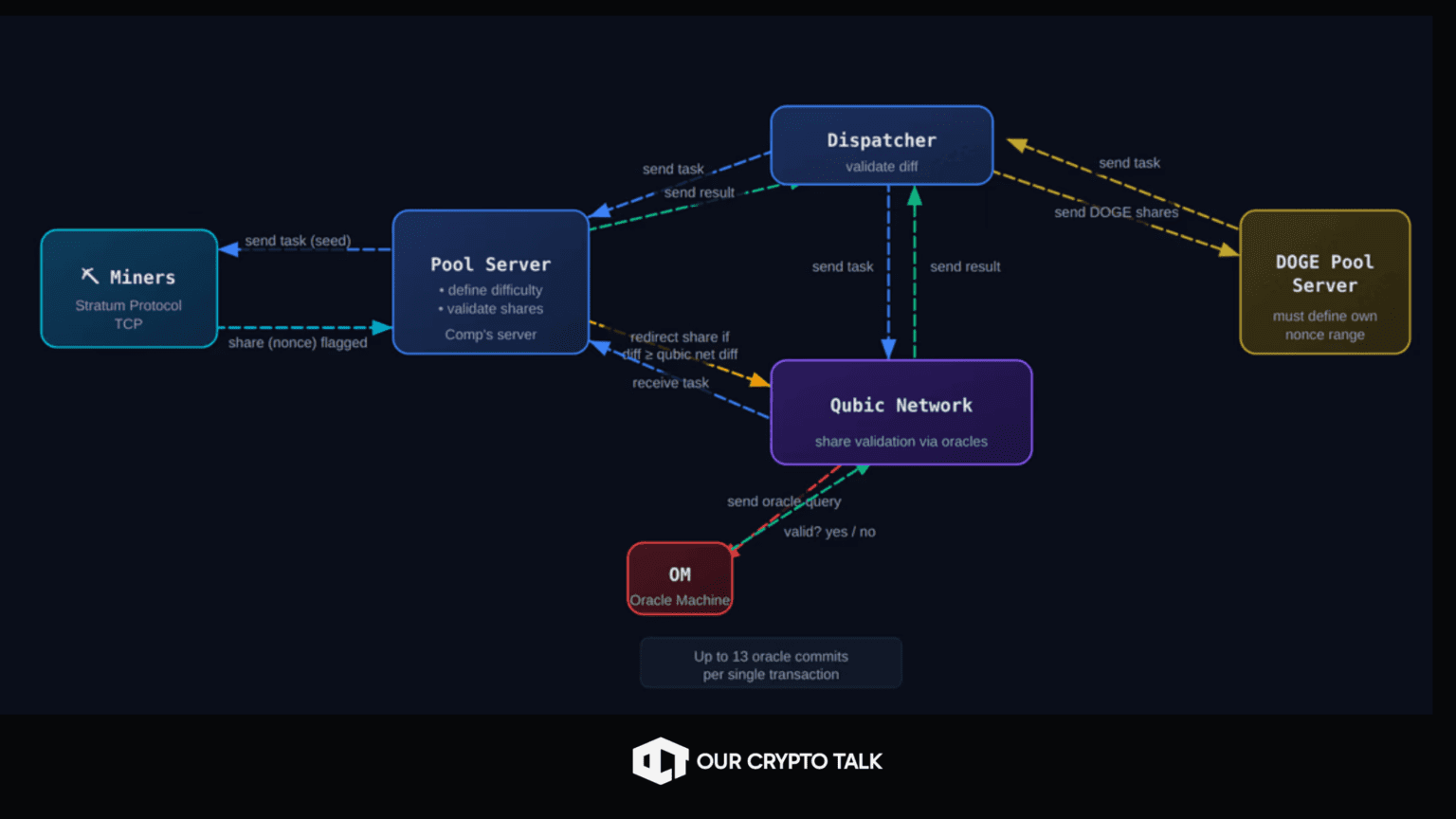
Qubic’s shift to Dogecoin mining in April 2026 is one of its most practical upgrades. It changes the network from a closed system into one that generates external revenue. Instead of relying only on internal token flow, Qubic now earns value from outside its ecosystem.
The setup is straightforward. ASIC miners handle Dogecoin mining full time. At the same time, CPU and GPU resources are fully dedicated to AI training. There is no overlap or switching between tasks. Both systems run in parallel. This improves efficiency and removes previous tradeoffs.
The revenue from Dogecoin mining is not left idle. It is used to support the ecosystem. This includes converting rewards into stable assets, funding buybacks, and contributing to token burns. This creates a feedback loop. External income strengthens internal token value.
This model also expands participation. ASIC miners now have a clear role in the network, while CPU and GPU miners focus on AI workloads. It separates responsibilities but keeps incentives aligned.
From an investment perspective, this is a meaningful shift. Most Layer-1 projects rely on inflation or fees. Qubic introduces an external revenue stream, which reduces pressure on token emissions. It also supports the deflationary model already in place.
However, the impact depends on scale. If Dogecoin mining remains profitable and adoption grows, it can strengthen the entire system. If not, the effect will be limited. The idea is strong. Execution and long-term sustainability will decide its value.
Qubic has moved past roadmap promises. Most of its 2025 plans are already live. The focus in 2026 is execution, not announcements. Several major updates went live within days, which shows fast delivery but also raises the bar for adoption.
Dogecoin mining launched on April 1, 2026. This added a direct revenue stream to the network. The system now runs a split model where ASICs handle DOGE mining and CPU or GPU power focuses on AI training. This removes inefficiencies and allows both systems to run at full capacity.
The Vottun Bridge went live on April 2. It enables QUBIC to connect with Ethereum through wrapped assets. This is a key step because Qubic lacked direct access to external liquidity before this. Early transactions and liquidity pools are already active, which signals real usage rather than test deployments.
Decentralization has also improved. Network Guardian nodes scaled from a few dozen to over 150 in a short time. These nodes improve data access and network reliability without needing full validator hardware. This helps reduce earlier concerns about the fixed validator structure.
On the research side, the team published multiple Neuraxon papers. These were accepted at recognized conferences and supported by public demos and code releases. This adds credibility to the AI narrative, which is often weak in crypto projects.
Developer activity has increased sharply. GitHub commits rose by around 84 percent in a single month, placing Qubic among the top projects in developer growth. Core improvements like faster tick times and better explorer tools are already live.
The roadmap is no longer theoretical. The real question now is adoption. The infrastructure is in place. Usage will decide the outcome.
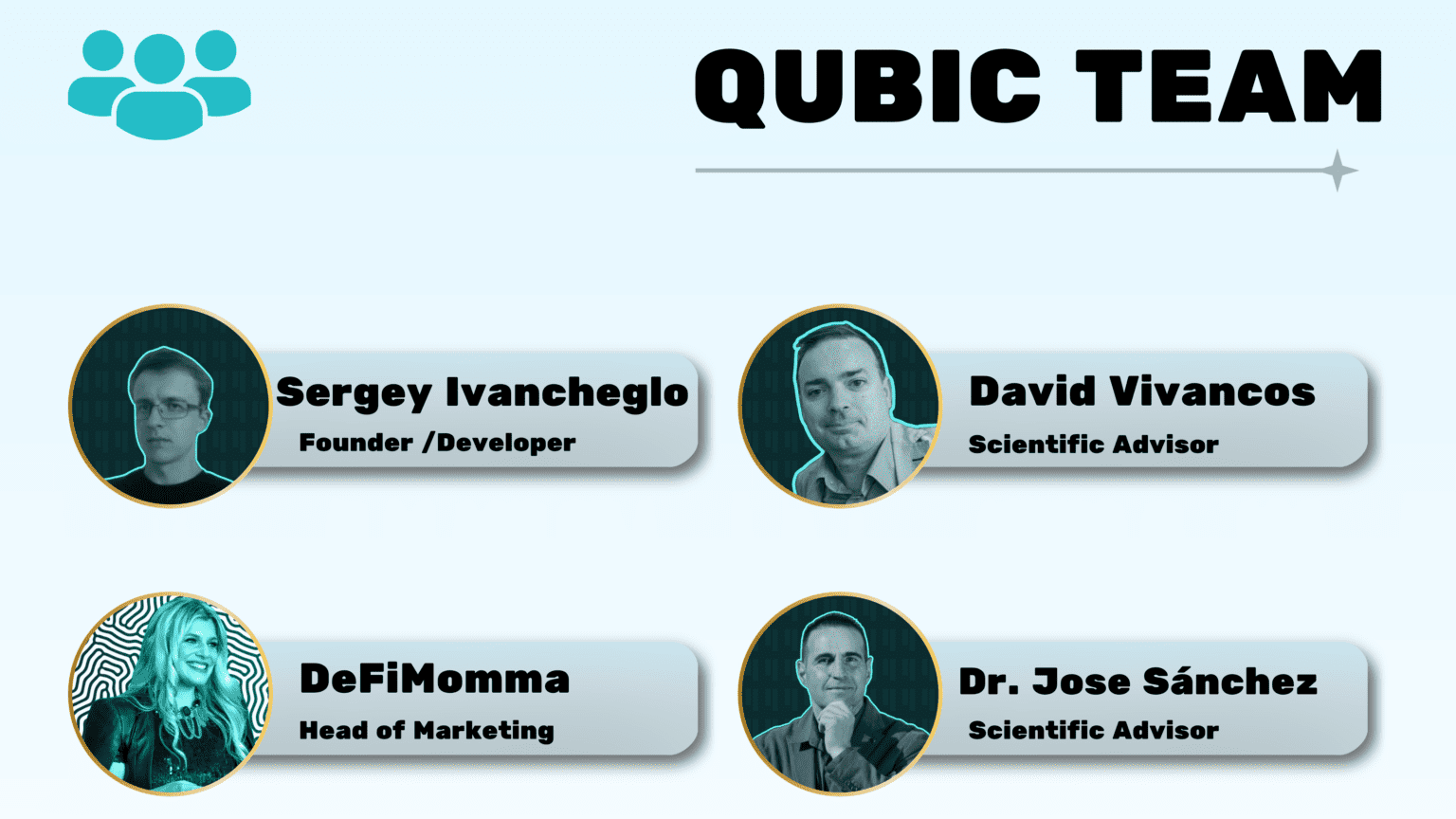
Qubic operates with a lean and distributed structure. It does not follow a traditional corporate model. The project is still led by Sergey Ivancheglo, who remains the main technical figure behind the vision. His track record adds credibility, but it also concentrates influence around a single builder.
Execution is split across workgroups. The Tech group is led by JOETOM. The Science group includes David Vivancos and Dr. José Sanchez, focusing on AI research and Neuraxon development. Marketing is handled by DeFiMomma, while community roles are evolving after recent changes.
Business development is led by Kimz300. The incubation program is managed by Mr. Rose. Governance has expanded through a Strategic Board, with new members added through a computor vote. This introduces some level of decentralization in decision making, even if it is still limited.
Recent updates include new roles focused on content and design. These are small additions, but they show a shift toward improving outreach during key launches like Dogecoin mining. At the same time, core developer hiring remains limited. The team relies heavily on existing contributors and open-source participation.
This structure has clear pros and cons. It keeps overhead low and aligns incentives with performance. But it also limits scaling speed. Progress depends on active contributors rather than a large internal team.
So far, the model has delivered results. The key risk is sustainability. If contribution slows, development pace may follow.
Qubic has a strong technical edge. It delivers high throughput, near-instant finality, and zero fees. These are not claims. They are already live. The addition of Dogecoin mining introduces external revenue, which is rare for Layer-1 networks. This revenue feeds buybacks and burns, which supports long-term supply pressure.
The AI angle is also more credible than most. The project has published research papers and open demos. Developer activity is rising, and the ecosystem is expanding with tools and bridges. If adoption grows, Qubic could position itself as both an infrastructure and compute layer.
Execution risk remains high. The model depends on real usage. Without adoption, the burn mechanism weakens. Dogecoin mining adds revenue, but it also adds dependency on external factors like mining profitability.
The token supply is still large in absolute terms. Even with halvings, full deflation takes time. Developer onboarding may also be slower due to the use of C++ instead of more common smart contract languages.
The team structure is lean. This helps efficiency but can limit scaling and coordination. Market conditions and competition in both AI and Layer-1 sectors add further pressure.
Qubic offers a clear thesis. Productive computation, external revenue, and controlled supply. The fundamentals are stronger than many early-stage projects. But the success of this model depends on adoption, not design alone.
For investors, this is a high-risk, high-reward setup. The upside is strong if usage grows. The downside is equally real if it does not. It is not a passive hold. It requires active monitoring of network activity and revenue flow.
Disclaimer This is not financial advice. Crypto markets are volatile and unpredictable. Always do your own research and assess your risk before investing.
Qubic shows strong technical progress, but several risks still matter. These are not minor points. They directly affect adoption and investment outcomes.
Inflation remains a key factor. The supply is capped at 200 trillion, but circulating supply is already high. Halvings and burns are reducing emissions, and some epochs have turned deflationary. Still, this depends on usage. If network activity slows, inflation pressure can return.
Exchange availability is limited. QUBIC is mostly traded on mid-tier exchanges. There are no major Tier-1 listings yet. This affects liquidity and makes large entries or exits harder. It also limits exposure to new investors.
Ecosystem size is still small. Developer activity is growing fast, with a strong increase in GitHub commits. Research output is also improving with peer-reviewed AI papers. But real usage is early. DeFi activity and applications remain limited compared to larger Layer-1 networks.
Protocol design introduces tradeoffs. The fixed set of 676 Computors gives fast and predictable finality. At the same time, it reduces flexibility compared to open validator systems. Smart contracts run in C++, which improves speed but increases risk if bugs are introduced. There is less margin for error.
Team visibility is another concern. The project is still founder-led with a lean structure. Workgroups handle execution, and governance is partly community-driven. This keeps operations efficient but reduces transparency for external investors who expect a larger public team.
These risks do not invalidate the project. But they explain why adoption and valuation have not fully caught up with the technology.
Consider only if you understand the model. Qubic focuses on useful computation, AI training, and external revenue through Dogecoin mining. The network already shows strong performance and rising developer activity. Tokenomics are moving toward deflation as burns increase.
You are comfortable with early-stage risk. The ecosystem is still developing. Adoption is not guaranteed. This is a position based on future growth, not current dominance.
Avoid if you need strong liquidity and easy access. Exchange support is still limited. Large positions may face slippage. You prefer proven ecosystems. Qubic is still building its application layer. Most real usage is yet to scale. You are not comfortable with volatility. The model depends on adoption, mining economics, and continued development.
Qubic is a high-risk, high-upside investment in 2026. The fundamentals are stronger than many small-cap Layer-1 projects. Real revenue, active development, and improving tokenomics create a solid base. But the outcome depends on execution and adoption.
It is not a safe bet. It is a calculated one.
Not financial advice. Always do your own research. Crypto markets are volatile. Only invest what you can afford to lose.
Explore More Reviews to Level Up Your DYOR Game


Rain Protocol Review: Is $RAIN Worth Buying? Tokenomics, Risks & Verdict
Zama Review
Lighter ($LIT) Review: zk-Powered DEX on Ethereum
Hyperliquid Review 2026: Is HYPE Worth Buying? Fees, Risks & Verdict
Rain Protocol Review: Is $RAIN Worth Buying? Tokenomics, Risks & Verdict
Zama Review
Lighter ($LIT) Review: zk-Powered DEX on Ethereum
Hyperliquid Review 2026: Is HYPE Worth Buying? Fees, Risks & Verdict


