
Loading Search...


Rain Protocol Review: We analyze AI-powered prediction markets, $RAIN tokenomics, risks, and whether it’s worth investing in 2026.

Author: Akshat Thakur
Prediction markets still miss the mark. Not because the idea is flawed, but because the infrastructure is. This is exactly the gap Rain Protocol is trying to address.
Centralized platforms like Polymarket win on execution. They offer deep liquidity, fast resolution, and simple UX. That is what traders care about. But they come with tradeoffs. Custody risk. Regulatory pressure. Zero flexibility for builders. You use what exists. You cannot extend it.
On the decentralized side, the problems flip. You get permissionless access, but everything feels fragmented. Liquidity is thin and scattered. Market resolution is slow or depends on centralized arbiters. Builders hit limits quickly. Most protocols only support basic yes or no markets. Anything beyond that becomes painful to build.
Private markets are another gap. DAOs, funds, and teams need closed forecasting environments. These barely exist today at scale. The result is predictable. Retail sticks to a few high-profile events. Institutions stay out. Developers keep rebuilding the same primitives instead of pushing the space forward.
Prediction markets should be broader. They should cover everything from elections to niche data to internal forecasts. Right now, they do not. They remain narrow and inefficient.
Rain Protocol targets this exact problem. It does not try to compete as another front-end app. It focuses on infrastructure. The goal is simple. Let anyone launch a fully functional prediction market without friction.
That shift matters. It moves the space from isolated apps to open systems. In my view, this is the missing layer needed for prediction markets to scale beyond retail speculation and attract serious capital.
Rain Protocol is a decentralized infrastructure layer for prediction markets built on Arbitrum. Think of it as a backend system rather than a single product.
Instead of forcing users into one platform, Rain gives developers tools to build their own. This includes SDKs, APIs, and smart contracts. Anyone can launch a custom prediction market ecosystem. That includes individuals, DAOs, and even AI agents.
The protocol went live in beta in late 2025 and is already showing early traction. As of April 2026, it has around 4.1 million dollars in TVL, nearly 28.5 million in trading volume, and over 29,000 users. Activity sits near 44,000 transactions. These are still early numbers, but they show real usage.
Token mechanics also matter. Around 89.9 million RAIN tokens have already been burned through fees. This proves that activity directly impacts supply. The key differentiator is flexibility. Markets can be public or private. They can settle in stablecoins like USDT or custom tokens. This opens use cases beyond public speculation.
Resolution uses a hybrid system. AI handles most outcomes quickly. Human arbitration steps in only when needed. This keeps the process fast without sacrificing trust.
From an investment view, the model is clear. Rain does not compete for users directly. It enables others to bring users. More builders lead to more markets. More markets drive volume. Volume feeds fees and burns.
This creates a compounding loop. The involvement of Nasdaq-listed Enlivex adds another layer. A public company allocating treasury into RAIN signals long-term belief in the infrastructure thesis. That kind of validation is still rare in this segment.
Rain keeps things simple on the surface, but everything runs fully on-chain. It starts with market creation. A user deploys a market using the SDK. No coding is required for basic setups. You define the event, set outcomes, add liquidity if needed, and choose access type. Public or private. The process takes minutes.
Trading runs through an AMM. Users buy and sell outcome shares like YES or NO tokens. Prices adjust in real time based on liquidity. There is no order book. No need to wait for counterparties. Everything happens against the pool.
Resolution is where Rain stands out. Most markets settle automatically through its AI oracle system. Multiple agents verify data, and an AI judge provides the outcome. This allows fast and consistent resolution across different event types.
If a dispute happens, it escalates to a decentralized human layer. This ensures edge cases are handled without breaking trust.
Fees are straightforward. There is a flat oracle fee for creators. Once a market resolves, a percentage of volume is distributed between creators, liquidity providers, and resolvers. A portion is used for token buybacks and burns.
This ties usage directly to token value. Another key piece is AI agent integration. Agents can create markets, trade, and manage positions. This turns prediction markets into programmable systems rather than static platforms. In practice, Rain shifts the model. It is no longer about placing bets. It is about building systems that continuously generate and price information.
Rain is built on Arbitrum. This keeps costs low and execution fast while maintaining Ethereum-level security. Cross-chain support is already live. Users can deposit from Ethereum, Base, and BNB Chain. This removes friction and expands liquidity access.
The architecture is modular. Core smart contracts handle market creation, liquidity pools, and outcome tokens. Everything runs on-chain with no hidden logic. The standout component is the AI oracle system.
It uses multiple agents to gather and verify data in real time. This allows fast resolution without relying fully on humans. At the same time, a dispute layer ensures accuracy when needed.
Additional modules expand functionality. Shared liquidity pools allow capital efficiency across markets. RNG support enables more complex event types. Community token integration lets projects launch markets in their own tokens.
Governance will shift to a DAO model. Token holders will eventually control upgrades and decisions. For now, the foundation manages development with published transparency. From a builder perspective, the stack is complete. You do not need to piece together contracts or build custom infrastructure. Everything is available in one system.
The design choice is clear. Rain is not optimizing for a single app. It is optimizing for scale and composability. That is the real edge. Most protocols try to win users. Rain tries to enable ecosystems. Whether that works depends on adoption. But structurally, it is built for a much larger outcome.
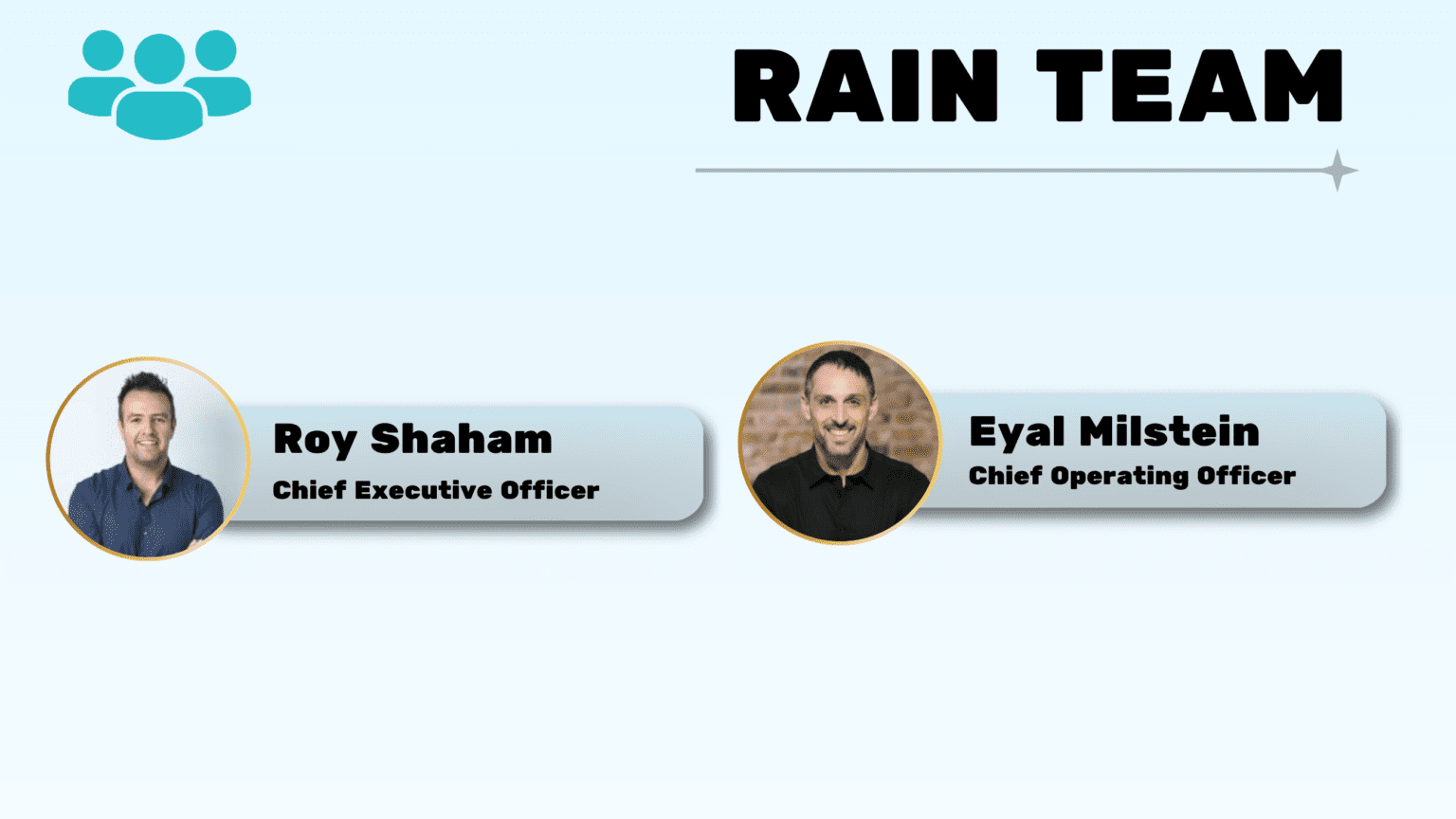
Rain Protocol is built by a low-profile team. Roy Shaham leads as CEO and Eyal Milstein as COO. The technical direction comes from engineers, including Muhammad Wasif on core infrastructure. The focus is clearly on product delivery rather than public visibility.
This creates a mixed signal. The team has shipped working systems, including smart contracts and an AI-based oracle layer. That shows technical capability. At the same time, limited public track records make it harder to assess execution under pressure. There is no strong history of scaling large crypto platforms.
The structure leans toward decentralization. Development is supported through contributors and grants. Governance is expected to move to the Rain DAO. Until then, the foundation handles operations. This reduces central control, but also means accountability is more distributed.
The backer profile is unusual. Enlivex Therapeutics, a Nasdaq-listed company, has allocated capital into $RAIN. This suggests real interest in prediction market infrastructure. Still, one corporate participant does not validate long-term success. It adds signal, not certainty.
There is no dominant crypto VC involved. The project did not raise large early rounds. This avoids heavy investor influence but also limits external support and network effects that VCs often bring.
From an investment perspective, the setup is balanced but not fully de-risked. The team has delivered so far, but visibility is limited. Backing is selective, not broad.
The key variable is execution. If development continues at the same pace, the model holds. If it slows, there is no strong brand or investor network to fall back on.
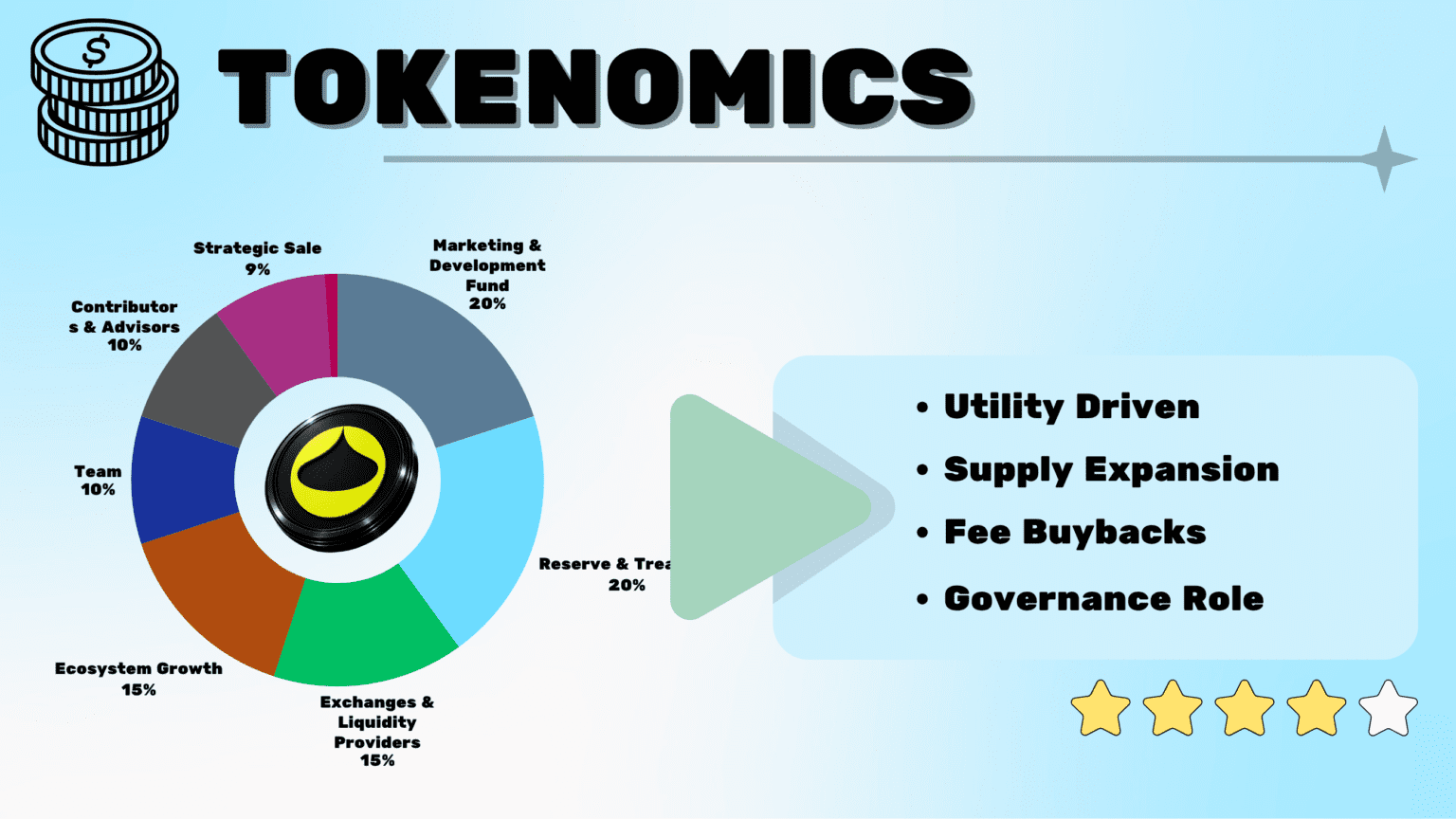
The $RAIN token sits at the center of the Rain Protocol ecosystem. It acts as both the governance asset and the economic coordination layer that aligns market creators, liquidity providers, resolvers, and users with the long-term growth of the protocol.
Rain Protocol’s tokenomics are built on real trading activity, not artificial emissions. The maximum supply is capped at 1.14T RAIN, with around 478.35 billion in circulation as of mid-April 2026, or roughly 41.6 percent. The remaining supply is locked or reserved for future distribution. This gap matters. Supply is still expanding through unlocks, which creates pressure, but demand is directly tied to platform usage.
In simple terms, $RAIN is designed to capture the value generated by the prediction market ecosystem while giving holders a role in governance once the Rain DAO is fully active.
The difference between total supply and maximum supply comes from protocol-level adjustments, token burns through fees, and reserved allocations.
Genesis supply entered the market through launchpad distribution and liquidity provisioning. Team and strategic allocations follow structured vesting schedules. A key unlock on April 10, 2026 released around 9.48 billion tokens, adding close to 2 percent to circulating supply. This created short-term pressure, but it did not break the overall model.
The main differentiator is the buyback and burn mechanism. Every market applies a 5 percent fee on trading volume. Half is distributed to creators, liquidity providers, and resolvers. The remaining 2.5 percent is used to buy $RAIN from the open market and burn it permanently.
This flips the typical DeFi model. Instead of increasing supply to reward users, Rain reduces supply through usage. Around 90 million tokens have already been burned. On higher volume days, this creates visible deflationary pressure.
From an investment perspective, this is the strongest part of the system. It creates a direct link between platform activity and token demand.
At the same time, risk remains. Around 58 percent of supply is still locked or reserved. Future unlocks and ecosystem incentives will continue to introduce new tokens into circulation. This overhang cannot be ignored.
Still, compared to most DeFi projects, Rain stands out. Usage drives fees. Fees drive buybacks. Buybacks reduce supply. That loop is simple and effective. The only real question is scale.
Rain Protocol removes a major risk seen in centralized platforms. You keep custody. Funds stay in your wallet until you trade. All activity runs on-chain on Arbitrum, so market creation, trades, and outcomes are fully transparent and verifiable.
The protocol has undergone audits. Hacken completed a token audit in 2025, followed by a public smart contract audit contest. No critical vulnerabilities were found. The code is open, which allows ongoing review.
Resolution uses a hybrid AI system. Multiple agents verify data before an AI decision is made. This keeps settlement fast. If disputes arise, the system escalates to human arbiters. This balance improves speed, but edge cases still carry risk if data inputs are flawed.
Liquidity risk remains. Smaller markets can be easier to influence, which is typical for AMM systems. Private markets reduce this risk by limiting access. Shared liquidity pools and stablecoin settlement improve stability but do not remove manipulation risk entirely.
There have been no major exploits or fund losses so far. That clean record is a positive signal. External risks still apply. Arbitrum could face network issues. Regulation around prediction markets may limit access in some regions. Rain reduces exposure by acting as infrastructure, but it cannot avoid these risks fully.
From an investment view, the safety profile is strong for DeFi. You avoid custody risk and gain transparency. The main risks come from market conditions, liquidity, and AI-based resolution in rare cases. Rain is not risk-free, but it is structurally safer than most on-chain applications.
Rain and Polymarket target the same market but use very different models. Polymarket dominates current volume with deep liquidity and smooth execution. It works well for retail traders. But it is a closed platform. Builders cannot create custom or private markets, and resolution can slow during disputes.
Rain focuses on infrastructure. It provides SDKs and smart contracts so anyone can launch their own prediction platform. Markets can be public or private. This opens use cases for DAOs, funds, and teams. Resolution is faster through AI with human fallback. Fees are higher at five percent, but part of it funds buybacks and burns, creating stronger long-term incentives.
Kalshi sits on the regulated side. It offers trust and compliance but limits flexibility and access. Other on-chain protocols like Azuro and Augur lack strong builder tools and still operate as isolated apps.
The difference shows in real use. Polymarket is best for trading existing markets. Rain is built for creating new ones.
From an investment view, Polymarket leads today. Rain targets future growth through builder adoption. It carries more risk but also more upside if the infrastructure model scales.
The bull case for Rain Protocol is tied to its infrastructure model. It does not rely on one platform to drive volume. It allows others to build their own markets. This expands the addressable use case beyond retail trading. Private markets already support internal forecasting for teams and DAOs.
The AI-based resolution system improves speed. Most markets settle quickly without manual delays. This makes the product usable in real-time scenarios. The fee model also stands out. A portion of every trade goes to buybacks and burns. Around 90 million tokens have already been removed from supply. This creates a direct link between usage and scarcity.
There is also early external validation. Enlivex has allocated treasury capital into $RAIN. This shows some level of institutional interest. Shared liquidity and custom token support reduce friction for new builders. If adoption grows, the model can scale through network effects rather than relying on a single app.
The bear case is more straightforward. Adoption is still early. TVL and trading volume remain small compared to competitors like Polymarket. Liquidity in many markets is thin. This increases the risk of price manipulation and poor execution.
Token supply is another concern. Only about 41 percent is circulating. Future unlocks will continue to add pressure. A recent unlock already showed how quickly sentiment can shift.
The AI oracle system is not fully battle-tested. It works well in standard conditions but may face issues in complex or disputed events. Regulatory risk also remains. Some regions may restrict prediction markets, which can limit growth.
From an investment perspective, the setup is asymmetric but uncertain. The model works if builder adoption scales. If it does not, the token relies on limited activity while supply expands. The strength is in design. The risk is in execution.
$RAIN works best for users who are active in the ecosystem. If you create markets, provide liquidity, or resolve outcomes, you earn a share of fees. A portion of every trade also goes to buybacks and burns. This creates a direct link between your activity and token value. Once governance and staking are fully active, this alignment may improve further.
For passive investors, the setup is less attractive. A large part of the supply is still locked. Future unlocks will continue to add selling pressure. The burn mechanism helps, but only if trading volume grows consistently. At current scale, this balance is not fully proven.
There is also external risk. Prediction markets face regulatory uncertainty. Access and growth may vary across regions. This adds volatility that long-term holders need to factor in.
From an investment perspective, $RAIN is not a broad exposure play. It is tied closely to platform usage. If adoption grows through builders and private markets, the model works. If activity stays limited, the token struggles under supply expansion.
The comparison is simple. This behaves more like a utility asset than a passive investment. Value comes from participation, not just holding.
Verdict: Consider buying $RAIN if you plan to use the protocol or build on it. In that case, the incentives are clear and measurable. Avoid if you are looking for a passive hold or short-term trade based on hype. The current structure does not strongly support that approach.
This is not financial advice.
Rain Protocol takes a different approach. It does not focus on building a single platform. It focuses on enabling others to build. The SDK, smart contracts, and AI oracle system target real limitations in prediction markets. Customization, private access, and slow resolution are clear problems. Rain addresses them directly.
The core product works. Private markets are already usable for teams and DAOs. Resolution is faster than most oracle systems. The fee model connects usage with token demand through buybacks and burns. There is also early external interest, which adds some validation to the infrastructure thesis.
At the same time, the project is still early. TVL and volume are low compared to established platforms. Liquidity is not deep yet. Token unlocks continue to add pressure. Regulatory risk around prediction markets remains unresolved.
The key question is adoption. The model depends on builders. If developers launch and scale their own markets, the network effect becomes real. If that does not happen, the design alone will not drive value.
From an investment perspective, Rain is not a short-term play. It is a bet on infrastructure adoption. The upside is tied to long-term usage growth. The downside comes from slow traction and ongoing dilution.
Verdict: Rain has a strong structural idea and a working product. It is one of the more serious attempts at building prediction market infrastructure. It is not yet proven at scale. If builder adoption increases, Rain can become a core layer in this sector. If not, it remains a niche protocol with limited impact.


Rain Protocol Review: Is $RAIN Worth Buying? Tokenomics, Risks & Verdict
Zama Review
Lighter ($LIT) Review: zk-Powered DEX on Ethereum
Hyperliquid Review 2026: Is HYPE Worth Buying? Fees, Risks & Verdict
Rain Protocol Review: Is $RAIN Worth Buying? Tokenomics, Risks & Verdict
Zama Review
Lighter ($LIT) Review: zk-Powered DEX on Ethereum
Hyperliquid Review 2026: Is HYPE Worth Buying? Fees, Risks & Verdict


