
Author: Sahil Thakur
High attention and emotional sentiment detected.
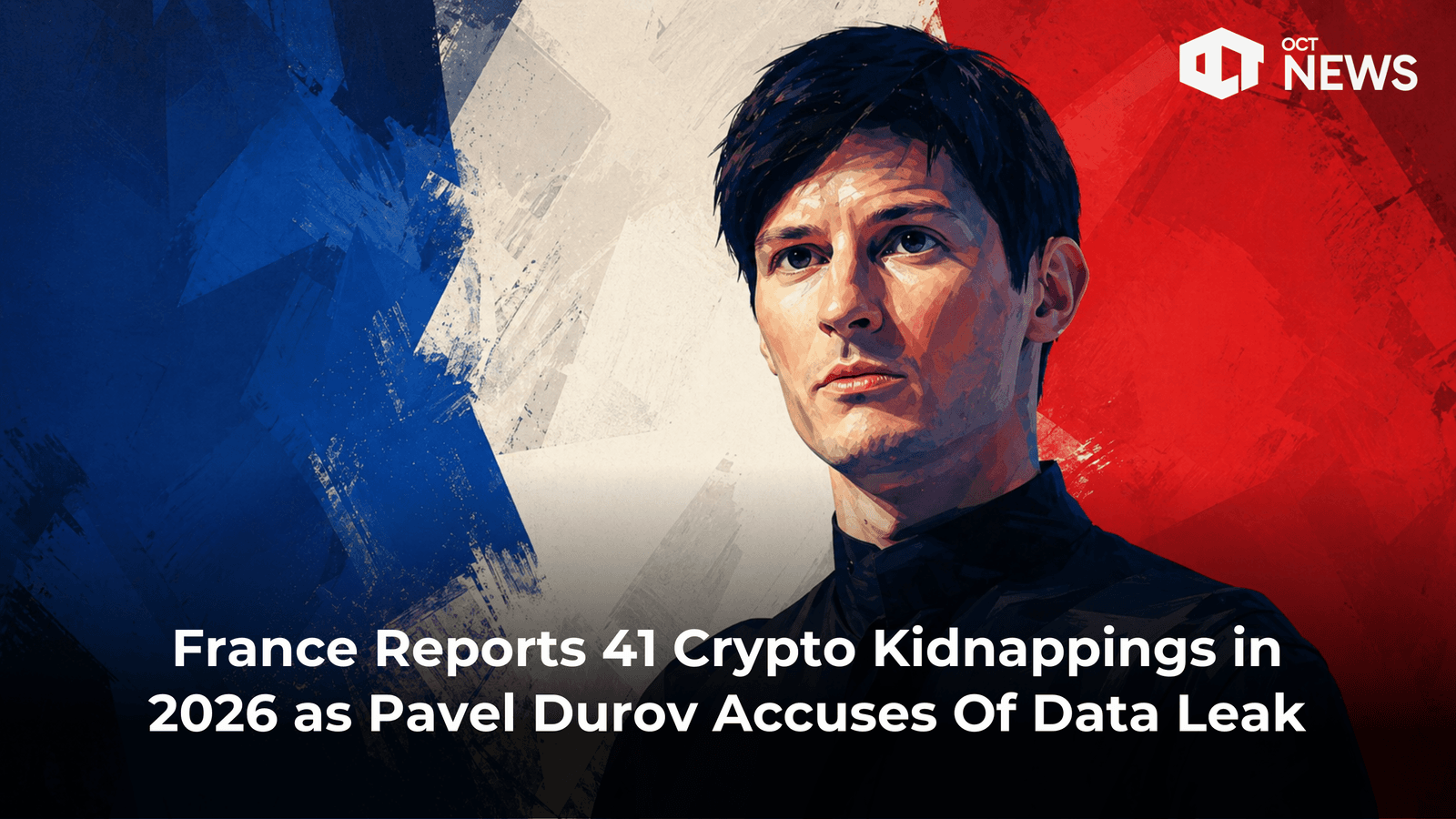
25th April 2026 – France has recorded at least 41 crypto-related kidnappings since the start of 2026, according to figures confirmed by the Interior Ministry. That averages one attack every 2.5 days.
High Signal Summary For A Quick Glance

That Martini Guy ₿
@MartiniGuyYT

💥JUST IN TELEGRAM FOUNDER PAVEL DUROV SAYS FRENCH TAX OFFICIALS ARE SELLING CRYPTO OWNERS' DATA THERE HAVE BEEN 41 KIDNAPPINGS OF CRYPTO HOLDERS IN FRANCE IN 2026 https://t.co/yBesxakedA

10:00 PM·Apr 24, 2026

Mario Nawfal
@MarioNawfal
🇫🇷 A French tax official was arrested for selling crypto investors' home addresses and financial records to criminal networks. 41 kidnappings followed. One every 2.5 days since January 2026. The criminals didn't need to hack anything. They bought a list from someone inside the https://t.co/nk5jYWsY7g

08:22 PM·Apr 24, 2026

Seb
@seblatombe
🔴 La France devient le 2ᵉ pays le plus piraté au monde en 2026 : un constat cinglant alors que l’Europe s’apprête à imposer le scan généralisé des identités. 👉 Plus de 300 services français touchés 👉 23 millions de comptes compromis 👉 Plus de 250 millions de données https://t.co/GRn5mFgfi7

02:58 PM·Apr 24, 2026
The cases involve home invasions, abductions, and physical violence aimed at forcing victims to transfer cryptocurrency. French authorities say the surge is tied to leaked personal data, organized crime networks, and the irreversible nature of crypto transactions.
The figure, confirmed by the Interior Ministry’s Sirasco unit around mid-April 2026, marks a sharp escalation. France reported roughly 30 such cases in all of 2025, up from just a handful in 2024. Globally, so-called “wrench attacks” rose 75% in 2025, with 72 verified cases tracked by security researcher Jameson Lopp. France led that global count.
Criminals identify targets through leaked databases, social media profiles, and public appearances at crypto events. Once they locate a holder, they use surveillance, home invasions, or kidnapping to force crypto transfers.
Ransoms are typically demanded in cryptocurrency. Attackers then convert the funds to stablecoins and move them across chains to launder the proceeds, according to CoinDesk reporting. In some cases, threats extend to family members, including children.
French officials say masterminds are often based abroad. Local accomplices, sometimes teenagers recruited through social media, receive target information at the last minute. This pattern makes the networks difficult to dismantle.
In April 2026, four attackers stormed a crypto entrepreneur’s home in Burgundy and demanded 400,000 euros. When the family’s crypto holdings turned out to be in a time-locked wallet, the attackers kidnapped the man’s wife and 11-year-old son.
GIGN counter-terrorism officers tracked the hostages to a hotel room in Val-de-Marne. They freed both unharmed and arrested at least four suspects, according to Decrypt. The father did not pay the ransom.
Separately in April, five suspects in Anglet targeted the wrong person entirely while hunting a crypto investor. In February, a magistrate and her mother were held for roughly 30 hours in a plot linked to the magistrate’s partner’s crypto investments, as CNN reported.
In March, armed intruders impersonating police officers forced a French couple in their late 50s to transfer $820,000 in crypto, according to The Block. Earlier high-profile cases include the January 2025 kidnapping of Ledger co-founder David Balland, where attackers severed his finger as pressure.
Multiple data breaches have given criminals a roadmap to French crypto holders. In January 2026, crypto tax platform Waltio confirmed a breach affecting roughly 50,000 users. The hacking group Shiny Hunters obtained email addresses and summarized tax filing data, according to DL News.
Waltio CEO Pierre Morizot said the company received an extortion demand on January 21. A government security bulletin warned that the breach could lead to impersonation by fake officers and kidnapping attempts.
Separately, a French tax administration employee named Ghalia C. was detained on June 30, 2025, for allegedly selling confidential data on crypto investors to criminal networks. According to IMI Daily, she exploited internal tax software called Mira to access addresses and financial records.
The Paris Court of Appeal rejected her release request in January 2026. She faces charges of criminal conspiracy and complicity in violence. One linked incident was a September 2024 assault on a prison guard whose address she allegedly provided.
Telegram founder Pavel Durov weighed in on April 24, 2026. In a post on X, he directly linked the 41 France crypto kidnappings to tax officials selling data and massive database leaks.
“French tax officials selling crypto owners’ data to criminals (Ghalia C.) + massive tax database leaks,” Durov wrote. He also referenced a separate breach at France Titres, the government database for passports and national IDs, which he said could affect roughly 19 million people.
Durov used the crisis to argue against expanding government data collection. He warned that more centralized data means more leaks and more victims. Cointelegraph reported that Durov also suggested Telegram could exit France over concerns about state access to private data.
French authorities have not publicly confirmed Durov’s specific claim that tax officials are actively selling data in connection with the 2026 cases. Durov also has an ongoing dispute with French regulators, which may influence his framing.
The French government has acknowledged the crisis. At Paris Blockchain Week on April 16, Minister Delegate Jean-Didier Berger announced new measures in coordination with Interior Minister Laurent Nuñez.
The response includes heightened security for crypto events, including police escorts. Authorities also launched a prevention platform that has already received thousands of sign-ups, according to France24.
A more comprehensive protective strategy is expected in the coming weeks. Berger acknowledged that the scale and speed of the attacks have outpaced earlier enforcement efforts.
Several factors make France uniquely vulnerable to crypto wrench attacks. The country has a large and publicly visible crypto community, with major events like Paris Blockchain Week drawing global attention.
France’s mandatory crypto tax reporting creates centralized databases that, when compromised, give criminals precise targeting data. The Waltio breach and the Ghalia C. case both illustrate how tax-related data flows directly into criminal hands.
Rising crypto prices increase the potential payoff for attackers. At the same time, improving digital wallet security pushes criminals away from hacking and toward physical coercion. Security experts at TRM Labs have described this shift as moving from “find a wallet” to “hunt a person.”
Reported issues with low conviction rates for earlier cases may have also emboldened new attackers. France accounted for roughly 26% of all verified global wrench attacks in 2025, according to data compiled by Jameson Lopp.
Security researchers recommend several precautions for crypto holders. Multisig wallets require multiple approvals for transactions, so forced transfers become harder. Time-locked wallets, like the one in the Burgundy case, add a delay that gives authorities time to respond.
Withdrawal limits and spending caps can reduce the amount an attacker can extract in a single session. Experts also stress that tying real-world identity to visible crypto wealth is the single biggest risk factor.
Keeping a low profile online, avoiding public discussions of holdings, and using privacy-focused tools are now standard recommendations. For anyone attending crypto events in France, heightened personal security awareness is critical.
This is not financial advice. Crypto holders should consult security professionals for personalized risk assessment.
Our Crypto Talk is committed to unbiased, transparent, and true reporting to the best of our knowledge. This news article aims to provide accurate information in a timely manner. However, we advise the readers to verify facts independently and consult a professional before making any decisions based on the content since our sources could be wrong too. Check our Terms and conditions for more info.


France Reports 41 Crypto Kidnappings in 2026 as Pavel Durov Accuses Of Data Leak
AWS Marketplace Adds Chainlink Data Standard for Developers
Binance Launched Keyless Agentic Wallet for AI-Powered Crypto Trading
Paul Sztorc Announces eCash Bitcoin Hard Fork for August 2026
France Reports 41 Crypto Kidnappings in 2026 as Pavel Durov Accuses Of Data Leak
AWS Marketplace Adds Chainlink Data Standard for Developers
Binance Launched Keyless Agentic Wallet for AI-Powered Crypto Trading
Paul Sztorc Announces eCash Bitcoin Hard Fork for August 2026