Deep Dive
Why Privacy Altcoins Survived 2026 Bear Market?
How Privacy Coins Dominated 2026


How Privacy Coins Dominated 2026
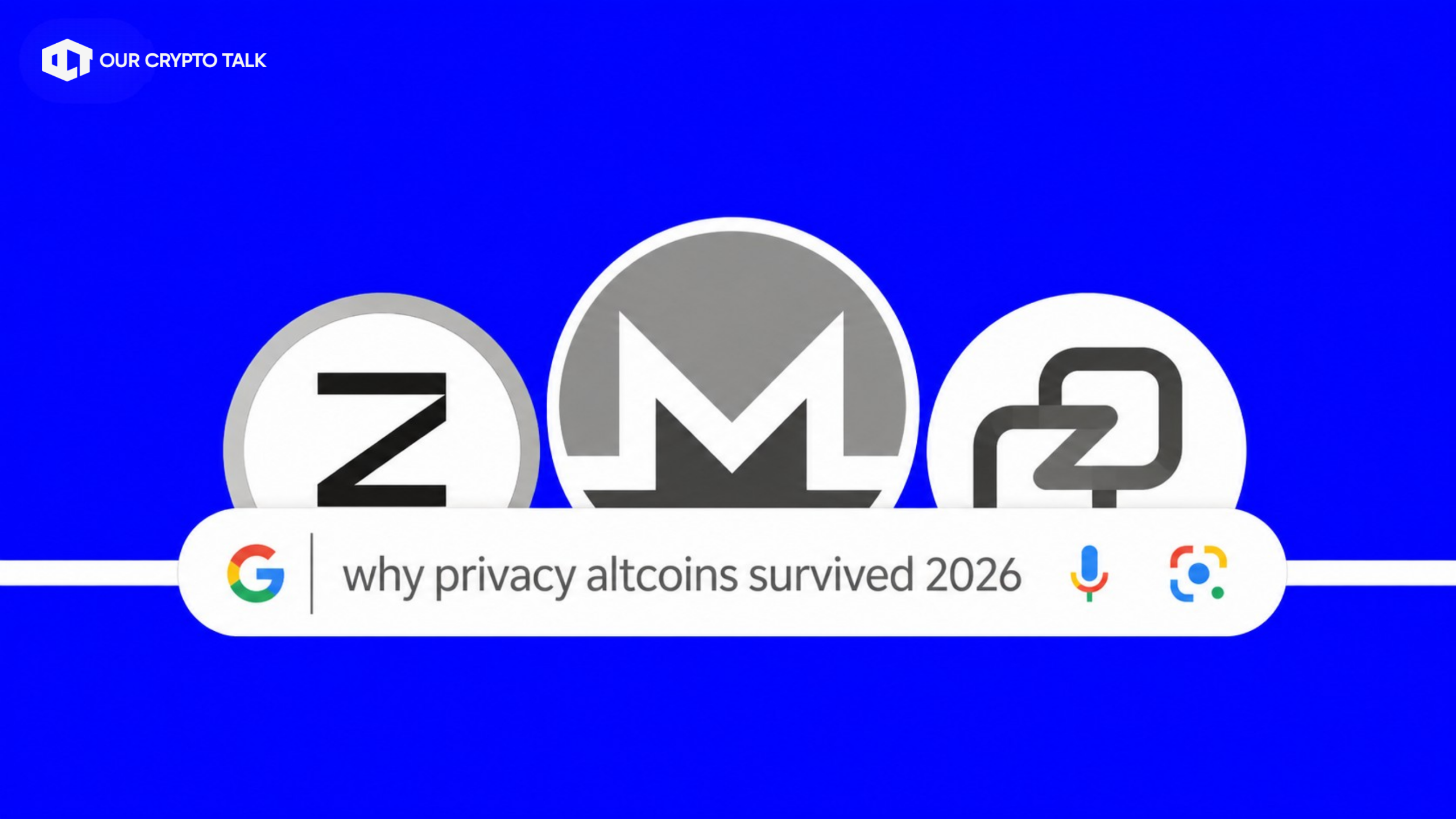
The framing that defined 2026 in crypto circles was simple and correct: it was a bear market for beta and a bull market for theses. And the thesis that worked hardest was privacy.
While Bitcoin and Ethereum spent 2026 under sustained pressure from macro tightening, ETF-driven liquidity dynamics, and broader risk-off sentiment, privacy coins were doing something different. They were going up. Not because of hype or a new token launch. Because the thing they offer, financial confidentiality in a world of expanding surveillance, became more valuable every single month of 2026.
Analysts who tracked the sector described the dynamic as a counter-cyclical rotation. When risk appetite compresses and the speculative premium evaporates from most altcoins, capital searches for assets with asymmetric utility. Privacy coins have utility that does not depend on a bull market. People need financial privacy during a downturn arguably more than during a boom. Capital controls tighten. Wealth tax discussions intensify. Governments move more aggressively on asset tracking. The worse the macro environment, the stronger the case for the product.
The EU DAC8 directive, effective January 1, 2026, made the argument in regulatory form. DAC8 mandates automatic crypto tax reporting and information exchange across all EU member states. Every transaction on a public chain like Bitcoin or Ethereum became, by law, a potential data point in a cross- border tax enforcement system. Chain-analysis firms expanded their capabilities concurrently, rendering public-chain transactions effectively transparent to any government with the budget to pay for the tools.
This is the paradox that drove the 2026 privacy trade. The regulations designed to make crypto more compliant and transparent did not eliminate demand for financial privacy. They created it at scale. Users who had no previous interest in privacy coins started asking what they could use to maintain some financial sovereignty. The answer was Monero, Zcash, and an emerging category of programmable confidentiality tools.
This is not a cypherpunk story anymore. A16z framed privacy as crypto's next competitive moat, describing it as the infrastructure layer of the post-programmability era. Multicoin Capital entered ZEC publicly. Grayscale filed for a spot ETF. These are not ideological actors. They are capital allocators following returns and structural demand. When institutions start buying privacy coins, the narrative has cleared its most important legitimacy test. And they started buying in 2026.
In 2026, transparent ledgers became a liability. DAC8 made every Bitcoin transaction a tax data point. AI chain analysis made every Ethereum transfer traceable. The people buying privacy coins were not criminals. They were anyone who read the news.
There is a difference between a narrative and a structural trade. A narrative is something people say. A structural trade is something people pay for. Privacy in 2026 was structural. Here are the five reasons why.
DRIVER 1 - SURVEILLANCE EXPANSION. Chain analysis firms expanded their capabilities faster than public-chain privacy advocates could respond. Bitcoin and Ethereum transactions, once considered pseudonymous, became de facto transparent for any party willing to pay for commercial blockchain analytics. The anonymity set on a public chain is effectively zero once you have connected your wallet to any KYC'd exchange. That realization drove users toward protocol-level privacy that could not be undone by a subpoena to an analytics company.
DRIVER 2 - REGULATORY REPORTING MANDATES. EU DAC8 (January 1, 2026), MiCA frameworks, and similar rules globally increased the transparency requirements on centralized platforms. Simultaneously, these regulations drove delistings of fully anonymous assets from licensed exchanges. The paradox: by making public chains more regulated and transparent, these rules pushed privacy-seeking users toward the protocols they could not regulate. The harder regulators pressed on visible chains, the more valuable invisible chains became.
DRIVER 3 - WEALTH TAX AND SEIZURE FEAR. Netherlands floated an unrealized gains wealth tax proposal. California explored similar measures. Political rhetoric around asset seizure intensified in multiple jurisdictions. For anyone holding significant crypto wealth on a transparent chain, these discussions were not abstract. They were a direct argument for moving assets into a form that cannot be trivially identified, valued, and taxed by an automated government system. Zcash's hybrid model became specifically appealing here: you can disclose selectively, which is more defensible than refusing to disclose at all.
DRIVER 4 - INSTITUTIONAL INFRASTRUCTURE MATURATION. Zero-knowledge proofs evolved from academic curiosity to production infrastructure. Shielded pools grew. FHE became practically deployable for the first time at scale (Zama's core contribution). The technology required to build institutional-grade privacy products existed in 2026 in a way it simply did not in 2020 or 2022. When the technology catches up to the demand, you get adoption.
DRIVER 5 - CAPITAL ROTATION AND NARRATIVE CONCENTRATION. In a market that punished most altcoin beta, capital concentrated into the themes with the clearest utility arguments. Privacy and AI were the two themes that held institutional attention throughout 2026. When capital concentration meets a small sector with thin supply, the price response is non-linear. ZEC's 14x from 2025 lows was not just fundamentals. It was fundamentals plus a small float plus Multicoin's public disclosure in February triggering short squeezes. The structural case was real. The price move was amplified by the mechanics of how narrative momentum works in thin markets.
Zcash is not the privacy coin most privacy maximalists would design. Optional privacy, transparent pools, institutional-friendly compliance features. Those compromises are exactly why it outperformed everything else in the privacy sector in 2026.
The ZEC thesis is built on one insight that most privacy coin advocates miss. The market for mandatory, fully anonymous transactions is not the largest privacy market. The largest privacy market is institutions, wealthy individuals, and compliance-aware retail users who want the option of privacy but cannot use it if it comes with regulatory non-compliance. Zcash's zk-SNARK shielded transactions are optional. You can transact transparently or privately depending on the situation. That optionality is not a weakness. It is the feature that makes ZEC institutionally usable.
The shielded supply data tells you how the market responded to the 2026 surveillance environment. Historically roughly 8% of ZEC supply was held in shielded form. By 2026, that figure rose toward 30%, with peaks in some reports near 59%, as wallets defaulted to privacy mode and users sought larger anonymity sets. When nearly 60% of a coin's supply moves into its most private mode simultaneously, that is not speculation. That is users using the product for its core purpose.
The two institutional signals that defined the ZEC trade. First, Multicoin Capital publicly disclosed a significant ZEC position in February 2026, framing it explicitly as a hedge against wealth seizure and government surveillance. That disclosure triggered short squeezes and momentum buying. Second, Grayscale filed to convert its Zcash Trust into a spot ZEC ETF, making it the first privacy-coin ETF attempt in history. Both signals crossed a legitimacy threshold that most privacy coins had never reached.
The risk events were real and worth being direct about. Early-2026 Electric Coin Company resignations and governance friction caused sharp drops and capital rotation out of ZEC and into Monero. A critical Orchard-pool vulnerability disclosed in June 2026 triggered a roughly 50% crash. This was not leverage-driven. It was a spot-led correction from users who understood that a privacy coin with a broken privacy mechanism has lost its core value proposition. Patching and sentiment recovery followed, but the June event is a permanent reminder of the technical risk profile of this sector.
Despite the volatility, the net picture is that ZEC is the most institutionally accessible privacy coin in existence. Transparent pools enable auditability. Optional shielding enables compliance selectivity. The Ironwood upgrade aims to improve supply verification post-vulnerability. For an institution that wants privacy exposure without the full regulatory risk of Monero, ZEC is the only product that currently fits. That is why Grayscale filed for the ETF and Multicoin built the position. Not because it is the most private. Because it is the most compliant while still being private enough.
Monero is the privacy coin that refuses to compromise. Mandatory privacy for everyone. No transparent option. No selective disclosure. And in early 2026 it hit a new all-time high for the first time since 2018.
XMR uses ring signatures, stealth addresses, and RingCT to make every transaction private by default. You cannot opt into transparency. Every sender, receiver, and amount is hidden for every transaction. That design makes it maximally private and maximally difficult for institutions to use. No selective disclosure means no compliance path for regulated entities. Monero has accepted that trade-off explicitly and built its entire value proposition around it.
The ATH near $799 in early 2026 was partly driven by capital rotation out of ZEC when Zcash faced governance turbulence. When ZEC's Electric Coin Company had internal problems, money moved somewhere. It moved to XMR, which has no company, no foundation that can resign, and no governance structure that can fracture. Monero is maintained by a distributed contributor base with no central point of failure. For users who want the maximum available privacy with minimum organizational risk, that structure is a feature, not a limitation.
The FCMP++ upgrade is the most technically significant development in Monero's history. Currently, Monero uses ring signatures with roughly 16 decoys per transaction to obscure which output is actually being spent. FCMP++ replaces this with Full-Chain Membership Proofs that cover the entire unspent output set of more than 150 million outputs. The anonymity set goes from 16 to 150 million plus in a single upgrade. The beta stressnet launched in May 2026. Audits and mainnet progression continued into later months.
The regulatory delisting pressure on Monero is real and ongoing. Multiple major exchanges have removed XMR rather than deal with the compliance complexity of a fully anonymous asset. Kraken removed it for UK users in 2021. OKX followed. The exchanges that still list it face increasing regulatory questions. This creates a structural disadvantage in exchange-based price discovery versus Zcash. But it also creates a supply dynamic: fewer on-ramps means tighter available supply at major venues, which amplifies price moves when demand spikes.
The demand for Monero is not speculative. It comes from users who need a medium of exchange that is genuinely untrackable. That demand does not disappear in a bear market. It may actually increase when economic pressure makes financial privacy more urgent. On-chain metrics including transaction counts and hash rate held firmer than price during 2026 weakness, signaling genuine utility rather than pure speculation. When the FCMP++ upgrade reaches mainnet, Monero becomes the hardest to trace digital cash system that has ever existed. That is a product statement worth understanding before dismissing XMR as exchange-hostile.

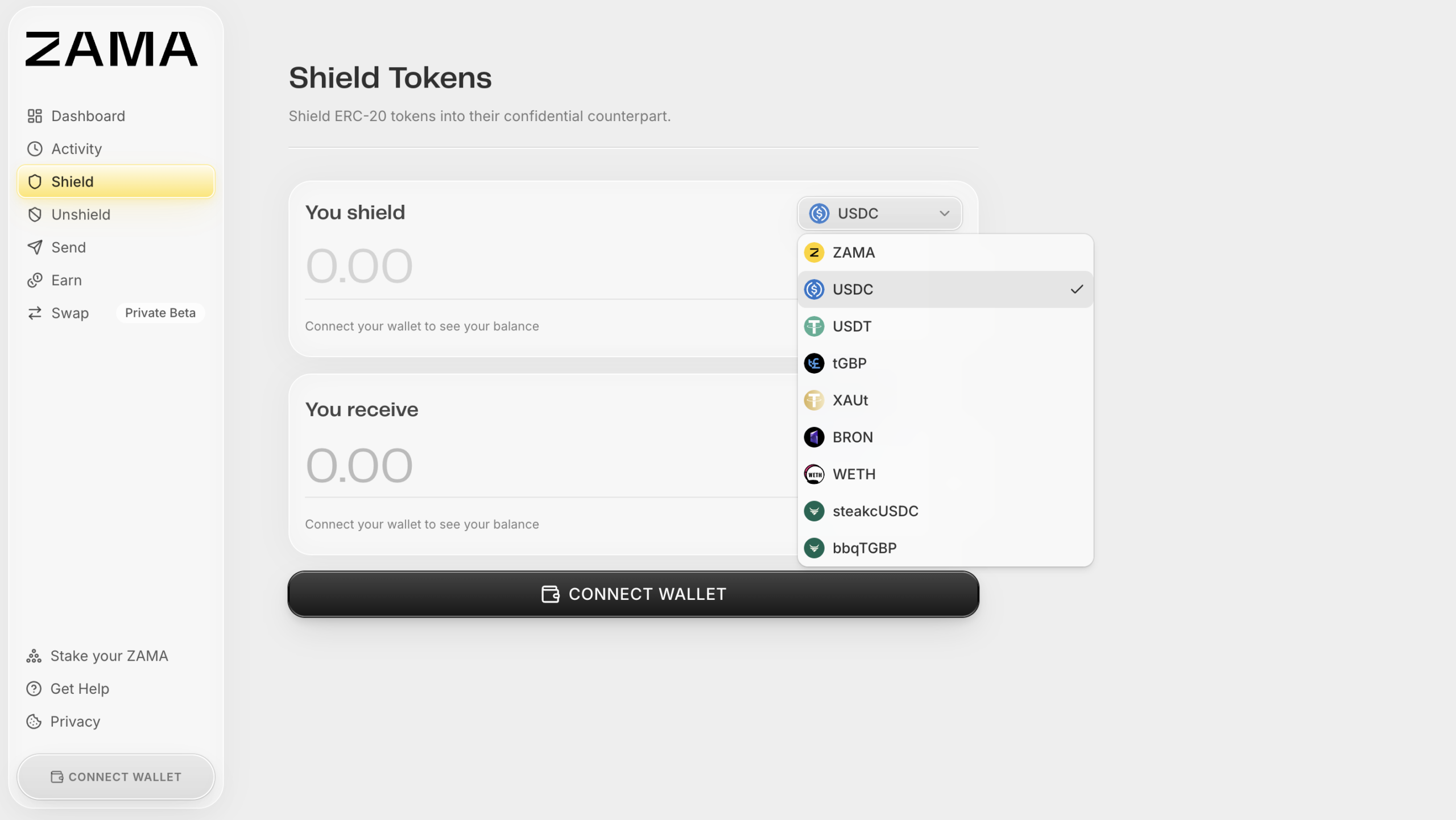
Zama is not a privacy coin in any traditional sense. It does not process your payments privately. It makes every smart contract on Ethereum capable of handling encrypted data without ever decrypting it. That is a fundamentally different and more powerful idea.
Fully Homomorphic Encryption allows computations to be performed on encrypted data without decrypting it first. The output is also encrypted. Only the data owner can decrypt the result. Applied to smart contracts, this means you can have a lending protocol where collateral amounts are never visible on-chain. A DeFi vault where position sizes remain private. A RWA settlement where counterparty identities stay confidential. The entire public-chain transparency problem is solved at the application layer without requiring a separate privacy chain.
The $ZAMA token launched via sealed-bid auction in early 2026 around February. The burn-and-mint model funds fees and staking. Governance participation comes with token holding. The listing on Revolut, reaching its 70 million plus user base, is an unusually strong distribution signal for a newly launched technical infrastructure token. Partnership with Morpho for confidential yield vaults and with Elliptic for risk screening demonstrates that the institutional side of the market is paying attention.
Zama's market cap reached the $100 million range with strong percentage gains from launch lows. The TokenOps acquisition strengthened its operational and developer tooling infrastructure. Confidential RFQ launches extended the privacy layer into trading workflows. The core product direction is clear: FHE as the foundation for programmable confidentiality on existing public chains, specifically Ethereum and expanding to other EVMs and Solana.
The reason Zama fits the 2026 privacy narrative is that it addresses the problem institutions actually face. The question is not whether you can use Monero to pay someone privately. The question is whether a bank can participate in a DeFi yield vault without publishing its position size on-chain for every competitor to see. Zama answers that question in a way that ZEC and XMR structurally cannot.
The principal risk is throughput scaling. FHE computations are significantly more expensive than standard cryptographic operations. Zama's roadmap targets a shift from CPU to GPU acceleration to close that gap. Until that gap closes, the applications that can be built on Zama are constrained by practical throughput limits. Competition from other ZK and FHE projects is real. But Zama's first-mover advantage in production-deployed confidential smart contracts on Ethereum is a meaningful technical and partnership moat.
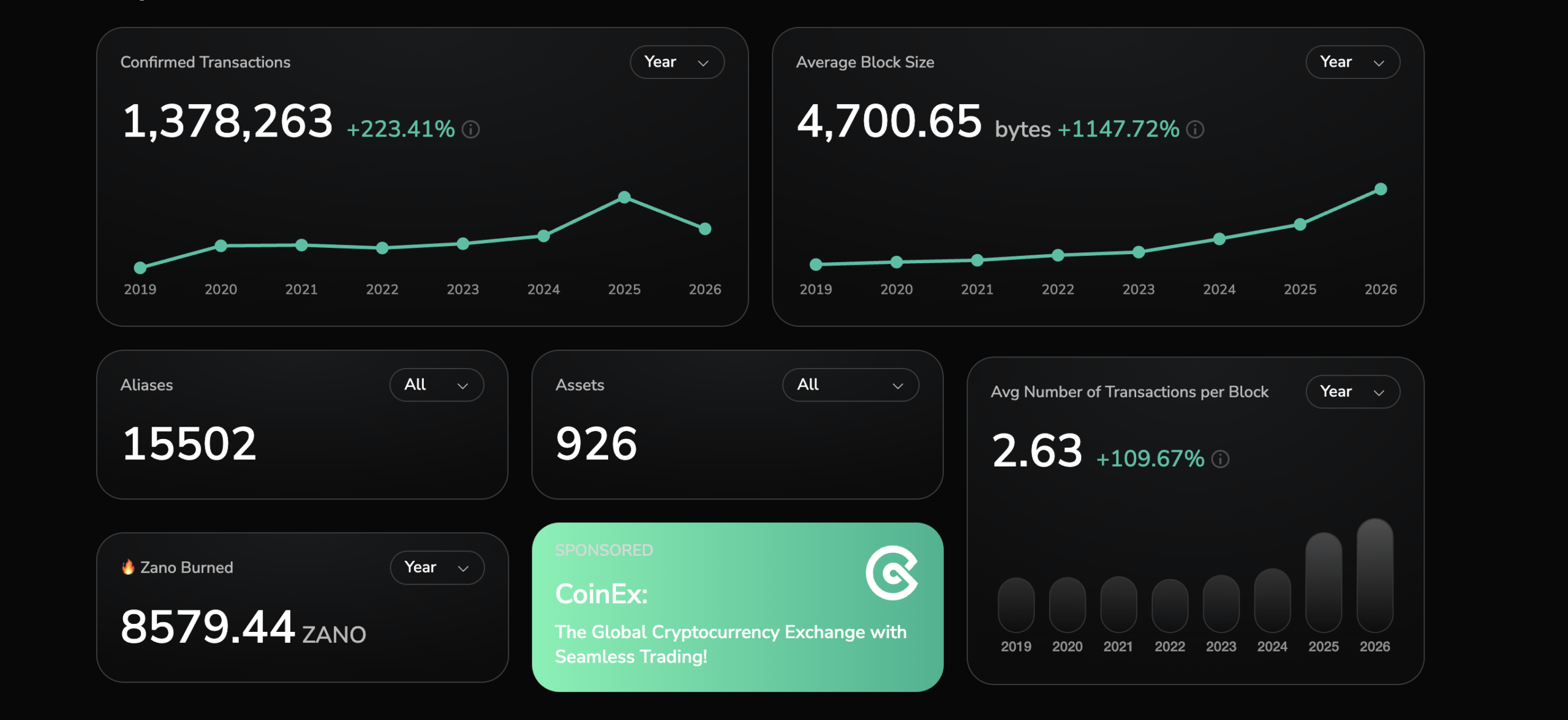
Zano made a bet that most privacy projects avoid: build a full Layer 1 with default privacy for every transaction, then spend years building the bridges that connect it to everywhere else. Hard Fork 6 is where that bet starts to pay off.
Zano is a privacy-by-default Layer 1. Every transaction on Zano is confidential: sender, receiver, and amount are hidden for every user without configuration. It also supports Confidential Assets, meaning any asset issued on Zano inherits the full privacy of the base layer. Token issuers do not need to design their own privacy features. The network provides them automatically.
The Freedom Dollar (fUSD) is the most practically significant product built on Zano. A private stablecoin with audited reserves that exceeded $10 million. A stablecoin that defaults to privacy is not a niche product. In the context of DAC8 reporting requirements and AI-driven chain analysis of public stablecoins like USDC and USDT, a private stablecoin solves a problem that is getting more important every quarter.
Hard Fork 6, targeted for late August 2026, is the upgrade that transforms Zano from an isolated privacy chain into an interoperable privacy layer. Gateway Addresses allow exchanges and DEXs to integrate Zano without breaking the underlying user privacy model. Bridgeless two-way bridging to Ethereum, Solana, and TON removes the need for a centralized bridge, which has historically been the attack vector that breaks privacy in cross-chain transactions.
The market cap range of $100 to $180 million positions Zano as a mid-cap that amplifies sector beta. When privacy narratives move, Zano moves more than ZEC or XMR from percentage terms because it starts from a smaller base. Liquidity is thinner than the majors, which is a practical warning for anyone considering a significant position. But for investors who understand the liquidity constraints and size accordingly, the risk-reward on a specific catalysts like Hard Fork 6 and fUSD adoption is asymmetric.
The Zenith upgrade advances Zano toward a pure Proof-of-Stake design, reducing energy requirements and improving network security economics. The combination of default privacy, a working private stablecoin, cross- chain bridges to the three largest smart contract ecosystems, and an upcoming PoS transition is a meaningful product roadmap for a project at its current market cap. The question is whether the team executes the Hard Fork 6 timeline cleanly. Privacy chain upgrades have a history of delays with outsized market consequences.
VVV is not a payment privacy coin. It is the token of a private AI platform. In 2026, when both privacy and AI were the two strongest crypto narratives simultaneously, owning a token that lived in both categories was a significant structural advantage.
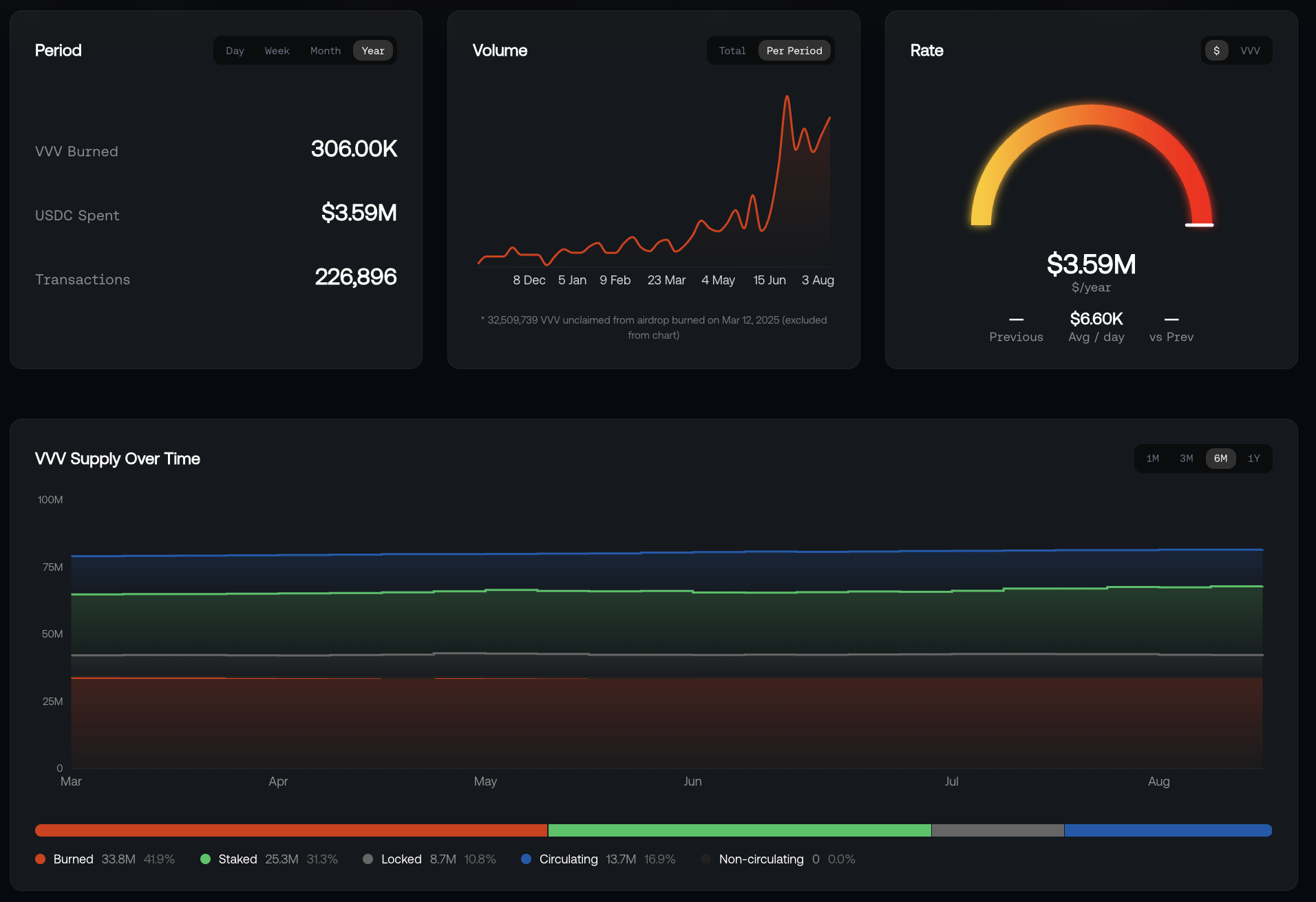
Venice.ai is a generative AI platform that emphasizes on-device or encrypted interactions without data retention. No training on your conversations. No centralized surveillance of your queries. Uncensored outputs without the content filtering that dominates the centralized AI competitors. VVV is the utility token that powers access to this infrastructure. You stake VVV to receive inference capacity and Pro access. Platform revenues fund a buy-and-burn mechanism. The token and the product are directly connected.
The user numbers are what separate VVV from most AI-crypto projects. More than 3.5 million registered users. Trillions of tokens processed monthly. Annualized revenue estimates in the tens of millions and accelerating. A Series A funding round at a unicorn-level valuation. These are real product metrics, not vaporware. In a cycle filled with AI tokens backed by nothing but a white paper and a narrative, VVV had the actual usage data to justify its positioning.
The tokenomics decisions made in 2026 provided structural price support. Emissions were aggressively cut. Approximately $100 million equivalent in unclaimed airdrop portions were burned rather than distributed or retained. The DIEM credit token system created additional utility loops beyond simple staking. These design choices reduced sell pressure while maintaining yield incentives for committed holders. They also sent a clear signal about the team's priority: long-term holder value over short-term distribution.
The ATH near $22 early in the cycle followed by deep drawdowns and recovery to double digits reflects the dual-narrative risk of VVV. When AI sentiment was high, VVV captured AI capital. When privacy sentiment strengthened, VVV captured privacy capital. When both narratives corrected simultaneously, VVV corrected harder than single- narrative plays. The correlation risk of being two narratives at once is that you can absorb two narratives worth of selling pressure in the same correction.
The honest risk statement on VVV: privacy verification for the AI layer is technically difficult to audit externally. The claim of on-device or encrypted inference requires trust in the implementation that is harder to verify than a blockchain-level cryptographic proof. Competition from centralized and decentralized private AI platforms is intensifying. But at 3.5 million users with real revenue acceleration and a tokenomics structure actively reducing supply, VVV is a genuine product story in a category where most are not.
Privacy is not a feature in 2026. It is infrastructure. The question is not whether you want financial privacy. The question is which layer of the stack you buy to get it: the payment layer, the smart contract layer, or the AI inference layer.
ZEC Optional hybrid | XMR Mandatory default | ZAMA / ZANO / VVV Infrastructure / L1 / AI | |
|---|---|---|---|
| Privacy philosophy | Optional: you choose per transaction | Mandatory: no choice, always private | Programmable / default L1 / AI layer |
| What it actually protects | Payments + storage | Payments only | Smart contracts / assets / AI queries |
| 2026 peak performance | ~14x from 2025 lows | ATH ~$799, first since 2018 | ZAMA $100M+, ZANO $100-180M, VVV ATH ~$22 |
| Institutional access | High (selective disclosure) | Low (no compliance path) | ZAMA high, ZANO low, VVV moderate |
| Key 2026 catalyst | Multicoin position + Grayscale ETF filing | FCMP++ beta May 2026, ATH on rotation | Revolut listing (ZAMA), HF6 bridges (ZANO), 3.5M users (VVV) |
| Key 2026 risk event | June Orchard-pool vulnerability - 50% crash | Exchange delistings, institutional access gap | ZANO: liquidity thin. VVV: dual-narrative correction risk |
| Upgrade narrative | Ironwood upgrade (post-bug fix) | FCMP++ - 150M+ anonymity set | ZAMA: GPU throughput scaling. ZANO: PoS (Zenith) |
| Best suited for | Regulated institutions wanting privacy | Users wanting maximum anonymity | Developers / DeFi / AI users needing programmable privacy |
Most people think of privacy coins as one thing. They are not. The 2026 performance data illustrates a sector with three distinct product categories solving three different problems. Understanding the spectrum matters before you allocate.
Layer 1 is pure transaction privacy. This is where Monero lives and where Zcash partially lives in its shielded pool. The problem being solved is: how do you move value from one party to another without creating a permanent public record of that movement? XMR and ZEC answer this at the payment layer. The technology is mature. The trade-offs are well understood. Monero maximizes privacy at the cost of institutional accessibility. Zcash optimizes for institutional accessibility at the cost of mandatory privacy. Both are legitimate answers to the same question.
Layer 2 is programmable confidentiality. This is Zama's territory. The problem being solved is: how do you run complex financial logic on a public blockchain without publishing the inputs and outputs of that logic for everyone to see? DeFi lending, institutional settlement, RWA tokenization, and corporate treasury management all need this capability. ZEC and XMR cannot provide it because they are payment layers, not smart contract platforms. Zama addresses the problem at a fundamentally different level.
Layer 3 is private access to compute. This is VVV's territory, and it is the newest category. The problem being solved is: how do you interact with AI systems without surrendering your query history, preferences, and behavioral patterns to a centralized provider that trains on your data and may share it with third parties? As AI becomes the primary interface layer for most knowledge work, the privacy of your AI interactions becomes as important as the privacy of your financial transactions.
Zano exists at an intersection between Layer 1 and Layer 2. A default- private L1 with Confidential Assets means any token issued on Zano inherits full transaction privacy. The Freedom Dollar (fUSD) is the practical expression of this: a stablecoin that is private by default, not by opt-in. This positions Zano as the infrastructure layer for private finance in a way that neither pure payment coins nor smart contract platforms exactly address.
The investment implication of the spectrum is that diversification across the categories provides different exposure to different parts of the privacy thesis. ZEC and XMR are bets on demand for private payments. ZAMA is a bet on institutional and DeFi demand for confidential computation. ZANO is a bet on a private-by-default base layer winning against both transparent L1s and optional-privacy hybrids. VVV is a bet that private AI inference is a durable product category rather than a niche use case. None of these bets are correlated enough to treat as one position.


Privacy coins outperformed in 2026. That does not mean they are safe. The same features that make them valuable make them targets for some of the most aggressive risk categories in crypto. Here is the honest picture.
TECHNICAL VULNERABILITY. The Zcash Orchard-pool bug in June 2026 is the clearest data point. A critical vulnerability in the cryptographic layer that is the core product feature of a privacy coin is an existential event. It is not like a hack of a hot wallet or a smart contract exploit. It is a failure of the fundamental promise the product makes. The 50% spot-driven crash that followed the Zcash disclosure happened because sophisticated holders understood what a privacy failure means for a privacy product. Every privacy coin carries this risk by definition. The more complex the cryptography, the larger the potential attack surface.
REGULATORY CRACKDOWN AND DELISTINGS. The delisting of Monero from Kraken, OKX, and others is a persistent process that removes liquidity and on-ramps progressively. MiCA's full enforcement makes European listing even more difficult for fully anonymous assets. A coordinated global push to delist privacy coins from all regulated exchanges would significantly impair price discovery and retail access even if the protocols themselves remain technically functional. Zcash's hybrid model provides some insulation here. XMR, ZANO, and purely anonymous assets have limited regulatory mitigation options.
LIQUIDITY CONSTRAINTS. With the exception of ZEC and XMR, most privacy assets trade in relatively thin markets. Thin markets amplify both gains and losses. ZANO explicitly carries thin liquidity. VVV carries extreme volatility tied to its dual narrative exposure. In a broad risk-off event where privacy correlates with the rest of the market, the exit from small privacy positions can be significantly worse than the entry looked. Know your position size relative to daily volume before entering any of these beyond ZEC and XMR.
NARRATIVE FADE. The 2026 privacy trade worked because DAC8, surveillance expansion, and wealth tax rhetoric created genuine urgency. If the regulatory environment softens, if chain-analysis capabilities plateau, or if a broader crypto bull market returns and speculative capital chases higher-beta plays, privacy coins could underperform even as their fundamentals remain intact. Counter-cyclical value is a feature in a bear market. It can become a limitation in a bull market.
The structural case for privacy in crypto has never been stronger. The 2026 performance proved it can generate real returns even in a bear market. The question is not whether privacy matters. It is how to hold it without the volatility destroying the thesis.
The structural drivers do not reverse in 12 months. DAC8 is law. MiCA is law. Chain-analysis capabilities do not diminish. AI-driven financial surveillance does not slow down. Wealth tax discussions have political momentum in multiple jurisdictions. The demand thesis for privacy coins is built on forces that are intensifying, not fading. That is the core argument for maintaining exposure rather than rotating out after the 2026 outperformance.
ZEC and XMR as the core positions. For anyone new to the sector, ZEC and XMR should represent the majority of any privacy allocation. They have the deepest liquidity, the longest track records, and the most legible value propositions. ZEC for institutional-facing exposure with the Grayscale ETF as a potential catalyst. XMR for maximum-privacy conviction with FCMP++ as the upgrade narrative. Both have survived regulatory pressure that would have killed most projects.
ZAMA as the infrastructure bet. If you believe programmable confidentiality becomes a standard feature of institutional DeFi and RWA products, ZAMA is the most direct exposure to that thesis. The Morpho partnership and Revolut listing give it distribution and institutional validation that most new infrastructure tokens lack. It is higher risk than ZEC or XMR but addresses a market that the payment privacy coins cannot.
VVV as the speculative high-conviction bet for AI-privacy believers. 3.5 million users is real. Unicorn-level Series A is real. But the dual-narrative exposure means the correction risk is also real. If you hold VVV, size it as a speculative position and set an exit plan before you enter. The June correction on ZEC showed how fast sentiment shifts in this sector. VVV at a dual-narrative correction would move faster.
The hardest and most important warning: do not let the 2026 outperformance turn into 2027 overallocation. Privacy coins decoupled from the bear market in 2026. They will not necessarily decouple from the next one. The structural case is strong. The technical risks are real. The liquidity constraints are real. Hold what you understand, size to your actual risk tolerance, and remember that a 50% crash from a vulnerability can happen in a day regardless of how right the thesis is. Position sizing is not pessimism. It is the thing that lets you stay in the trade long enough to be right.
Every time surveillance intensifies, privacy wins. Every time governments expand reporting requirements, demand for tools that bypass them grows. The 2026 privacy trade was not a prediction. It was a direct response to events that were already happening. Those events have not stopped.



