Deep Dive
Show Me the Revenue
Why Only Projects That Earn Will Survive the Next Bull Run


Why Only Projects That Earn Will Survive the Next Bull Run
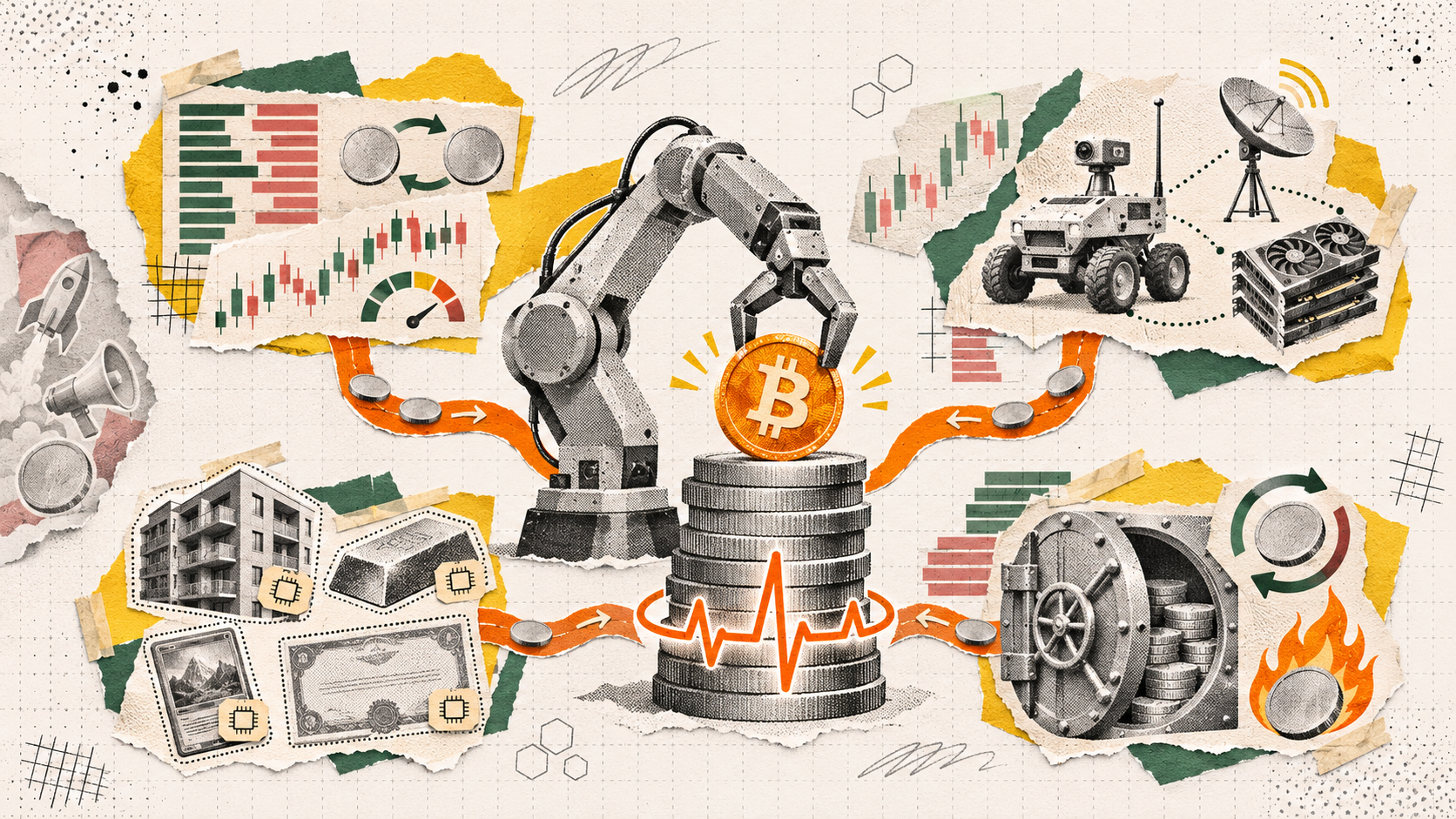
Price tells you what people feel. Revenue tells you what people pay.
Most tokens in your wallet earn almost nothing. DefiLlama tracks hundreds of protocols, and only the low hundreds at best make more than $1M a year. Tens of thousands of listed tokens make close to zero.
That gap is the whole thesis. A project with revenue has customers who pay for something real. A project without it has holders who hope someone else will buy next.
Bear markets expose the difference fast. When attention leaves, a narrative token loses its only source of demand. A revenue token keeps a paying base, and some of them spend that cash buying their own supply.
Nobody has published a clean head-to-head study of revenue tokens against no-revenue tokens. Treat this as a pattern and not a law. The pattern is still hard to miss. Institutional commentary in 2026 now leads with revenue and value accrual instead of narrative.
This report tests the idea on real names. You will see Hyperliquid, pump.fun, Geodnet and io.net up close, then a map of who else earns. You will also see where revenue fails, because it does fail. WARN The 'low hundreds earn over $1M a year' figure is an estimate from the research, not a published count. Say 'a few hundred at most' and link DefiLlama's revenue page. Do not claim revenue tokens beat no-revenue tokens without a named source.
A token with no revenue needs a new story every quarter. A token with revenue only needs the next quarter.
Before you celebrate the headline number, check who earns it.
Tether earned about $512.5M in the last 30 days and Circle earned about $204.5M. Together that is 60.8% of all the protocol revenue DefiLlama tracks.
That money is reserve yield, mostly from Treasuries. It is real income, but no crypto token captures it the way a HYPE or PUMP holder captures fees.
Remove those two and the rest of crypto earned about $463M. Hyperliquid alone is 15% of that base, and pump.fun adds another 10%.
Concentration runs deep across the whole sector. The top 30 protocols earned about $1.07B of the $1.18B total, which is roughly 91%. The top 5 took about 73%.
Revenue also swings a lot from month to month. Papertrade's last 30 days annualize to about $348M, while its 12-month total sits near $75M. Treat a 30-day number as a snapshot and not a salary.
If you want one project that proves the thesis, this is it.
Hyperliquid earned about $69.5M in the last 30 days and roughly $679M over 12 months, according to DefiLlama. Most of it comes from perpetual futures trading fees.
Here is the part that matters for you. About 99% of eligible fees flow to the Assistance Fund, which buys HYPE on the open market. Cumulative buys now exceed $1.3B.
The fund held about 48M to 49M HYPE in early to mid November. At roughly $66.50 a token, that is about $3.2B, or around 20% of circulating supply by our math.
A new stream joined in August 2026. About 90% of the yield from the AQAv2 USDC reserve now flows into revenue. Q3 2026 buybacks alone ran about $149M.
Now look at the price. HYPE trades near 19x annualized sales on market cap. Fully diluted value runs $63B to $66B, about 4x the market cap, so future unlocks matter.
The risks are easy to name. Hyperliquid depends on trading volume, faces other perp exchanges, and could lose fee share as HIP-3 builders grow. US access is also a live regulatory question. WARN Check the market cap and price at publish time. The 20% of circulating supply figure is OCT math (48.5M HYPE divided by about 239M circulating, implied by $15.9B market cap at $66.50). Mark it as an estimate. Do not mix the $679M DefiLlama 12-month figure with the ~$818M 2025 figure from Sacra. They use different definitions.
pump.fun makes real money. The question is how long the source lasts.
pump.fun earned about $47.5M in 30 days and about $483M over 12 months. That ranks it fourth in the whole sector, behind two stablecoin issuers and Hyperliquid.
It sends roughly 50% of revenue into PUMP buybacks and burns. Cumulative spend sits between $460M and $510M depending on the source, including one burn of about $370M.
That equals close to 40% of the current $1.2B to $1.3B market cap. Those burns happened at earlier prices, so use the percentage as a rough guide.
Now the uncomfortable part. Dune analyses show a large share of fees comes from coins that are a day old or worth under $250K. That is attention revenue, not customer revenue.
On paper PUMP looks cheap at about 2.2x annualized sales. The market prices that revenue as temporary, and the concentration data says it has a point.
Team and investor unlocks continue monthly and have exceeded burns in some periods. Rivals such as Flap are also taking launchpad share. WARN The research called pump.fun's multiple 'elevated'. The math does not agree. Market cap of $1.25B divided by about $570M annualized revenue is 2.2x (2.6x on the trailing 12 months, 4.6x on FDV). Report the math and name the denominator. Buyback totals differ by source ($460M to $510M). Quote the range and date it.
Geodnet is not a narrative. Companies pay it for centimeter-level location data.
Geodnet sells real-time GNSS correction data, known as RTK, to surveyors, robotics firms and IoT companies. Customers pay fees on Solana and Polygon, and nearly all of it counts as protocol revenue.
The last 30 days brought $952K, up from about $0.25M a month in late 2024. That is nearly 4x in two years, and 2026 months have mostly run between $0.7M and $0.94M.
About 80% of revenue buys GEOD tokens. That was about $762K in the last 30 days and about $11.9M since launch. The other 20% funds the foundation and operations.
Valuation is the catch. Market cap is about $157M and FDV about $192M, which puts GEOD near 13.7x annualized revenue. That sits between pump.fun and Hyperliquid.
Dilution risk looks lower here. FDV is only about 1.2x market cap, compared with about 4x for HYPE. Fewer unlocks are left to weigh on the price.
Scale is the real test. Geodnet's whole 30-day revenue equals about 1.4% of Hyperliquid's. Hardware rollout, rivals in precision positioning and token inflation against burns will decide if it compounds. WARN Keep the framing fundamentals-first. Lead with revenue, buybacks and customers, then the valuation caveat. Do not add price targets or bullish language that you would not apply to Hyperliquid or pump.fun.
io.net rents out GPUs for AI work. The revenue looks strong, but the data behind it needs a second look.
io.net runs a decentralized marketplace for GPU compute. AI and machine learning teams pay to rent clusters, and GPU suppliers get paid for providing them.
Project data puts the latest 30 days at an annualized pace of about $14.3M. That is roughly $1.2M a month, slightly above Geodnet.
Market cap sits around $40M to $50M. That works out to about 2.8x to 3.5x annualized revenue, the second-lowest multiple of the four main projects.
Here is the catch. The figure comes from project and DePIN Pulse data, not DefiLlama, and it may be counted before supplier payouts. Geodnet reports net protocol revenue, so the two are not like for like.
Holders get a floor and not a guarantee. The Incentive Dynamic Engine sets aside at least 50% of post-payout revenue for IO buybacks, according to tokenomics updates.
Unlocks are the other risk. Emissions plus investor and team tokens keep releasing through about 2030, and the next notable unlock lands in December 2026. WARN Do not rank io.net's revenue above Geodnet's in the text. The $14.3M figure is annualized from the last 30 days, comes from a less standardized source, and may be gross of supplier payouts. Say so plainly and ask the reader to check the dashboard. Add FDV once confirmed on CoinGecko.


Revenue is not only a Hyperliquid story. It shows up on every chain if you look.
On Solana, Jupiter, Axiom and Phantom each earn roughly $3M to $11M in a 30-day window. Jupiter routes part of its fees into buybacks through its Litterbox.
On Ethereum, Uniswap switched on its fee switch in late December 2025 and burned 100M UNI from the treasury. Aave, Sky, Morpho, Ether.fi and Pendle also earn real fees, and Sky made about $13.4M in 30 days.
On Base, Aerodrome leads with a ve-style model. Among perp exchanges, Lighter, GMX and dYdX all earn. dYdX pays fees to stakers, but Hyperliquid leads by a wide margin.
Several of the biggest earners sit outside the usual token trade. Polymarket made about $19M, Titan Builder about $29M, Grayscale about $16.5M and Collector Crypt about $14M. Check what you can actually buy before you get excited.
In DePIN, Geodnet and io.net lead on recent revenue. Helium, Render, Akash, Grass and Bittensor subnets show activity, but their protocol revenue is lower or tied to emissions.
The pattern holds on every chain. The group of projects that send revenue back to holders is still small, and that is why it matters. WARN This section is a map and not a buy list. Grok gave ranges, not exact numbers, for Jupiter, Axiom, Phantom, Aave, Uniswap and Aerodrome. Pull exact 30-day figures from DefiLlama for each name before you publish, or cut the number and keep the description.



Revenue does not make a token safe. It makes the token worth arguing about with data.
HYPE Hyperliquid, perp exchange | PUMP pump.fun, launchpad | GEOD Geodnet, location data | IO io.net, GPU compute | |
|---|---|---|---|---|
| Revenue source | Perp trading fees + USDC reserve yield | Bonding curve and trading fees | RTK correction fees | GPU compute rental |
| Who pays | Traders | Meme coin traders and launchers | Surveyors, robotics, IoT firms | AI and ML developers |
| Share to holders | ~99% of eligible fees | ~50% | ~80% | At least 50% of post-payout revenue |
| Data source | DefiLlama | DefiLlama | DefiLlama and project dashboard | Project and DePIN Pulse |
| Price to sales (mcap) | ~19x | ~2.2x | ~13.7x | ~2.8x-3.5x |
| FDV vs market cap | ~4.1x | ~2x | ~1.2x | Higher, not quantified |
| Main revenue risk | Volume and perp rivals | Meme cycle, short-lived coins | Hardware scale and rivals | Utilization and GPU quality |
| Main token risk | Ongoing unlocks | Unlocks above burns at times | Token inflation vs burns | Unlocks to ~2030, next Dec 2026 |
Revenue is necessary. It is not enough, and you should know the five ways it fails.
FAILURE 1: SUBSIDIZED REVENUE. Incentives can inflate activity. When emissions pay people to trade, the revenue line looks healthy and the business is not. Check whether fees survive once rewards drop.
FAILURE 2: NO ACCRUAL. Revenue that never reaches holders does nothing for your bag. Uniswap earned large fees for years with no direct holder share. That ended when its fee switch went live in late December 2025.
FAILURE 3: DILUTION. HYPE trades near 19x sales on market cap and near 77x on fully diluted value. If unlocks outrun buybacks, holders lose even while revenue grows.
FAILURE 4: CYCLES AND CONCENTRATION. pump.fun earns most of its fees from short-lived coins. Papertrade's 30-day pace runs more than 4x its 12-month total. The market often prices peak revenue as permanent.
FAILURE 5: MESSY DATA. Protocol revenue, gross fees and holder revenue are three different numbers. Stablecoin revenue is reserve yield, not app fees. Wash trading also inflates volume on some meme and launchpad venues.
Past cycles gave warnings before revenue collapsed: falling real fees, growing reliance on incentives and large unlock cliffs. When you see all three together, treat it as a serious red flag. WARN The research had no named 2025-2026 counterexamples with numbers. If you want one, ask Grok for specific high-revenue tokens that fell hard, and cite DefiLlama and CoinGecko. Do not write a counterexample from memory.
You cannot hold everything in a bull run. Use revenue to decide what earns a spot.
The revenue thesis is a filter and not a forecast. It will not tell you which token pumps hardest. It tells you which ones still have a reason to exist after the pump.
QUESTION 1: Does it earn real fees from real customers, or does it pay people to show up?
QUESTION 2: Does a fixed share of revenue reach holders through buybacks, burns or staking?
QUESTION 3: What do you pay per dollar of revenue, on market cap and on fully diluted value?
QUESTION 4: Do unlocks outrun buybacks over the next 12 months?
QUESTION 5: Is revenue broad, or does one source or one meme cycle drive most of it?
Run those five questions on Hyperliquid, pump.fun, Geodnet and io.net and you get four different answers. Revenue gives you a way to argue about price with data. This is research and not financial advice, so size every position with care.
Which one would you hold into the next bull run, and why? Reply with your pick. Then run the five questions on your own bag today.
Every token pumps in a bull run. Only the ones with revenue still have a reason to exist when it ends.




