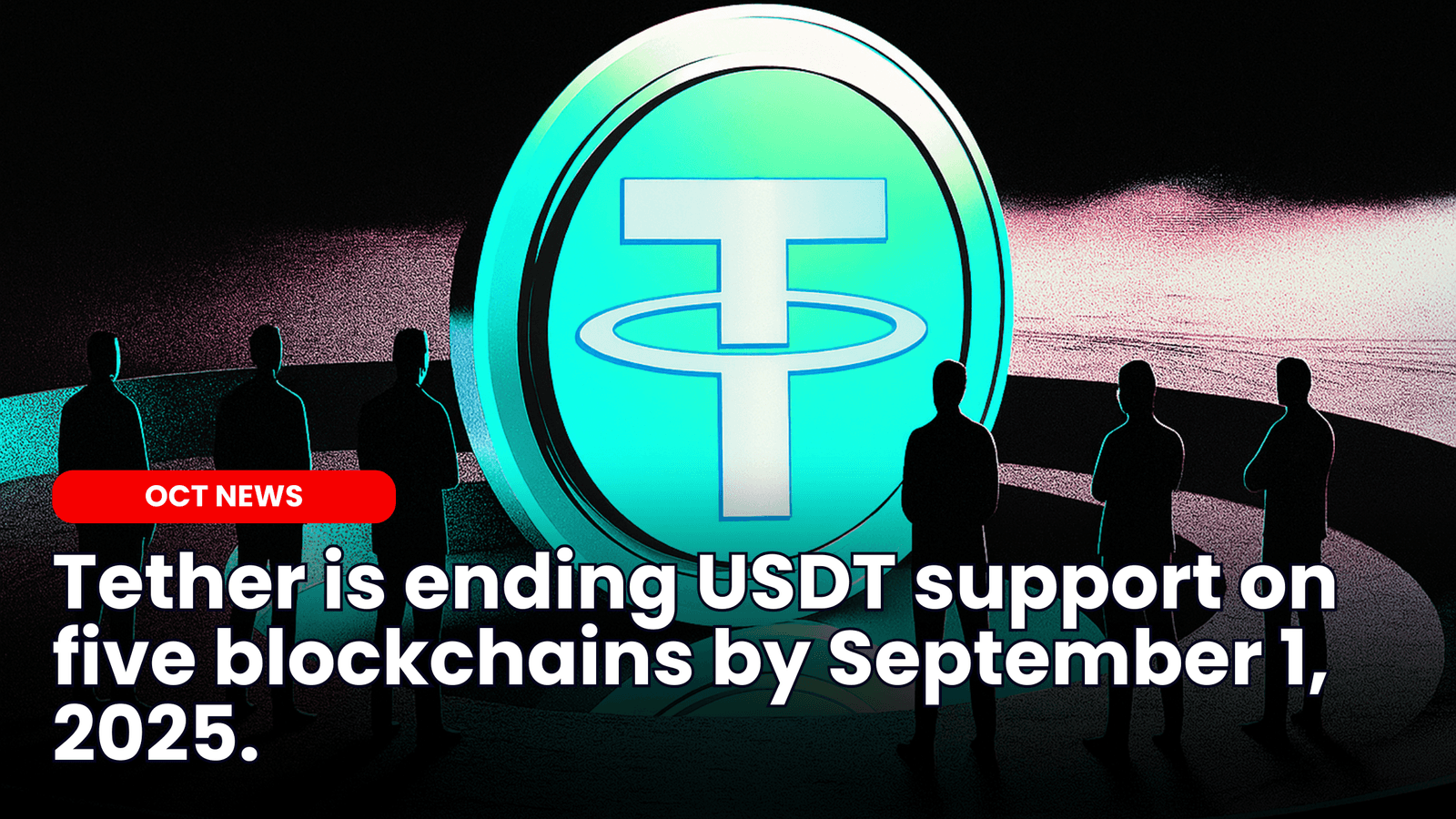
Tether is ending USDT support on five blockchains—including EOS and Algorand—by September 1, 2025. Here’s why, what it means for users, and what to do before the freeze.

Author: Tanishq Bodh
Tether, the issuer behind the world’s largest stablecoin USDT, has announced it will officially discontinue support on five blockchains by September 1, 2025. This marks a significant operational shift as the company looks to optimize resources and double down on more active, scalable networks.
The decision follows a broader industry trend of consolidating stablecoin issuance around high-volume, developer-rich chains.
The five networks losing USDT support are:
Tether referred to these as “legacy” blockchains where USDT circulation has significantly dropped in recent years. Minting had already been paused on these chains in previous phases—this announcement finalizes the transition.

Tether cited three key reasons for the decision:
USDT volumes have drastically dropped on these chains, with minimal user or developer activity to justify continued support.
The team plans to reallocate resources to faster, more scalable chains with robust DeFi ecosystems—such as Ethereum, Tron, Solana, and Lightning Network.
With Layer 2s gaining traction and DeFi-native chains driving utility, Tether aims to enhance interoperability while reducing overhead on underutilized networks.
If you’re holding USDT on any of the affected chains, Tether strongly advises action before September 1:
Use Tether’s platform to redeem tokens or request a re-issuance on another chain.
If you’re not a Tether customer, migrate tokens through centralized exchanges or blockchain bridges that support chain-swapping.
USDT will remain active on over a dozen other chains—visit Tether.io to view the current list.
Failing to act before the freeze will leave your USDT locked and unusable.
This isn’t the first time Tether has trimmed support. Previous cuts included networks with low liquidity or poor developer momentum. The company continues to invest in newer blockchain integrations and aims to future-proof USDT’s role in decentralized finance.
Did you know? The Omni Layer—now being retired—was the original home of USDT when it launched in 2014. The move away from Omni closes a historic chapter in stablecoin history.

Our Crypto Talk is committed to unbiased, transparent, and true reporting to the best of our knowledge. This news article aims to provide accurate information in a timely manner. However, we advise the readers to verify facts independently and consult a professional before making any decisions based on the content since our sources could be wrong too. Check our Terms and conditions for more info.