Explore the top 10 Solana ecosystem projects of 2026 across DeFi, staking, NFTs, and DePIN. Compare TVL, revenue, and the key risks behind $5.8B in activity.

Author: Kritika Gupta
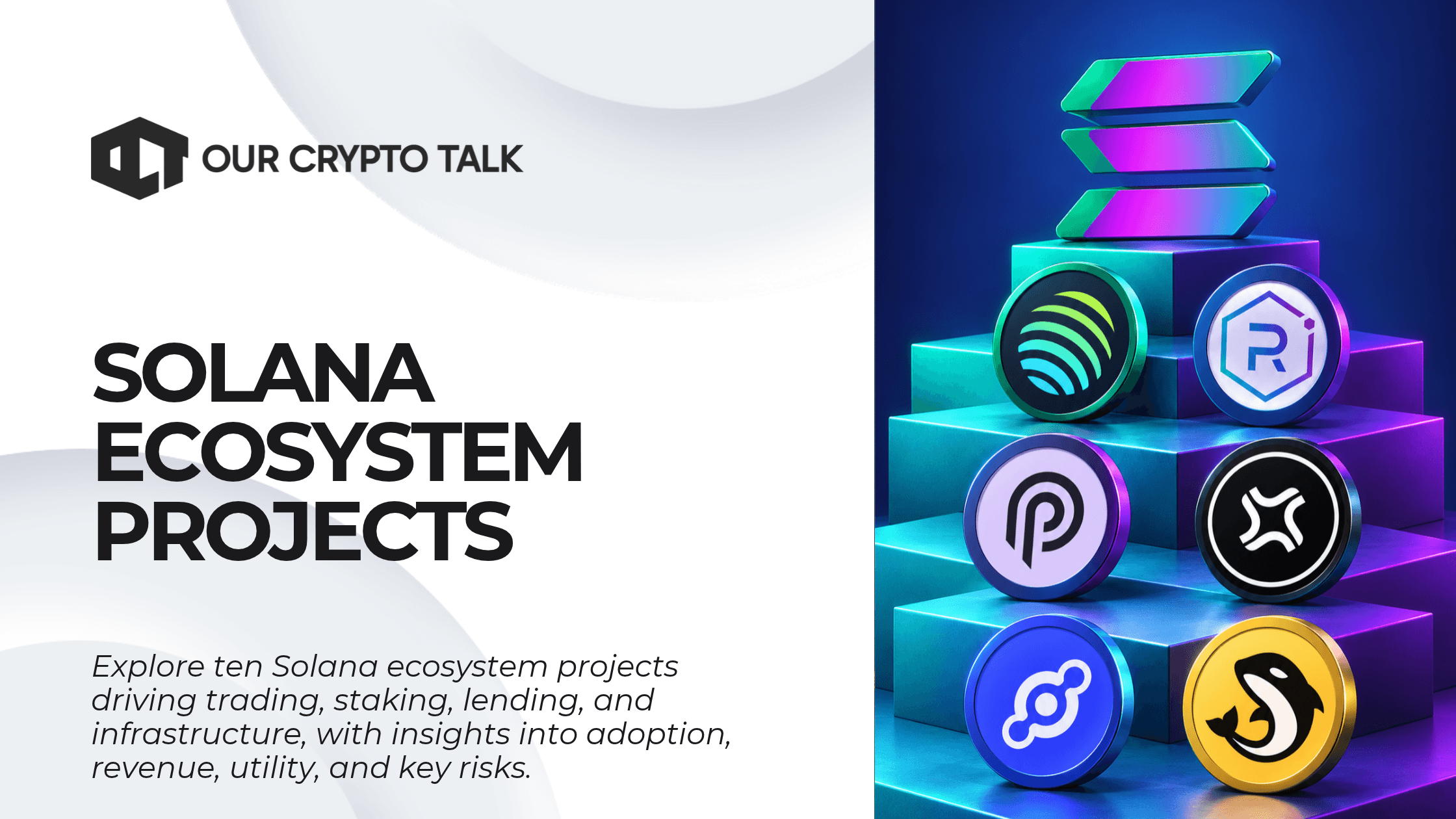
Memecoin launches draw attention to Solana, but they tell only part of its story. Beyond token launches, traders use Jupiter to find swap routes, SOL holders access liquid staking through Jito, and developers rely on Pyth for price data. Meanwhile, projects such as Helium connect crypto infrastructure with services beyond financial markets. Together, these uses make Solana ecosystem projects worth examining individually. With that in mind, this guide explores ten projects shaping the network in 2026, explaining what they do, where they attract demand, and which risks matter. Along the way, crypto readers can assess how each project fits into Solana and what its activity means for users and token holders.
Solana ecosystem metrics in 2026
Solana enters the second half of 2026 with signs of sustained network activity. For instance, total value locked (TVL) sits near $5.8 billion, while daily transactions regularly exceed 40 million. Meanwhile, the U.S. Securities and Exchange Commission has treated SOL as a commodity in key contexts, and spot ETF products have attracted inflows. Together, these indicators help crypto readers assess network usage, liquidity, and institutional demand. However, they do not guarantee lasting adoption or stronger token returns.
Against this backdrop, this article examines ten Solana ecosystem projects across DeFi, infrastructure, and consumer sectors. Specifically, it focuses on where users trade, protocols generate revenue, and participants deploy capital. Yet token prices can diverge sharply from protocol performance. Therefore, the following sections examine adoption and activity rather than rank tokens by investment potential.
10 Solana ecosystem projects at a glance
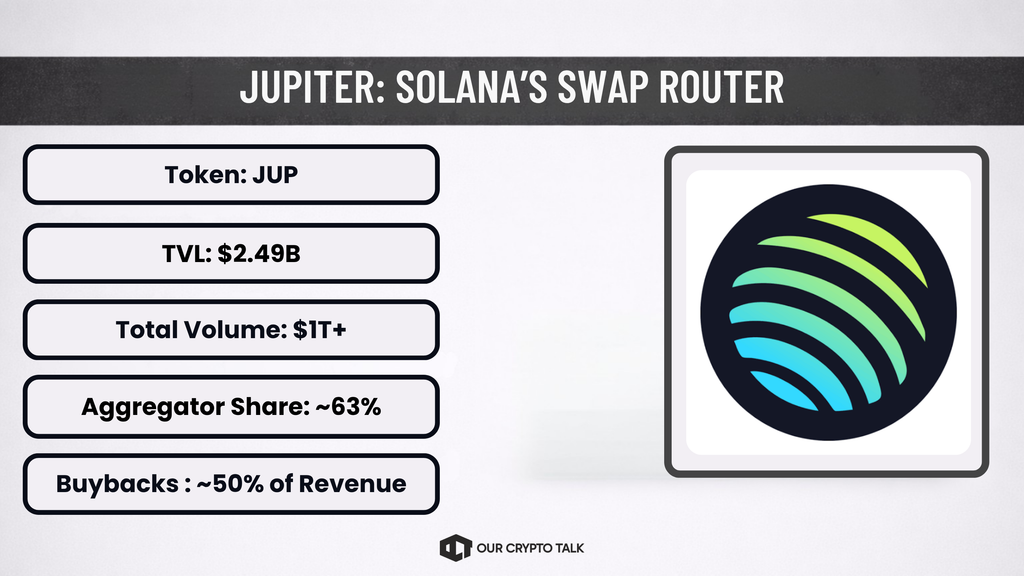
Jupiter stands out among Solana ecosystem projects as a major trading interface, routing roughly 63 percent of organic DEX aggregator volume. So far, the platform has processed more than $1 trillion in cumulative volume, while daily routing volume frequently exceeds $700 million. Meanwhile, its TVL stands near $2.49 billion, and JUP carries a market capitalization of approximately $1.19 billion.
Beyond swaps, Jupiter offers limit orders, dollar-cost averaging, perpetuals with leverage up to 100x, and on-ramps. On the revenue side, the protocol generated more than $500 million in gross revenue during 2025. Since then, monthly revenue figures in 2026 have reached the low-to-mid millions, including a reported single-day record of $822,000 on August 30. Additionally, Jupiter directs roughly half of protocol revenue toward JUP buybacks and burns.
Together, these products give crypto traders access to trade routing and several execution tools under one interface. However, readers should distinguish its aggregator activity from its perpetuals business when comparing volume, revenue, and risk.
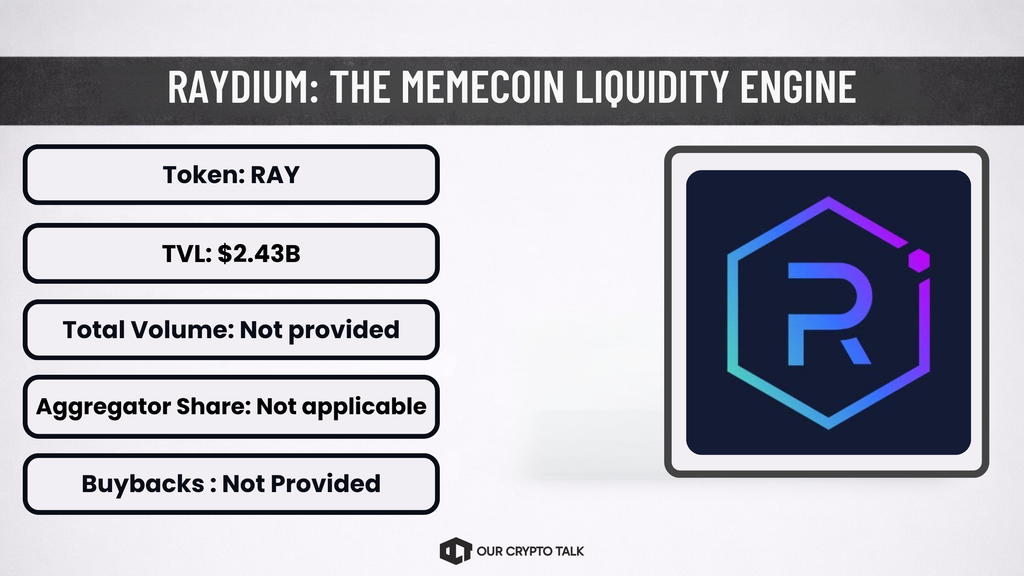
Raydium holds approximately $2.43 billion in TVL, while its reported market capitalization stands near $1.43 billion. Meanwhile, RAY trades around $0.55–$0.60, roughly 96 percent below its $16.83 all-time high. Despite that drawdown, the protocol continues to attract trading activity. Together, these figures highlight how token performance can diverge from platform usage.
Within Solana’s trading ecosystem, Raydium has played a major role in memecoin liquidity, including trading for tokens that originate on Pump.fun. In addition, its products include permissionless pool creation, automated market maker (AMM) swaps, concentrated liquidity, and yield farming. However, security remains a consideration. In June 2026, attackers drained $1.34 million from five deprecated pools. The treasury subsequently covered the loss.
For traders, Raydium’s relevance comes from liquidity depth and access to newly launched assets. At the same time, liquidity providers must weigh fee income against impermanent loss, volatile token prices, and pool security risks.
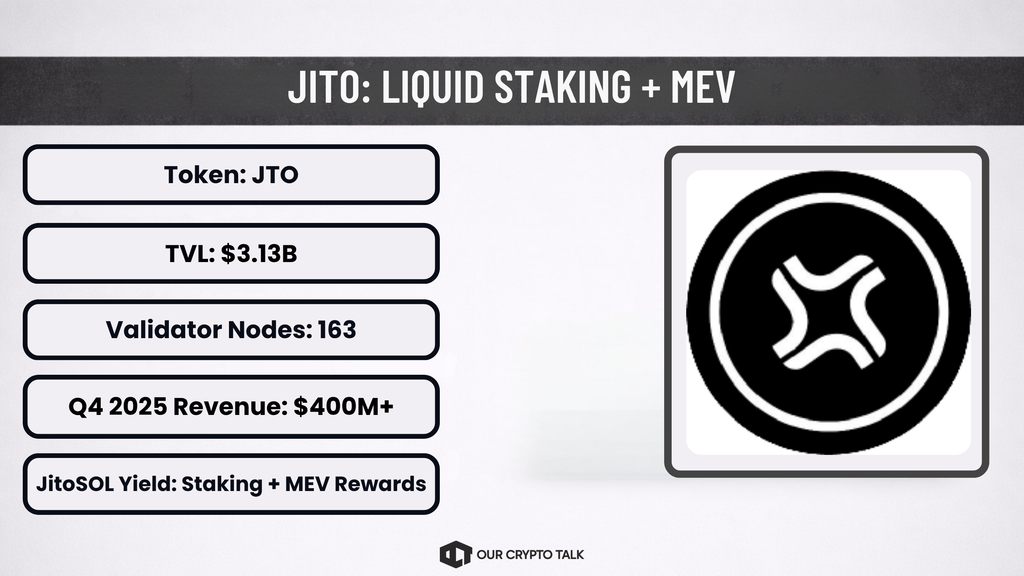
Jito ranks among the largest Solana ecosystem projects, with roughly $3.13 billion in TVL. Its validator network spans 163 nodes, while JitoSOL holds a leading position within a liquid-staking market of about 60.5 million SOL. Meanwhile, JTO carries a market capitalization above $850 million. In addition, the protocol reported more than $400 million in Q4 2025 revenue, while validator commission has stayed below 10 percent.
Jito auctions transaction-ordering opportunities associated with maximum extractable value (MEV) and shares proceeds through its staking infrastructure. As a result, JitoSOL holders can earn staking rewards alongside additional MEV-related returns. Furthermore, they retain access to a liquid token that they can use across DeFi.
For SOL holders, JitoSOL therefore offers a way to combine staking with liquidity. However, users should compare net yields, validator performance, smart-contract exposure, and JitoSOL’s market liquidity before choosing it over native staking.
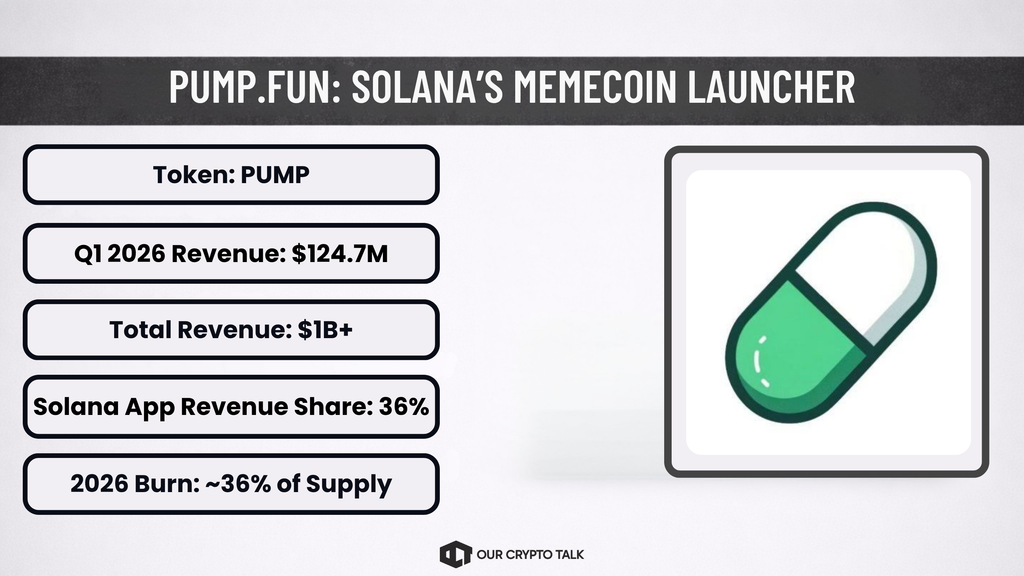
Pump.fun stands out among Solana ecosystem projects for its revenue generation. For instance, it generated $124.7 million during Q1 2026, up 17 percent quarter-over-quarter. That figure accounted for 36 percent of Solana’s $342.2 million in application revenue during the quarter. Overall, the platform has generated more than $1 billion in cumulative revenue since its January 2024 launch. Additionally, the project burned approximately 36 percent of circulating PUMP supply in May 2026, worth roughly $370 million at the time. It also transferred 91,708 SOL, worth about $7.76 million, to Kraken on May 18, marking its first reported SOL sale in nine months.
The platform lets users launch memecoins through a bonding curve. Once a token reaches the relevant graduation threshold, it moves into liquidity-pool trading. In turn, this model lowers the barriers to token creation and generates fees from speculative activity. Consequently, Pump.fun holds a substantial share of Solana’s application revenue, although revenue alone does not establish profitability.
For crypto readers, Pump.fun illustrates both Solana’s distribution strength and its exposure to speculative trading. However, fee generation tells only part of the story. Readers should also consider token failure rates, trader losses, and the sustainability of memecoin demand.
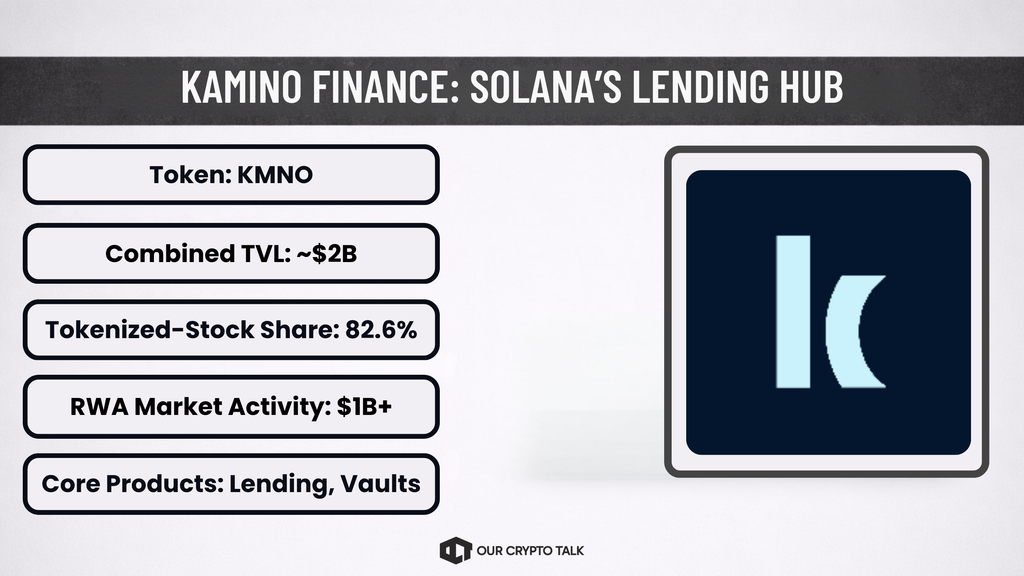
Kamino holds roughly $2 billion in combined TVL across lending markets and auto-rebalancing vaults. Within Solana’s lending sector, it commands a substantial share of activity, including a reported 82.6 percent share of tokenized-stock lending. Additionally, the protocol has supported more than $1 billion in real-world-asset market activity. Compared with memecoin-focused platforms, Kamino gives readers a view into borrowing demand and capital deployment across DeFi.
Its core products include lending markets, concentrated-liquidity vaults that automatically rebalance positions, and Multiply strategies that increase exposure through borrowing. As a result, users can access passive liquidity management or take on additional leverage. However, each strategy carries different liquidation, collateral, and smart-contract risks.
Beyond headline trading volume, Kamino’s lending markets help users access liquidity against their holdings. Meanwhile, its vaults support capital deployment across Solana. Therefore, readers should track borrowing demand, utilization rates, and collateral quality alongside TVL.
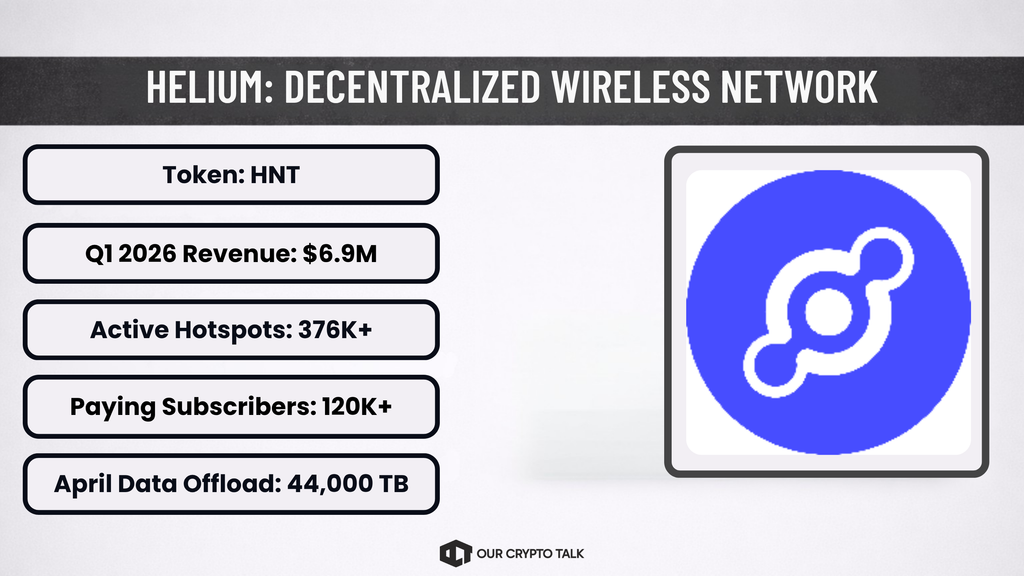
Helium generates telecom revenue through its decentralized physical infrastructure network (DePIN). In Q1 2026, revenue reached $6.9 million, up 32 percent quarter-over-quarter. Overall, cumulative revenue since January 2025 has exceeded $20 million, including a monthly record of $2.5 million in March. Meanwhile, the network reports more than 376,000 active hotspots and added 4,900 deployments in April 2026. In addition, paying subscribers exceed 120,000, total sign-ups top 670,000, and daily active users reached 2.9 million in April.
Alongside this growth, the network offloaded approximately 44,000 TB of data in April, a 17-fold year-over-year increase. Meanwhile, carrier offload contributed 57 percent of Helium Mobile revenue in March. Furthermore, a T-Mobile 5G partnership has attracted more than 100,000 sign-ups, while Helium’s market capitalization stands above $1.18 billion. However, these metrics cover different activities. Therefore, readers should distinguish mobile subscribers, network users, and carrier-offload traffic.
For crypto readers, Helium provides a way to assess whether DePIN infrastructure attracts paying demand beyond token incentives. Still, network growth alone does not establish how much value HNT holders capture.
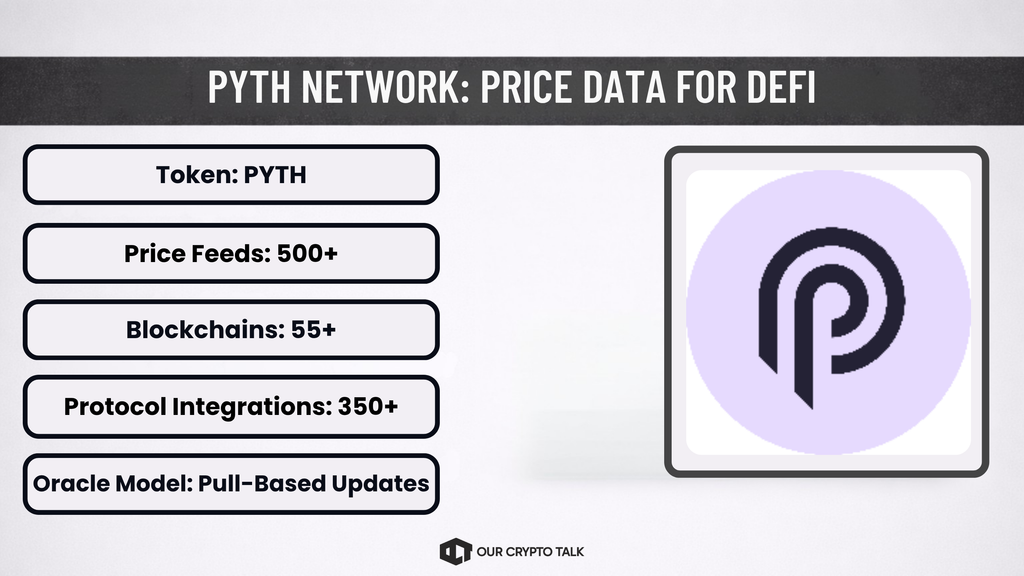
Pyth supplies more than 500 price feeds across over 55 blockchains, and more than 350 protocols use its data. Meanwhile, it carries a market capitalization of approximately $1.41 billion. Its pull-based model lets applications request price updates when they need them. In turn, this approach can help applications manage update timing and costs, depending on the integration.
Across DeFi, price oracles underpin collateral valuation, liquidations, and derivatives settlement. Consequently, unreliable or delayed data can expose protocols and users to significant losses. Against this backdrop, Pyth’s adoption highlights its role in the infrastructure market, while Chainlink’s larger market capitalization provides context for the category’s scale. However, readers should assess data quality, integration design, and token value capture separately.
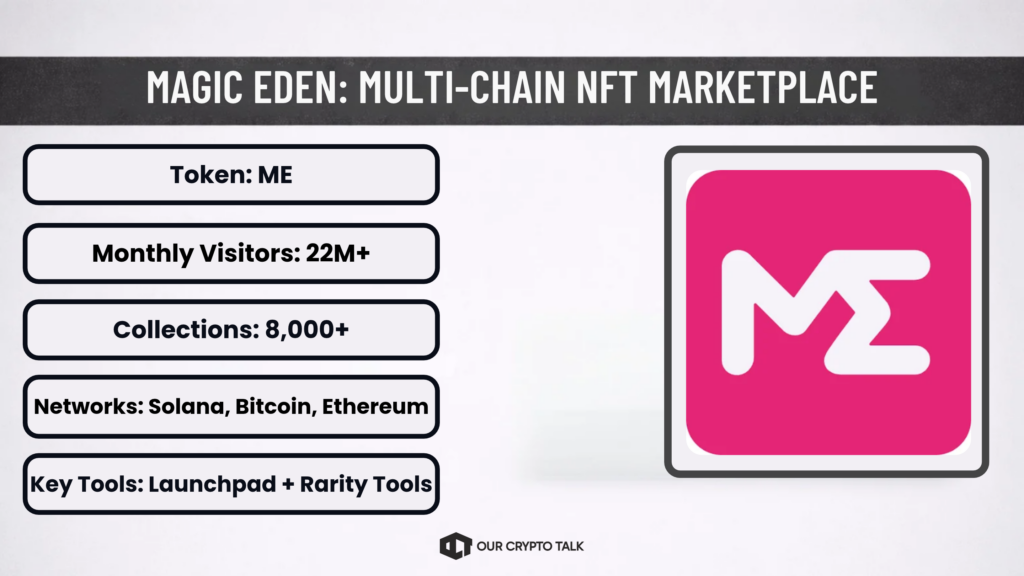
Magic Eden reports more than 22 million monthly visitors and supports over 8,000 collections. Beyond Solana, its multi-chain marketplace covers Bitcoin Ordinals, Ethereum, Polygon, and Base. Additionally, it offers a launchpad, rarity tools, and cross-chain trading features. Meanwhile, the ME token supports governance.
However, NFT trading volumes remain well below their 2021–2022 peaks. In response, Magic Eden has expanded across chains and product categories to reach a broader audience. Nevertheless, broader reach alone does not establish sustained trading demand. Therefore, crypto readers should examine marketplace revenue and repeat users alongside visitor numbers. Ultimately, these measures help readers assess whether platform activity translates into value for ME holders.
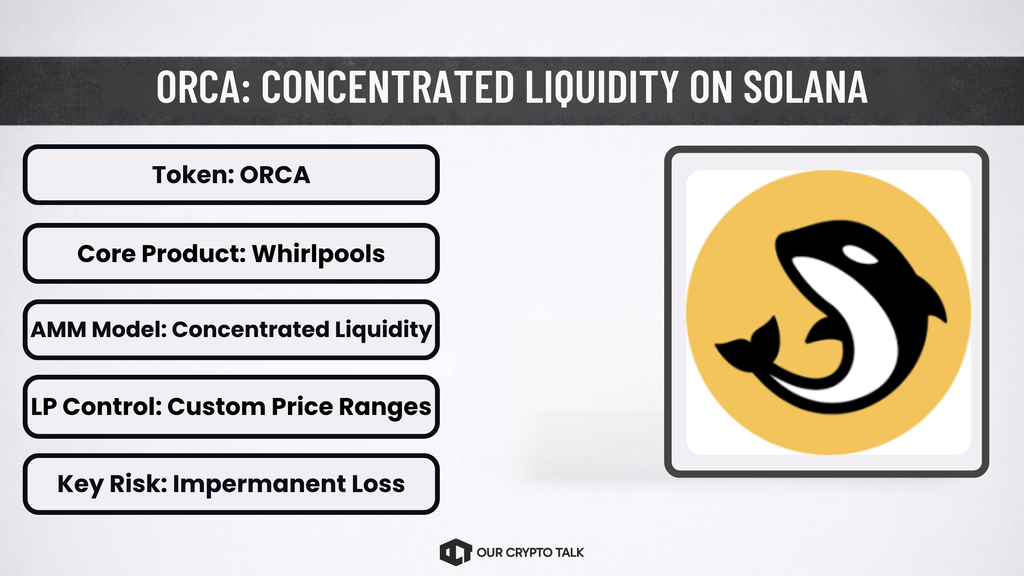
Orca’s flagship product, Whirlpools, uses a concentrated-liquidity AMM model. Specifically, liquidity providers choose price ranges instead of spreading capital across every possible price. As a result, they can increase capital efficiency while the market stays within the selected range. However, positions can stop earning trading fees when prices move outside that range. Therefore, LPs must monitor their ranges to keep positions active.
Meanwhile, Orca competes with Raydium for liquidity and trading flow, although Raydium attracts more memecoin-related volume. For LPs, the practical comparison therefore involves fee income, pool depth, range management, and impermanent loss. Before choosing a pool, readers should first check current TVL and volume figures directly on DefiLlama. Additionally, they should compare returns after accounting for incentives and position-management costs. Together, these checks help LPs assess whether potential fees justify the risks and ongoing management.
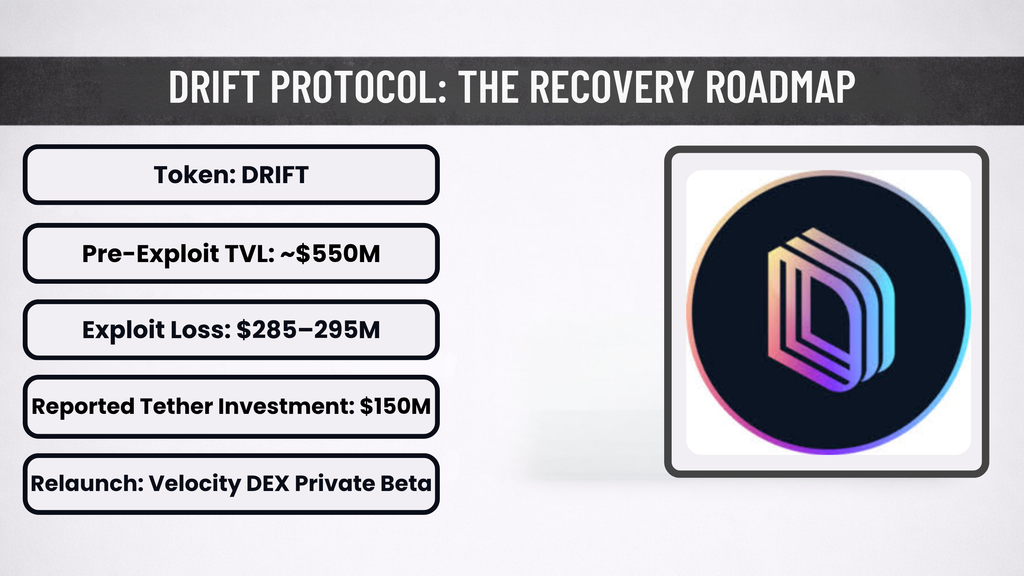
Before the April 2026 incident, Drift held roughly $550 million in TVL and ranked among Solana’s leading decentralized perpetuals platforms. However, attackers stole approximately $285–$295 million in the exploit. Shortly afterward, DRIFT fell around 40 percent. Consequently, the incident highlighted the risks traders face when they deposit collateral into a derivatives protocol.
Following the exploit, Tether reportedly invested $150 million to support recovery efforts. Additionally, the project proposed a token-based recovery framework. Meanwhile, the team has begun rebranding the platform as Velocity DEX ahead of a private beta relaunch. Elsewhere, Jupiter’s JLP pool avoided losses from the incident. Thus, the exploit did not directly affect every major Solana trading platform.
Despite these efforts, the recovery remains incomplete as the private beta begins. Therefore, users should examine reimbursement terms, security changes, and withdrawal conditions before assessing the relaunch. Furthermore, they should track whether the team delivers on its recovery commitments. Ultimately, the episode shows why ecosystem liquidity and outside funding cannot substitute for strong operational controls.
Start with four indicators: capital metrics such as TVL, protocol revenue, active users, and the team’s response to incidents. Next, examine what each metric actually measures. For example, trading fees, protocol revenue, and token-holder income represent different flows. Likewise, TVL can rise because asset prices increase, even when users deposit no additional capital.
Beyond these metrics, watch for unexplained declines in users or revenue, unclear incident disclosures, heavy dependence on token emissions, and concentrated governance control. Additionally, compare token supply, unlock schedules, and value-capture mechanisms with protocol growth. As RAY’s drawdown illustrates, active usage alone does not guarantee strong token returns.
Together, these ten projects span trading, lending, staking, physical infrastructure, and data services. To track their progress, follow recurring revenue, capital retention, user demand, and security performance. Ultimately, those measures provide more context than token prices alone.
This article is for informational purposes only and does not constitute financial advice. Always do your own research before interacting with any DeFi protocol or purchasing any token.