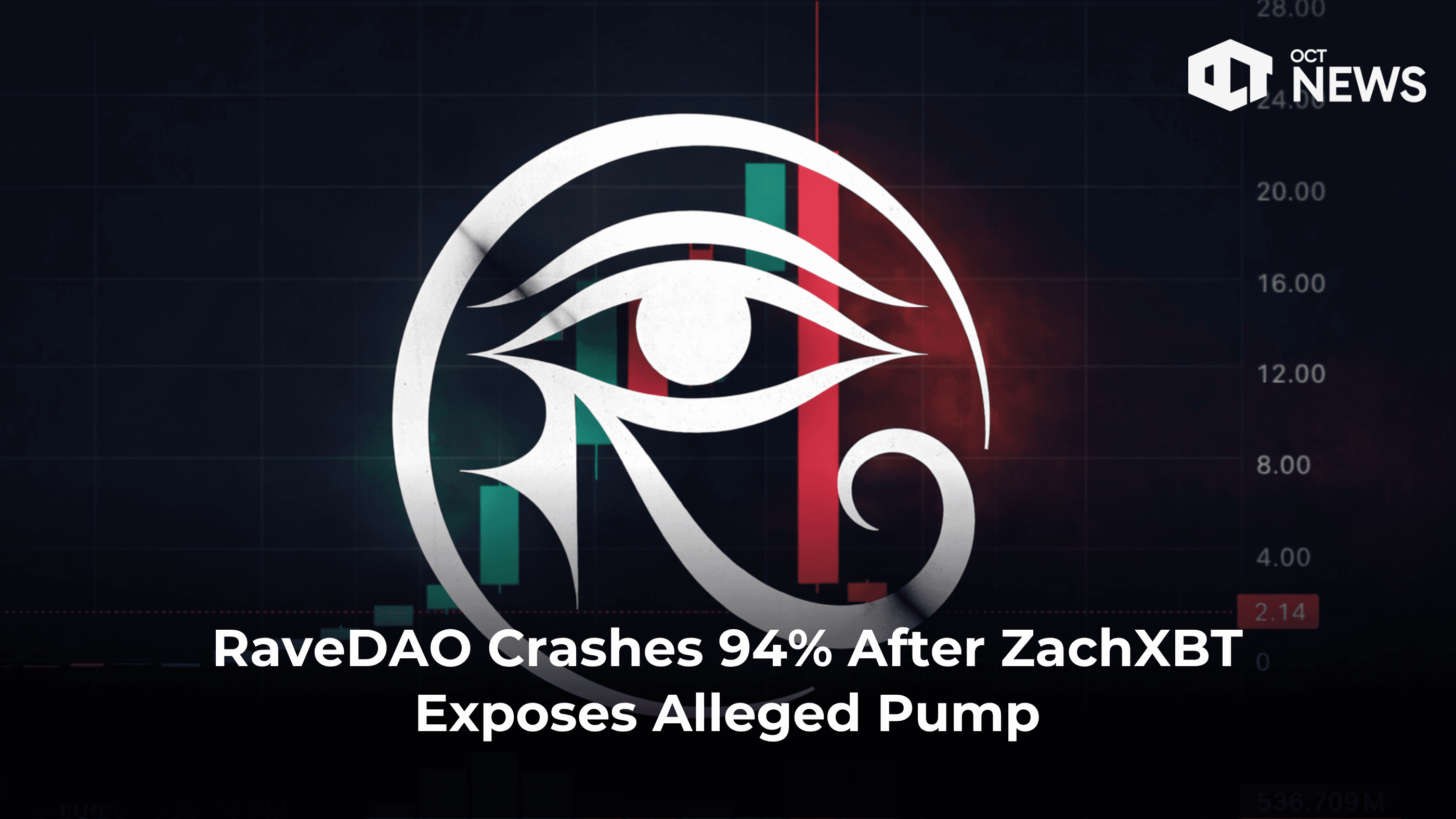
RaveDAO ($RAVE) has collapsed over 94% after on-chain investigator ZachXBT exposed what he called a textbook pump-and-dump scheme.

Author: Sahil Thakur
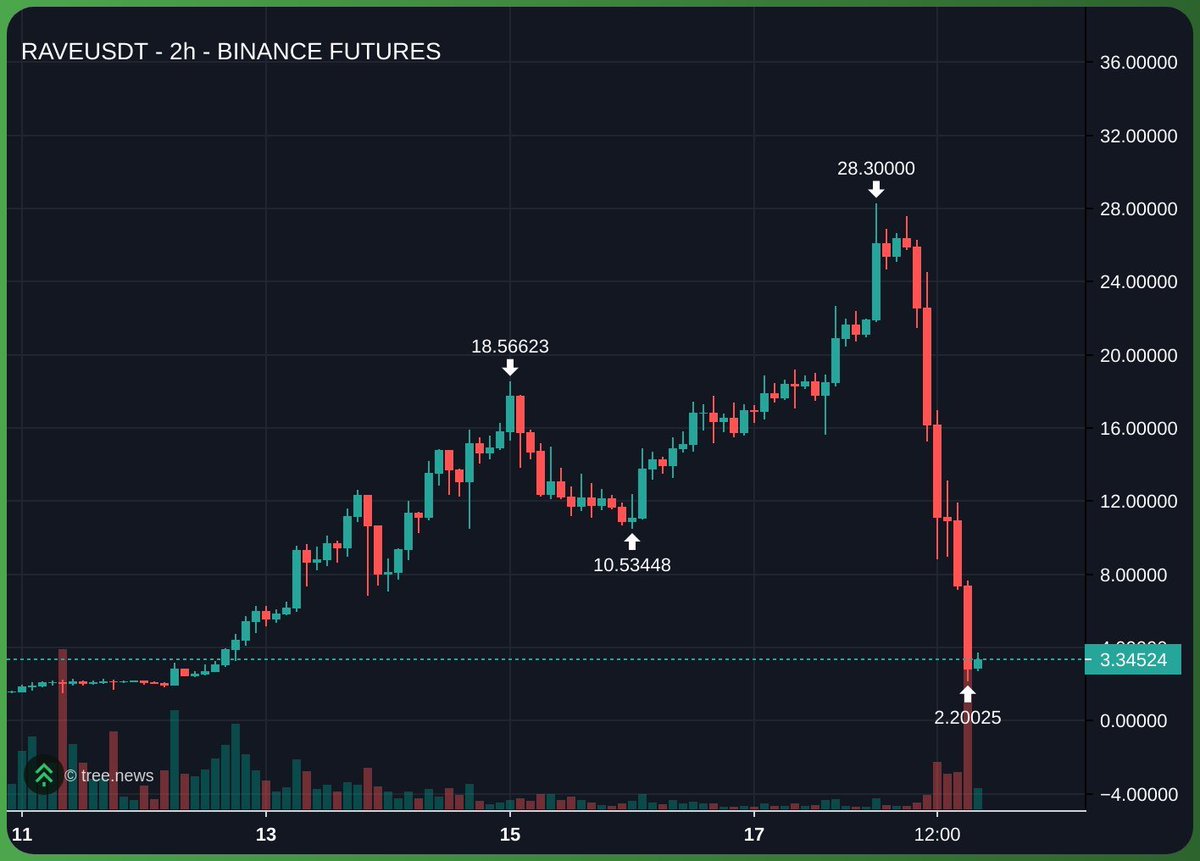
19th April 2026 – RaveDAO ($RAVE) has collapsed over 94% from its all-time high after on-chain investigator ZachXBT exposed what he called a textbook pump-and-dump scheme driven by insider wallet control.
High Signal Summary For A Quick Glance

Jeremy
@Jeremybtc

RaveDAO $RAVE is on a moon mission to ZERO From $28 down to $3.34 and still overvalued 0 https://t.co/UYtRiG4rVh https://t.co/u7pvhv18dp
$RAVE IS FINALLY CRASHING Send this shit to zero with haste https://t.co/l7GyOeAR57 https://t.co/FiytaQneHu
08:32 PM·Apr 18, 2026

StarPlatinum
@StarPlatinum_
Wait until people start connecting that WLFI, Binance and RaveDAO were all linked Literally the manipulation: https://t.co/XDD8EowHkU https://t.co/FomSDOWHEe

@RaveDAO Pump and dump activity for $RAVE originated on @bitget @binance @Gate Call to action for both @heyibinance @GracyBitget to do better and launch internal investigation offboarding the responsible actors. Offering up to $10K bounty of my personal funds for whistleblowers to https://t.co/NhZDubdU9R
04:36 PM·Apr 18, 2026

jussy
@jussy_world
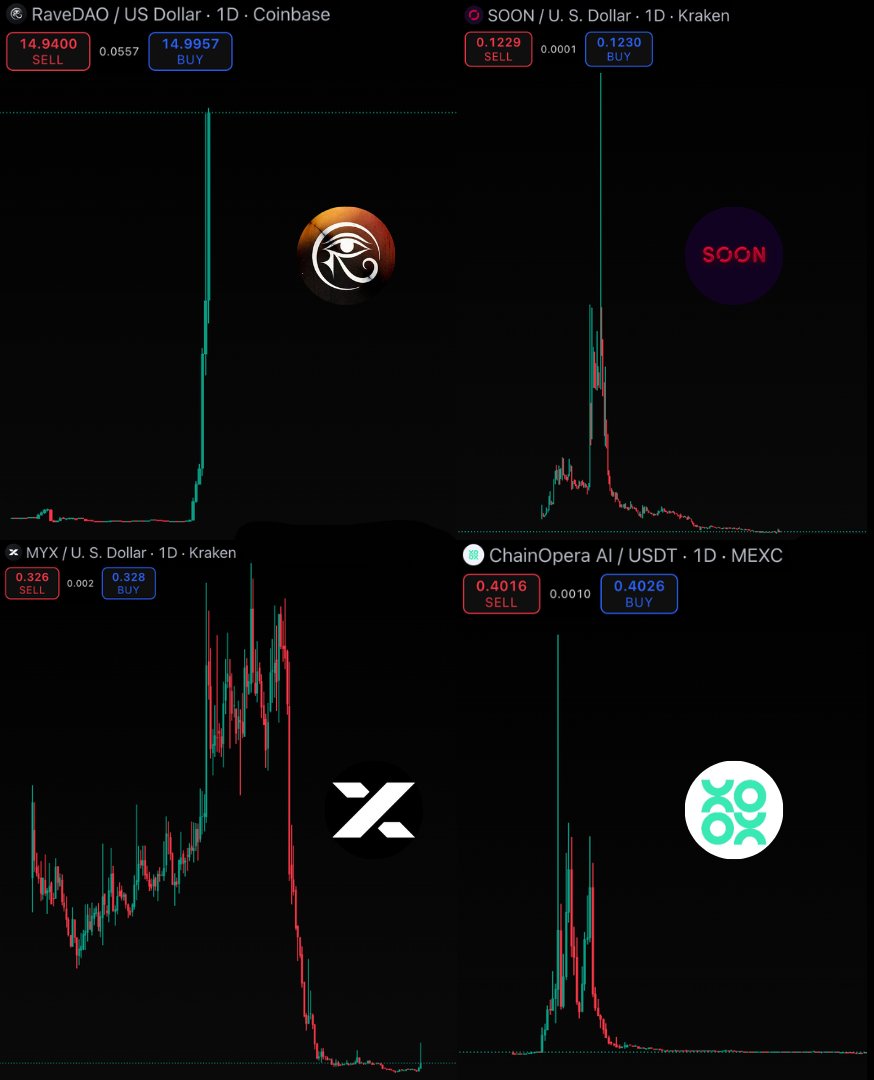
The RaveDao playbook is not the first time seen When insiders control 90%+ of the supply and manipulate price on centralized exchanges It's the biggest scam Previously, we have seen some coins like: MYX - pumped from $1.7 to $8 (now $0.3) COAI - pumped from $0.4 to $45 (now https://t.co/XqGmE9z8g0
11:48 AM·Apr 15, 2026
High attention and emotional sentiment detected.
The token surged from roughly $0.20 in early April to nearly $28 on April 17. Then it crashed to around $2 within hours. According to on-chain data, roughly 90% of the circulating supply sat in just three wallets linked to the project team.
The rally started in late March 2026. RAVE climbed from around $0.20-$0.25 to an all-time high near $27.88 by April 17. At its peak, the token briefly ranked in the top 50 by market cap, with a valuation exceeding $3 billion.
The mechanics behind the move were straightforward. Only 24.8% of the 1 billion total supply was in circulation. Of that, on-chain analysts estimated less than 5% was truly liquid. The rest sat locked in Gnosis Safe wallets tied to the team.
That extreme scarcity created paper-thin order books. Even small buy orders moved the price significantly. Daily and weekly gains of 200-700% became routine during the peak of the rally.
On-chain data revealed a pattern that analysts described as a deliberate short squeeze. Project-linked wallets reportedly deposited large batches of tokens to exchanges like Bitget. In one cited instance, roughly $42 million in RAVE moved to exchange wallets.
Those deposits created the appearance of incoming sell pressure. Traders responded by opening short positions. At one point, over 70% of futures traders on RAVE were short.
Then the project wallets withdrew roughly $32 million worth of tokens. That sudden supply removal triggered cascading liquidations. According to exchange data, $30 million to $43 million in short positions were liquidated during the squeeze. Funding rates hit extremes between -1,000% and -4,000% annualized.
The result was a feedback loop. Forced short covering drove the price higher, which triggered more liquidations, which drove it higher again. Analysts at AInvest and on crypto forums described the setup as “engineered” rather than organic.
RAVE positioned itself as a Web3 music and entertainment project. The team organized real-world rave events in Amsterdam and co-hosted the Lisbon Dance Summit. NFTs gave attendees access to events, and staking offered governance rights.
The project also leaned into philanthropy. According to project materials, roughly 20% of proceeds were directed to charity. The Coachella-adjacent branding and EDM culture appeal attracted retail interest during the rally.
CEX listings added fuel. Each new exchange listing brought fresh trading volume and visibility. Combined with the low-float dynamics, the narrative gave retail traders a reason to buy into what was primarily a mechanical squeeze.
The FUD that broke the rally started building during the pump itself. Analysts on YouTube and Reddit warned about wallet concentration and dilution risk. Videos titled “RAVE Is About To DUMP HARD” circulated before the crash.
The catalyst came from ZachXBT. The on-chain investigator posted a detailed thread exposing the alleged pump-and-dump setup. He noted that insiders controlled nearly all of the circulating supply through Gnosis Safe wallets. He also flagged suspicious pre-surge wallet transfers to exchanges.
ZachXBT questioned how RAVE went from a $60 million market cap to billions with minimal utility. He called for investigations by Binance, Bitget, and Gate.io, and reportedly offered a bounty for additional information. According to CoinGape, Bitget responded by opening a full probe into insider trading and manipulation.
The RaveDAO team denied the allegations. They pointed to their real-world events, token locks for operations, and charity commitments. Most observers dismissed those responses as damage control.
The unwind was fast. RAVE hit its all-time high near $28 on April 17-18. Then it dropped over 51% from ATH within hours. The full cascade brought the price down 86-94%, depending on the exchange, to lows around $1.94-$2.81.
According to MEXC data, the token lost over 90% of its value in a single 24-hour period. An earlier pullback had already erased $919 million in market cap in one session. The final crash wiped out billions more.
The selling was one-directional. Thin order books meant there was almost no buy-side liquidity to absorb the selling pressure. On-chain outflows suggested some of the concentrated holders were exiting or distributing tokens.
As of April 19, RAVE trades around $2-$2.63 with extreme volatility. The community remains split. Some holders still point to the project’s Web3 music narrative as a long-term play. Most analysts consider it a textbook example of a low-float squeeze followed by a liquidity evaporation event.
The RaveDAO episode follows a familiar pattern. A token with concentrated supply and thin liquidity gets pumped through mechanical means. Retail traders pile in on narrative and FOMO. Then reality hits when on-chain transparency exposes the setup.
The FDV-to-market-cap ratio at RAVE’s peak told the story clearly. FDV exceeded $12 billion while the actual market cap sat around $3 billion. That 4x gap represented billions in locked tokens that could flood the market once vesting unlocked.
Exchanges now face pressure to improve their listing standards for low-float tokens. Bitget’s probe could set a precedent for how CEXs handle projects with extreme supply concentration. For traders, the lesson is direct: when 90% of supply sits in three wallets, the exit door is always smaller than it looks.
This is not financial advice. Always research token supply dynamics and wallet concentration before trading.
Our Crypto Talk is committed to unbiased, transparent, and true reporting to the best of our knowledge. This news article aims to provide accurate information in a timely manner. However, we advise the readers to verify facts independently and consult a professional before making any decisions based on the content since our sources could be wrong too. Check our Terms and conditions for more info.