OFC Airdrop Sparks Controversy as users report low rewards, bot labeling claims, and unfair distribution across millions of wallets.

Author: Akshat Thakur
6th April 2026 – The OFC airdrop triggered a wave of community outrage after the project reportedly distributed rewards to just 25,000 users out of more than 38 million connected wallets.
High Signal Summary For A Quick Glance

ʜᴀʙɪʙ ʜᴋ
@cryptominerapp

Just woke up to another drama • After 2 years, $OFC finally decided to drop their TGE… and somehow managed to reward barely anyone • Before the latest announcement, the timeline was full of people grinding tweets, thinking they’d secure a spot • 38M wallets connected… https://t.co/QEz1LIIcT2

07:12 AM·Apr 6, 2026

Crypto Rohit
@CryptoRohit07
🚨 2 YEARS of waiting… and THIS is what $OFC did? 😡 Users trusted them. Stayed active. Waited patiently for the airdrop… And now? 👉 90% users NOT eligible 👉 Confusing claim system (3, 6, 9 months lock??) 👉 Rewards cut unless you wait LONGER This doesn’t feel like a https://t.co/r23nqJHkWe
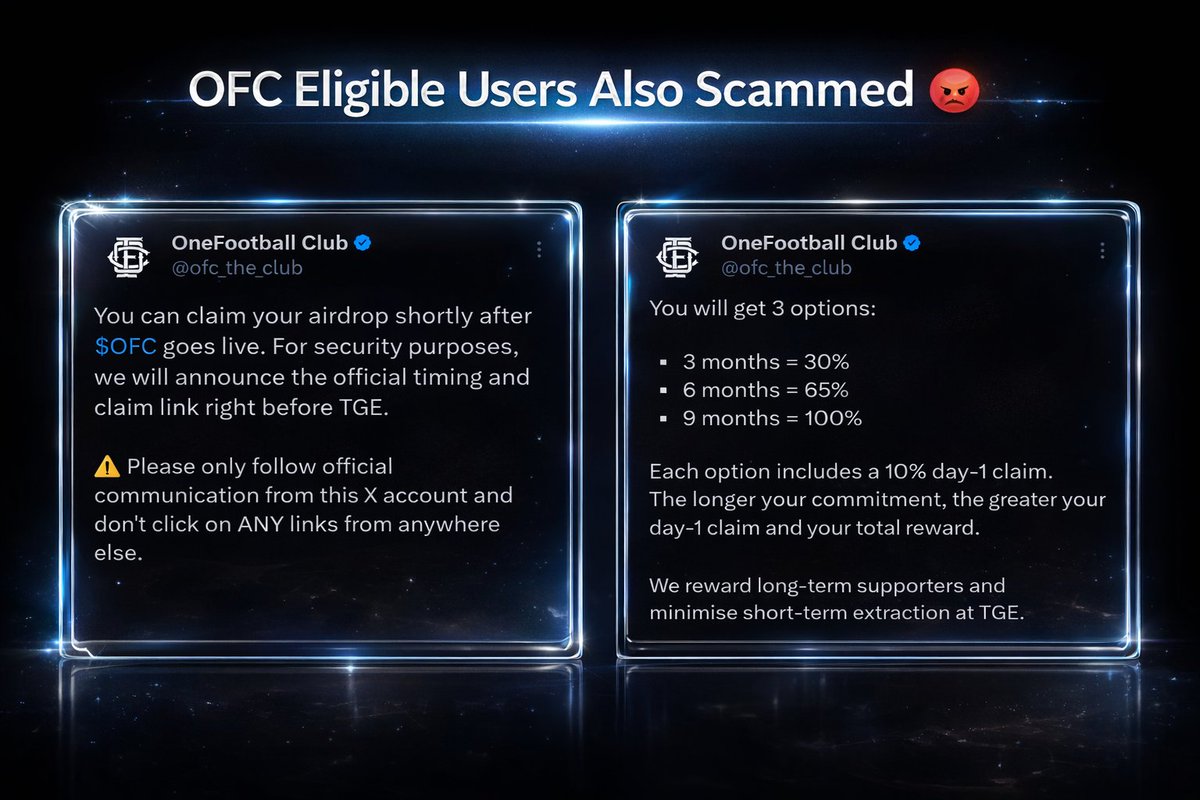
06:35 AM·Apr 6, 2026

monothiez 🐳
@Monothiez
Another project just SCAM community after 2 years of support $OFC Airdrop: I asked before: is one football club going to be the next big scammer? Observe with me: Registration NFT badge 📛: around 230k users minted their NFT. Mint Fee : 1.5$+ Guess how many people are https://t.co/KnC2IcbjUm https://t.co/dXLREfypTi
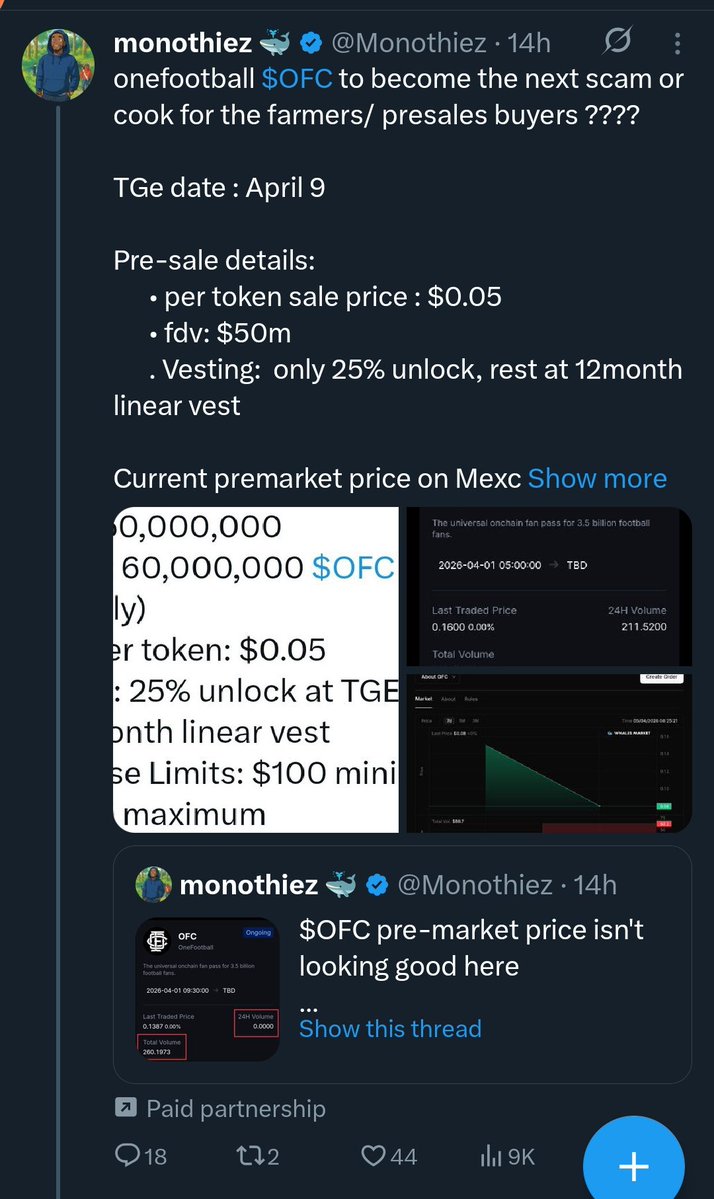
$OFC Airdrop update 🪂 OFC $OFC FanPass Airdrop is here You can claim your airdrop shortly after $OFC goes live. For security purposes, we will announce the official timing and claim link right before TGE. Dump before community claim??? Airdrop Details : Here is a quick https://t.co/cUu7sPW5Ve
05:58 AM·Apr 6, 2026
Steady attention without excessive speculation.
Crypto influencer and airdrop researcher @CryptoLakhan broke down the situation in a detailed thread on X. The post accused OFC of delivering an extremely narrow reward pool despite years of community effort. It quickly gained traction, with dozens of replies echoing the frustration.
According to the thread, over 238,000 users paid a required $1 fee for a badge or NFT. That fee was marketed as proof of genuine interest. Yet the vast majority of those paying participants reportedly received nothing.
The scale of the disconnect is striking. More than 38 million wallets connected to the OFC platform over its two-year run. As a result, community estimates suggest 1 to 2 million of those were active supporters who completed tasks regularly.
Still, the final eligible group reportedly landed at just 25,000 users. That represents roughly 0.066% of all connected wallets. For the 238,000+ users who paid the $1 participation fee, the pass rate was just over 10%.
At minimum, those badge purchases alone generated over $238,000 in revenue for the project. The OFC team has not shared any public breakdown of the eligibility algorithm or token allocation.
The backlash intensified after community members discovered that OFC had reportedly labeled many genuine supporters as bots. According to users in the thread, accounts with consistent daily activity and long participation histories still received the bot tag.
In response, critics argue this labeling served as a convenient tool to justify the narrow distribution. Without a transparent sybil detection methodology, the community has no way to verify whether the filtering was legitimate or selective.
Several users shared screenshots showing months of daily engagement. Despite following every step the project outlined, they found themselves flagged and excluded from the OFC airdrop rewards.
Key milestones in OFC and $OFC Token
Long-term Web3 community project launches, focusing on engagement, NFT minting campaigns, daily tasks, and social features to build a dedicated user base.
Consistent NFT drops and activity incentives attract millions of wallets, establishing OFC as one of the larger community-driven platforms in Web3.
Mandatory $1 fee (or NFT mint) added to filter bots and “prove genuine interest.” Over 238,000 users pay the fee; total connected wallets surpass 38 million.
$OFC airdrop distribution announced — out of millions of wallets and 238,000+ fee-paying users, only ~25,000 users qualify for rewards.
The $1 fee requirement is a central part of this controversy. OFC framed the payment as a way to filter out pure farmers and prove real commitment. Consequently, many participants viewed it as a fair trade for guaranteed consideration.
Now, with over 238,000 users having paid that fee and most receiving nothing, the sentiment has shifted. Community members increasingly describe the fee as a “bait-and-switch” tactic. In addition, some suggest the fee collection may have functioned as a revenue strategy rather than a genuine filtering mechanism.
This pattern echoes similar controversies in crypto airdrops. Projects like LayerZero, zkSync, and Starknet all faced backlash over eligibility criteria that excluded large portions of their communities.
Airdrops remain one of the primary ways Web3 projects distribute tokens and build initial user bases. Trust in the process, however, is fragile. Each controversy chips away at the willingness of real users to invest time and money into future projects.
When millions of participants follow every rule and still get excluded, it damages more than just one project. As a result, it erodes confidence in the entire airdrop model as a viable path for early supporters.
Meanwhile, the combination of high wallet counts, paid participation requirements, and extremely narrow eligibility has fueled accusations. Some projects, critics say, use large communities primarily for hype while reserving the actual token distribution for a small inner circle.
Affected users are actively calling for accountability under hashtags like #OFC, #CryptoScam, and #ofcnoairdorp. Some have also urged others to report the project and spread awareness across social platforms.
The OFC team has not yet issued a detailed public response addressing the specific accusations. The community would need a transparent breakdown of the eligibility criteria and supporting data before any trust could be restored.
For now, the OFC airdrop backlash serves as another cautionary tale for the broader Web3 space. Projects that collect fees and build massive user bases carry an implicit obligation to manage expectations clearly from the start. When that expectation gap becomes a chasm, the fallout can be swift and lasting.
Our Crypto Talk is committed to unbiased, transparent, and true reporting to the best of our knowledge. This news article aims to provide accurate information in a timely manner. However, we advise the readers to verify facts independently and consult a professional before making any decisions based on the content since our sources could be wrong too. Check our Terms and conditions for more info.