
Loading Search...


Lighter Review: A zk-powered Layer 2 DEX with verifiable order books, SNARK proofs, and high-performance trading on Ethereum.

Author: Akshat Thakur
Decentralized exchanges still lag behind centralized platforms where it actually matters, execution speed, fairness, and reliability. That gap has been obvious to traders for years. The industry has spent years trying to patch this gap, but most solutions either sacrifice performance or quietly reintroduce trust through offchain components. Lighter enters the decentralized exchange landscape at a time when performance gaps between DEXs and centralized platforms remain impossible to ignore.
That tradeoff is not accidental. It comes from the way blockchains are designed. Consensus systems are secure but slow. Offchain systems are fast but require trust. Very few designs seriously attempt to solve both at the same time.
Lighter is one of those attempts. Instead of optimizing around consensus or hiding complexity offchain, it builds around a different idea entirely, verifiable computation. The goal is simple. Execute trades efficiently, then prove that everything happened correctly.
This piece breaks down that approach, why it matters for order book markets, and whether it is a real step forward or just another complex design that struggles to gain adoption.
Lighter introduces the LIT token as the governance and economic coordination asset of the Lighter ecosystem. The protocol operates as an application-specific zero-knowledge rollup on Ethereum, enabling high-performance verifiable order book perpetual futures trading while aligning incentives with long-term protocol growth, network security, and decentralized perpetuals trading expansion.
The LIT token functions as the governance, staking, and value accrual asset of the Lighter protocol. It enables governance participation, staking for fee discounts and liquidity pool access, revenue sharing through on-chain fee buybacks, protocol upgrades, and ecosystem incentives.
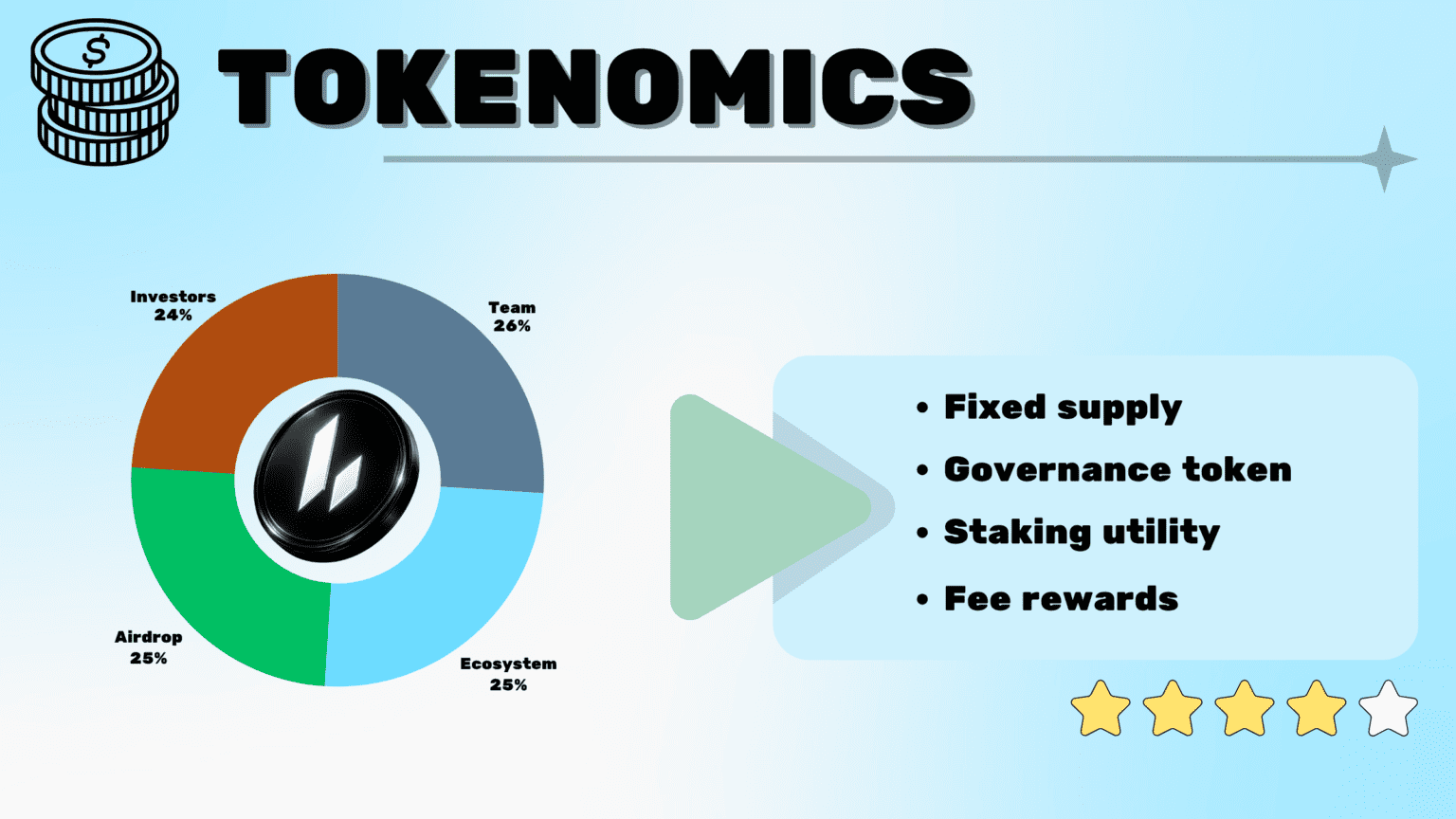
Lighter is one of the few projects that actually questions the default assumptions of blockchain design. Most protocols try to scale consensus or improve user experience on top of existing limitations.
Lighter instead removes consensus from the critical execution path and replaces it with proof-based verification. That is a meaningful shift. But it also introduces new risks.
| Project | Core Focus | Execution Architecture | Programmability | Token Utility | Notes |
|---|---|---|---|---|---|
|
|
A Lighter review ultimately comes down to one question. Does verifiable computation actually solve the core problem of decentralized trading, or does it just move complexity into a different layer?
Lighter makes a strong case for the first. By separating execution from verification, the protocol avoids the bottlenecks of consensus-heavy systems while still maintaining trust through proofs. That is not just an incremental improvement. It is a different design philosophy.
At the same time, this approach is not free. It introduces complexity at both the technical and conceptual level. Developers need to understand new primitives. Users need to trust proof systems instead of familiar consensus models.
The upside is clear. If this model works at scale, it could bring onchain trading much closer to the performance of centralized exchanges without sacrificing transparency. That is something most DeFi systems have failed to achieve so far.
The risk is also clear. If adoption does not follow, the design may remain technically impressive but underutilized.
Right now, Lighter sits in that middle ground. It is one of the more serious attempts to rethink trading infrastructure, but it still needs real market validation. Whether it becomes foundational infrastructure or another experimental design will depend on execution, not just architecture.


| High-performance verifiable perpetual DEX |
| Custom zk-rollup Layer-2 on Ethereum using proprietary ZK circuits |
| Custom (purpose-built) |
| Governance, staking (LLP access / discounts), revenue buybacks |
| Zero trading fees for retail; mainnet Oct 2025; TGE Dec 2025 with airdrop; sub-second finality and zero MEV design; backed by a16z and Coinbase Ventures |
|
| High-performance perpetual DEX on sovereign Layer-1 | Custom high-throughput Layer-1 with off-chain matching engine | Custom (Rust-based) | Governance, fee buybacks | Leads perpetual futures volume; HIP-3 and HIP-4 ecosystem expansions; no VC allocation; launched in 2023 |
|
| Decentralized perpetual derivatives trading | Cosmos-based sovereign appchain (V4) | Full (CosmWasm) | Governance, staking (DYDX) | High leverage orderbook trading; migration from Ethereum Layer-2 to dedicated appchain architecture |
|
| Perpetual trading using GLP pooled liquidity model | Smart contracts on Arbitrum and Avalanche | Full (EVM) | Governance, protocol fee share (GMX) | Zero-slippage design with multi-asset pool; V2 introduces synthetic markets and isolated liquidity improvements |
|
| Perpetual DEX offering crypto and stock perpetual products | Custom high-performance Layer-1 | Custom | Governance (ASTER) | Backed by CZ; rapid open-interest growth; differentiation through tokenized stock derivatives exposure |
|
| Options and perpetual derivatives trading | Ethereum Layer-2 built using OP Stack | Full (EVM) | Governance, staking (AEVO) | Formed via Ribbon Finance merger; optimized for high-speed derivatives trading; incentive farming programs ahead of major launches |
|
| Hybrid orderbook perpetual DEX | Arbitrum deployment with appchain scaling plans | Full (EVM) | Governance, fee utility (VRTX) | Cross-chain liquidity synchronization; low fees and unified margin engine; integrations with Cosmos ecosystem routes |
Rain Protocol Review: Is $RAIN Worth Buying? Tokenomics, Risks & Verdict
Zama Review
Lighter ($LIT) Review: zk-Powered DEX on Ethereum
Hyperliquid Review 2026: Is HYPE Worth Buying? Fees, Risks & Verdict
Rain Protocol Review: Is $RAIN Worth Buying? Tokenomics, Risks & Verdict
Zama Review
Lighter ($LIT) Review: zk-Powered DEX on Ethereum
Hyperliquid Review 2026: Is HYPE Worth Buying? Fees, Risks & Verdict


