Loading Search...


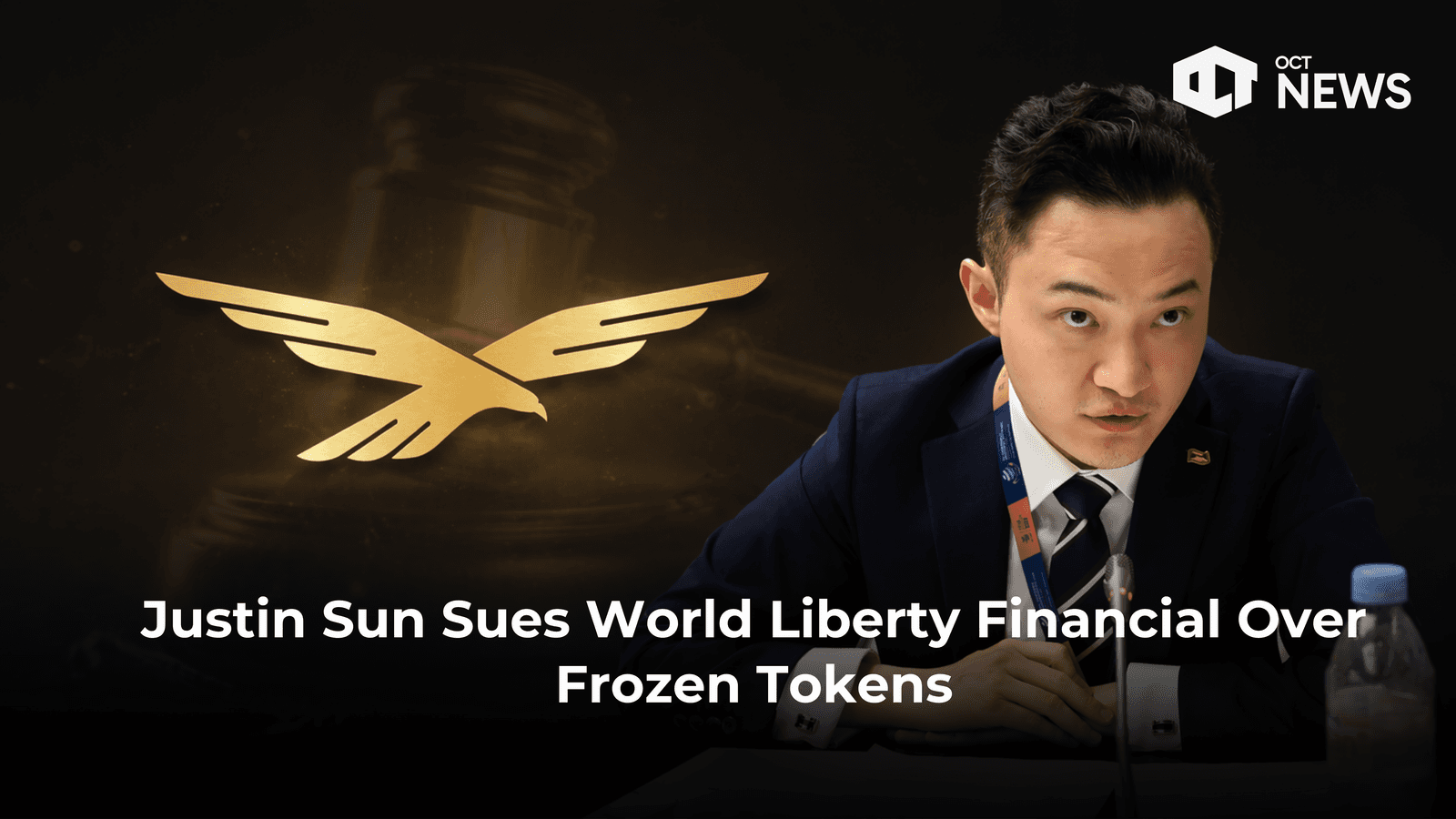
Justin Sun sues World Liberty Financial, claiming WLFI froze his tokens, removed voting rights, and imposed unfair governance rules.

Author: Akshat Thakur
22nd April 2026 – TRON founder Justin Sun has filed a federal lawsuit against World Liberty Financial. He accuses the Trump-linked DeFi project of freezing his tokens and stripping his governance rights.
High Signal Summary For A Quick Glance

Shogo Nakai
@ShogoNakai

@justinsuntron Governance risk is still one of the biggest blind spots in crypto when token rights can be altered or frozen unilaterally it undermines the entire premise of decentralization.
Today, I filed a lawsuit in California federal court against World Liberty Financial to protect my legal rights as a holder of $WLFI tokens. I have always been—and remain—an ardent supporter of President Trump and his Administration’s efforts to make America crypto friendly.
06:37 AM·Apr 22, 2026

CryptoHopz
@grokisthislegit
@justinsuntron I remember when you fucked us over with BTT and went to V2 Karmas a bitch
Today, I filed a lawsuit in California federal court against World Liberty Financial to protect my legal rights as a holder of $WLFI tokens. I have always been—and remain—an ardent supporter of President Trump and his Administration’s efforts to make America crypto friendly.
04:22 AM·Apr 22, 2026

Hazey
@GlobalHazey
@justinsuntron Here is Justin Suns locked WLFI right now valued at $43,194,551.30 https://t.co/lXKblZAzBV
Today, I filed a lawsuit in California federal court against World Liberty Financial to protect my legal rights as a holder of $WLFI tokens. I have always been—and remain—an ardent supporter of President Trump and his Administration’s efforts to make America crypto friendly.
03:39 AM·Apr 22, 2026
High attention and emotional sentiment detected.
Sun announced the lawsuit through a lengthy post on X on April 22. The WLFI team froze all of his $WLFI tokens, removed his voting rights, and threatened to burn his holdings. According to Sun, good-faith negotiations failed before he turned to the courts.
Sun says the team “wrongfully froze all of my tokens.” They also “stripped me of my right to vote on governance proposals.” He claims they threatened to permanently burn his holdings “without any proper justification.”
In his post, Sun directed criticism at specific team members. He wrote that “certain individuals” on the team operate the project “in a manner that goes against President Trump’s values.” Sun made clear he still supports Trump personally.
Sun also tried to separate Trump from the dispute. He wrote: “I do not believe President Trump would condone these actions if he knew about them.” That framing places blame on the team, not on the project’s political brand.
The conflict traces back to April 2025. Roughly $9 million of Sun’s WLFI tokens moved to exchanges. The team froze those tokens, citing suspicious activity.
At the time, WLFI defended the freeze as a security measure. Sun’s current lawsuit frames that earlier action differently. He calls it part of a broader pattern of overreach by the team.
The complaint was filed in the U.S. District Court for the Central District of California. Sun reportedly committed roughly $75 million to WLFI across rounds. That includes $30 million in the initial public sale, according to Fortune and The Defiant. He is the project’s largest external backer.
WLFI launched in late 2024 as a Trump-family-linked DeFi platform. It marketed itself as permissionless and aligned with financial freedom. Sun became its largest external backer and took an advisory role to promote the project.
Key milestones in Justin Sun vs World Liberty Financial Dispute
World Liberty Financial launches as a Trump-linked DeFi platform. Justin Sun becomes the largest external backer, committing ~$75M and taking an advisory role.
~$9M of Sun’s WLFI tokens are moved to exchanges and frozen by the team, citing suspicious activity, triggering the first public signs of conflict.
WLFI introduces new terms including a 10% forced burn and strict vesting, requiring acceptance or indefinite token lock — while Sun remains unable to vote.
Justin Sun files suit in U.S. federal court, alleging unlawful freezing, loss of governance rights, and risk of forced token burn, seeking restoration and equal treatment.
A new governance proposal from WLFI on April 15 triggered the lawsuit. According to Sun, it requires token holders to “affirmatively accept” its terms. Those who refuse face indefinite token locking.
For advisors, the proposal includes a mandatory 10% permanent burn. Early purchasers like Sun face a two-year cliff plus two-year vesting. Non-acceptors get their holdings locked indefinitely.
Sun cannot vote on this proposal. His tokens are already frozen. He stated: “This proposal is bad for the community.” Because his tokens are locked, he has no voice in the outcome.
At the core of the dispute is a guardian address in WLFI’s smart contract. This function lets the team blacklist wallets unilaterally. It was not prominently disclosed in early materials, according to Sun.
WLFI marketed itself as permissionless at launch. The guardian address contradicts that framing. It gives the team centralized control over token transfers.
This type of admin power is not unique to WLFI. Many DeFi projects retain similar controls through multisig wallets or admin keys. The difference here is the scale and the political profile of the project.
Sun wants his tokens unfrozen and his voting rights restored. He also seeks to block any forced burning or vesting. He emphasized fairness: “All I want is to be treated the same as every other early investor.”
The complaint likely alleges breach of contract. It may also raise securities-law questions about the undisclosed blacklist function. Sun’s legal team has not released the full complaint as of April 22.
Standard federal-court procedure will apply. The court will first address motions to dismiss. If the case survives, discovery could expose internal communications and governance records.
As of April 22, WLFI has not issued a public response. The team previously defended the blacklisting as necessary for community protection.
A preliminary injunction could unfreeze Sun’s tokens while the case plays out. Discovery could also reveal details about the guardian address and its use history.
The April 15 governance proposal remains live. It could further divide the community if it passes without input from the largest investor.
Loading chart...
This case highlights a growing tension in DeFi. Projects sell themselves on decentralization, then retain hidden admin controls. Those controls let insiders freeze funds and change rules.
Sun’s $75 million commitment gave WLFI early legitimacy. If his claims hold, they expose how decentralization promises can mask centralized power. A token marketed as permissionless still allowed unilateral freezes.
The case tests how federal courts handle token governance disputes. Traditional contract law may apply where crypto assumed code was law. For investors in politically branded DeFi projects, the outcome could set important precedent.
The broader market now faces fresh questions about admin-key transparency. When projects retain the power to freeze, burn, or lock tokens, investor protections depend on disclosure. Sun’s lawsuit puts that question before a federal judge.
This is not financial advice. Do your own research before making investment decisions.
Our Crypto Talk is committed to unbiased, transparent, and true reporting to the best of our knowledge. This news article aims to provide accurate information in a timely manner. However, we advise the readers to verify facts independently and consult a professional before making any decisions based on the content since our sources could be wrong too. Check our Terms and conditions for more info.


Pokémon TCG Tokenization Pushes Weekly Revenue to $5.38M
James Wynn Accused Of Scam Following $ASSDAQ PreSale
Aave Records $9.94B Outflow, TVL Drops to $16.43B
KelpDAO Hacker Moves $175M in Stolen Funds as Laundering Phase Begins
Pokémon TCG Tokenization Pushes Weekly Revenue to $5.38M
James Wynn Accused Of Scam Following $ASSDAQ PreSale
Aave Records $9.94B Outflow, TVL Drops to $16.43B
KelpDAO Hacker Moves $175M in Stolen Funds as Laundering Phase Begins

World Liberty Financial
$0.08