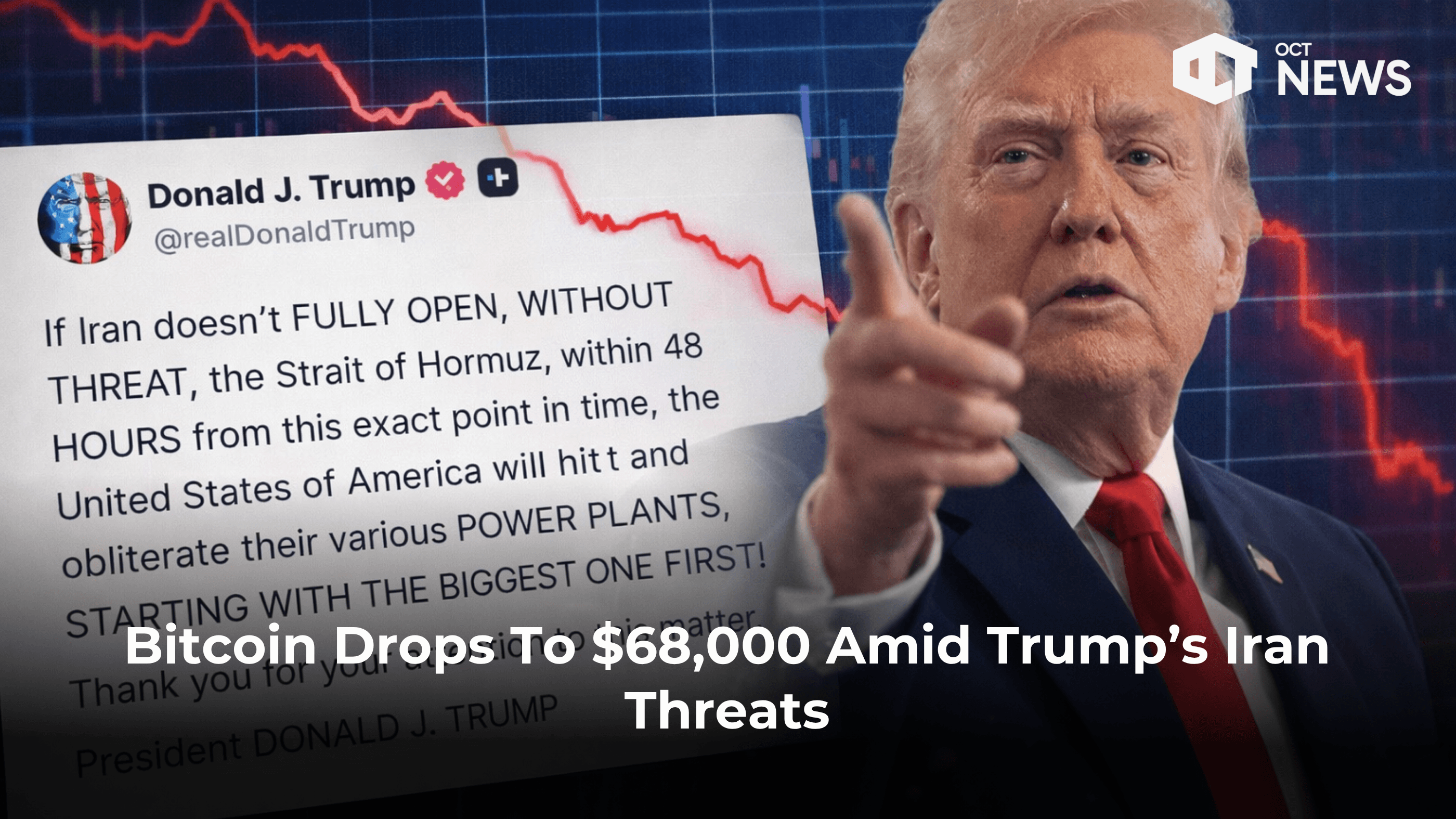
Bitcoin fell below $68,000 after President Trump issued a 48-hour ultimatum to Iran, threatening to obliterate Iran's power plants.

Author: Sahil Thakur
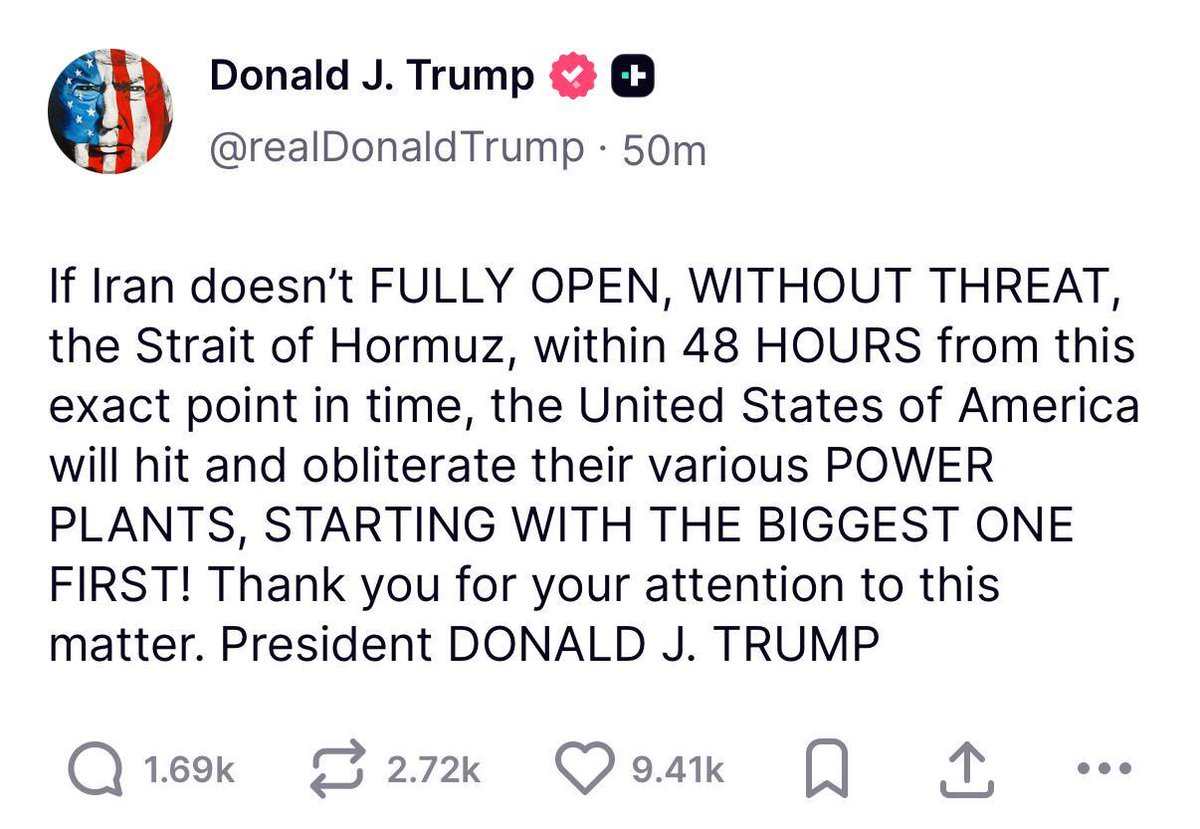
22nd March 2026 – Bitcoin fell below $68,000 after President Trump issued a 48-hour ultimatum to Iran. He threatened to “hit and obliterate” Iran’s power plants unless the country fully reopened the Strait of Hormuz.
High Signal Summary For A Quick Glance

Cointelegraph
@Cointelegraph

🚨 JUST IN: President Trump threatens to strike Iran’s power plants if the Strait of Hormuz isn’t fully opened within 48 hours. $BTC dipped below $69K following the post. https://t.co/2o2XTD9BxG
01:35 AM·Mar 22, 2026

The Kobeissi Letter
@KobeissiLetter
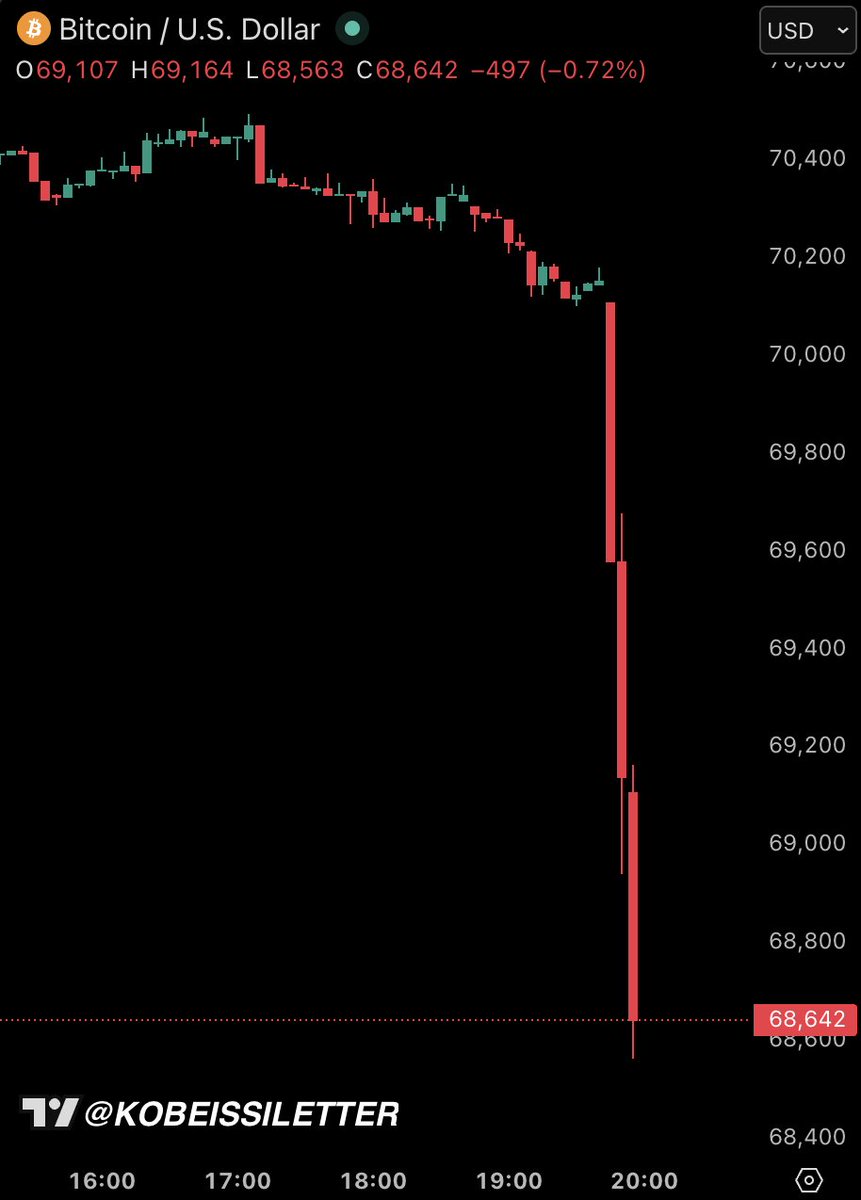
BREAKING: Bitcoin collapses below $68,000 after President Trump threatens to "obliterate" Iran's power plants. Just 24 hours ago, President Trump said he was considering "winding down" the Iran War. https://t.co/6rGwk7lZV5
11:59 PM·Mar 21, 2026
Overheated
Steady attention without excessive speculation.
The threat came just 24 hours after Trump suggested the war was “winding down.” That reversal triggered immediate risk-off sentiment across crypto and traditional markets. Over $1 billion in crypto liquidations followed, with roughly $980 million in long positions cleared out.
BTC had been trading between $69,000 and $71,000 before the ultimatum. Thin liquidity below $70,000 accelerated the move once sellers took control. If $68,000 fails decisively, analysts estimate another ~$608 million in liquidations could follow.
The drop extended a week-long selloff tied to renewed geopolitical uncertainty. Crypto broadly followed equities lower as a risk asset.
Just days earlier, Bitcoin had surged to $75,000-$75,800 during US trading hours on March 16-17. That marked its highest level since the Iran war began on February 28. The rally reflected a nearly 25% rebound from February lows near $63,000.
Short squeezes, derivatives momentum, and ETF inflows all fueled the climb, according to Bitcoin Magazine. Temporary de-escalation signals from Trump also helped sentiment. Then the Iran ultimatum reversed all of it.
The 2026 Iran conflict began with US/Israeli “Operation Epic Fury” airstrikes on February 28, according to compiled reports. Targets included missile sites, command centers, and nuclear facilities. The strikes also killed Supreme Leader Ali Khamenei.
Iran retaliated with missiles and drones aimed at Israel, Gulf US bases, and shipping. The Strait of Hormuz handles roughly 20% of global oil supply. So its disruption rattled energy and financial markets at the same time.
Bitcoin, as the only major 24/7 liquid market, sold off first. BTC dropped 4-8.5% to lows around $62,900-$64,000 on the opening weekend. That move wiped roughly $128 billion from total crypto market cap.
ETH and altcoins followed, with Ethereum losing over 5%. Yet recovery came fast. BTC reclaimed $68,000-$69,000 within hours as markets digested the shock.
Each subsequent escalation produced a smaller dip. Higher lows formed at roughly $66,000, then $68,000, then $69,400. By mid-March, BTC had outperformed most asset classes.
Oil has been the biggest winner since the war began. Brent and WTI crude surged over 40% from pre-war levels around $70-$73 per barrel. Prices spiked to $100-$120+ on Hormuz disruptions and tanker attacks, according to Business Insider.
The S&P 500 dropped over 2% since the conflict started. Some reports cite 3-4% drawdowns and trillions in market cap lost. Energy and defense stocks outperformed while broader indices suffered, per Reuters.
Gold initially rallied toward $5,000-$5,300 per ounce at peaks. Yet it has declined 2-4% in stretches since the war began. Dollar strength and rising rate concerns weighed on it. BTC outperformed gold over the same period, according to Yahoo Finance.
The US dollar strengthened as a safe-haven bid. Treasury yields rose on inflation fears while bonds came under pressure.
The war has tested whether Bitcoin acts as a risk asset or a store of value. BTC sold off on every escalation headline. But it also rebounded faster than equities each time.
Some analysts pointed to reduced leverage before the war as a stabilizing factor. Prior corrections had already flushed out excess speculation. Others see long-term bullishness from inflation or capital flight.
One overlooked factor stands out. If Trump strikes Iran’s power plants, that could disrupt the country’s subsidized Bitcoin mining. Iran contributes a notable share of global hashrate.
The 48-hour window from Trump’s ultimatum expires around March 23. Markets remain highly sensitive to headlines about the strait and oil flows. The $68,000 level is the key technical threshold for Bitcoin.
A decisive break below could trigger the cascading liquidations analysts have flagged. If de-escalation signals emerge instead, BTC could recover quickly based on the mid-March pattern.
The war is now in its fourth week. Trump’s stated objectives have shifted to securing the Strait of Hormuz. This is not financial advice. Geopolitical events can move crypto prices in either direction.
Our Crypto Talk is committed to unbiased, transparent, and true reporting to the best of our knowledge. This news article aims to provide accurate information in a timely manner. However, we advise the readers to verify facts independently and consult a professional before making any decisions based on the content since our sources could be wrong too. Check our Terms and conditions for more info.