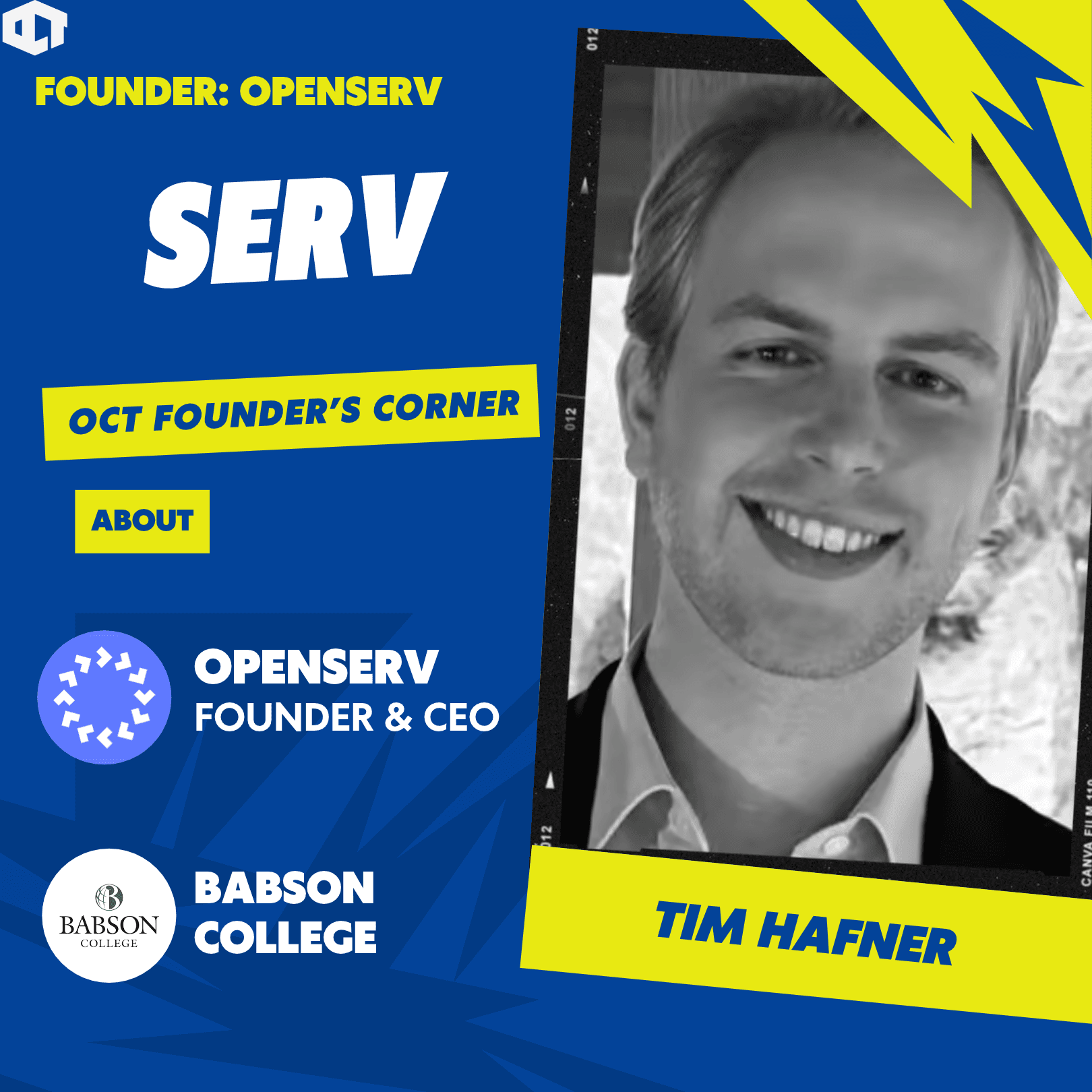
Who Is Tim Hafner? OpenServ Founder and AI Infrastructure Entrepreneur Explained
Tim Hafner is the founder and CEO of OpenServ, an AI infrastructure project developing reasoning systems, AI agents, and tools for enterprise automation.


Author: Akshay
Tim Hafner is the founder and CEO of OpenServ, a technology project developing AI infrastructure for autonomous agents, enterprise automation, and the emerging agent economy. OpenServ aims to help developers and organizations build, deploy, and operate AI-powered applications through its agent infrastructure and reasoning technology. The project has also developed the $SERV token ecosystem, connecting platform usage, AI product launches, and network participation. Hafner’s work focuses on making AI systems more reliable and practical for businesses, developers, and institutions.
Early Background and Career
Tim Hafner’s professional background spans venture capital, software, artificial intelligence, and Web3. According to his professional profile, he studied finance and entrepreneurship at Babson College and gained experience working with early-stage businesses and technology ventures.
Before focusing on OpenServ, Hafner was involved in investment research, venture development, and blockchain-related initiatives. These experiences brought together business strategy and emerging technology, helping shape his interest in building AI systems that can support practical business workflows rather than functioning only as experimental tools.
How Tim Hafner Created OpenServ
Hafner co-founded OpenServ to address the challenges involved in developing and deploying AI agents that can perform useful tasks across applications and workflows. While AI models can generate text and respond to instructions, deploying them in real-world environments often requires additional infrastructure for coordinating tasks, connecting tools, managing execution, and improving reliability.
OpenServ initially developed tools that enabled users and developers to create AI agents and coordinate their work. Over time, the project expanded its focus toward reasoning infrastructure and enterprise applications. Its newer SERV Reasoning initiative aims to provide more structured and reliable AI reasoning for organizations, including enterprises and institutions. The project’s current direction connects reasoning technology, developer infrastructure, AI product launches, and the $SERV ecosystem.
How OpenServ Works
OpenServ provides infrastructure intended to help developers build and deploy AI agents that can interact with tools, APIs, and external services. Its developer platform includes agent creation and deployment capabilities, while its broader ecosystem supports the development and launch of AI-powered products.
The project’s SERV Reasoning infrastructure focuses on making AI outputs more structured and dependable for practical applications. OpenServ is also developing its ecosystem around enterprise reasoning services, developer access, and a network of AI products. This approach is intended to support use cases that require more than a basic chatbot, such as automated workflows, business operations, and specialized AI applications.
The $SERV token is the ecosystem’s network asset. OpenServ’s current documentation describes utility tied to platform participation, staking, and AI product launches, with a portion of platform revenue intended to flow back into the token ecosystem. The project is also working toward integrating $SERV into payments across its products and services. The scope and implementation of these token functions may evolve as the network develops.
Tim Hafner’s Role at OpenServ
As founder and CEO, Tim Hafner leads OpenServ’s strategic direction and product vision. His work is focused on developing AI infrastructure that can serve businesses and institutions, while connecting the technology to a broader ecosystem of developers, applications, and token-based participation.
Hafner’s role also involves positioning OpenServ beyond a conventional AI-agent builder. The project is moving toward reasoning services and infrastructure designed for enterprise deployment, with an emphasis on reliability, operational usefulness, and integration into real business environments. Its progress will depend on technical performance, customer adoption, and the ability to turn its stated token utility into sustained platform activity.
Why Tim Hafner Matters in Crypto
Tim Hafner is part of the group of founders working to connect artificial intelligence with blockchain-based infrastructure. AI agents are increasingly being developed to perform tasks across digital services, but deploying them reliably requires systems for execution, coordination, and access to external tools.
OpenServ’s approach combines AI reasoning and agent infrastructure with a crypto ecosystem built around $SERV. This makes the project relevant to the broader AI-and-crypto sector, where developers are exploring how blockchain networks and token-based systems can support AI applications. Its longer-term significance will depend on real usage, enterprise adoption, technical reliability, and whether platform activity generates durable demand for the ecosystem.
Frequently Asked Questions
Who is Tim Hafner?
What is OpenServ?
Is Tim Hafner the founder or co-founder of OpenServ?
What is the $SERV token?
What does OpenServ do with AI agents?
In this article
Early Background and CareerHow Tim Hafner Created OpenServHow OpenServ WorksTim Hafner’s Role at OpenServWhy Tim Hafner Matters in Crypto