Loading Search...


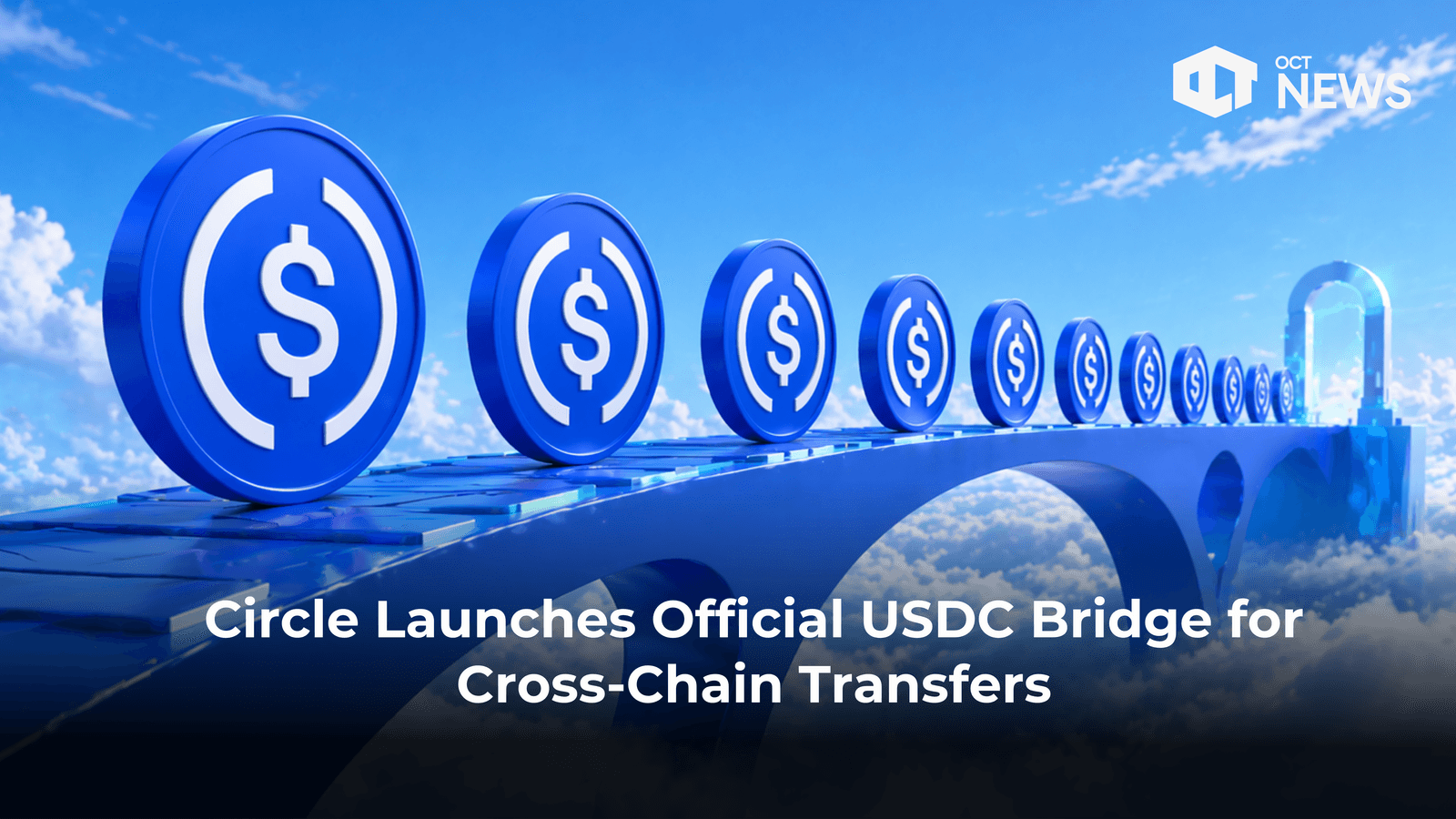
Circle launches USDC Bridge with native transfers, enabling seamless cross-chain USDC movement with transparent fees and no intermediaries.

Author: Akshat Thakur
17th April 2026 – Circle launched its official USDC Bridge on Thursday. The product gives users a direct way to move USDC between blockchains.
High Signal Summary For A Quick Glance

patrick.algo
@patrickbennett

@USDC Where's $ALGO support - it was one of your first USDC supported chains.
Introducing the USDC Bridge. A direct way to move USDC crosschain. Built and operated by Circle, USDC Bridge gives you a predictable, transparent way to move USDC between chains: → Native burn-and-mint transfers → Clear fees upfront, with live status and progress → No route https://t.co/EZUFJhzX8U
04:18 PM·Apr 17, 2026

hyetigran
@hyetigran
@USDC Swapping 100% of stables from USDC to Tether. Thank you
Introducing the USDC Bridge. A direct way to move USDC crosschain. Built and operated by Circle, USDC Bridge gives you a predictable, transparent way to move USDC between chains: → Native burn-and-mint transfers → Clear fees upfront, with live status and progress → No route https://t.co/EZUFJhzX8U
04:10 PM·Apr 17, 2026

NPC68
@NPC_68
@USDC Other providers charge 0 fees for the same service... https://t.co/KT5OTHPurA
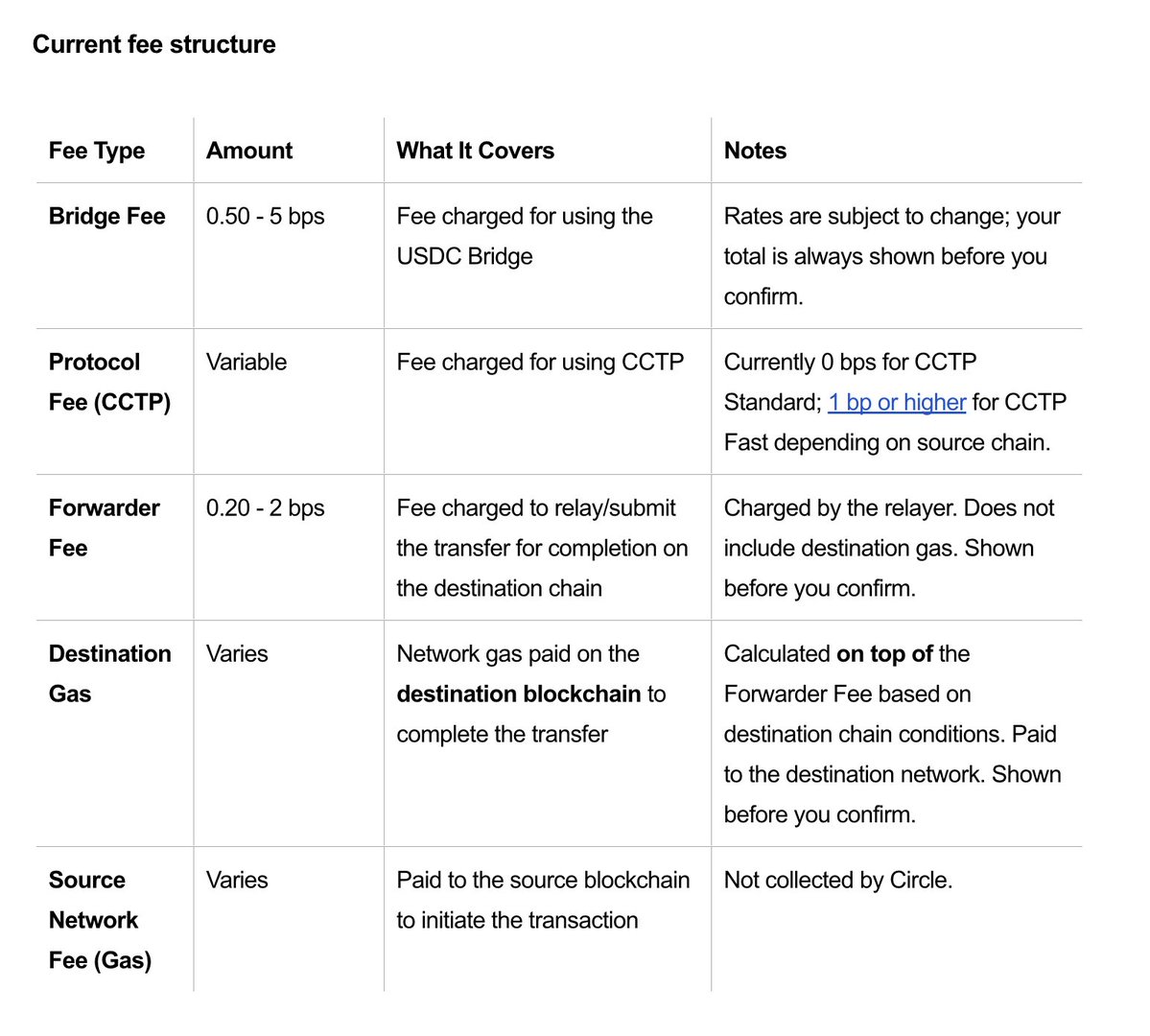
Introducing the USDC Bridge. A direct way to move USDC crosschain. Built and operated by Circle, USDC Bridge gives you a predictable, transparent way to move USDC between chains: → Native burn-and-mint transfers → Clear fees upfront, with live status and progress → No route https://t.co/EZUFJhzX8U
02:59 PM·Apr 17, 2026
Steady attention without excessive speculation.
The company announced the launch on X. It highlighted predictable upfront fees, live transfer tracking, and automatic destination-chain gas. As a result, users no longer need to select routes manually or handle gas on the receiving chain.
The USDC Bridge builds on Circle’s Cross-Chain Transfer Protocol (CCTP). That protocol already powers native 1:1 USDC transfers across more than a dozen chains. Unlike third-party bridges, the new product burns tokens on the source chain and mints native USDC on the destination. Because of this, the 1:1 reserve backing stays intact at every step.
The process is straightforward. A user selects a source chain and destination chain, then enters the amount. Before confirming, the interface shows the exact fee and expected arrival time.
Circle’s contracts then burn the USDC on the source chain. They mint an equivalent amount of native USDC on the destination. No wrapped tokens or liquidity pools sit in the middle of the transaction.
Fees stay fixed per transfer. In contrast, traditional bridges charge variable gas or slippage costs. Circle also prepays the destination-chain gas automatically. As a result, the recipient gets spendable USDC with no extra steps.
All transfers include real-time status updates in the interface. Developers can also track transfers via API. That makes the Bridge easy to embed in wallets or payment flows.
Cross-chain movement remains one of the biggest friction points in crypto. Third-party bridges have suffered repeated exploits. For example, the Ronin Bridge lost $625 million in 2022. The Wormhole exploit drained $320 million. Nomad lost $190 million the same year.
In total, bridge hacks have exceeded $2 billion since 2021. That figure comes from data tracked by Rekt.news and Chainalysis.
Those incidents pushed institutions away from cross-chain transfers. Retail users faced different problems: confusing interfaces, opaque routing, and slippage risk. The USDC Bridge addresses both concerns. Circle controls the entire flow end-to-end, so there is no external smart contract risk.
Because of this design, the result is closer to a bank wire than a traditional crypto bridge.
The launch strengthens USDC’s position against Tether. Tether commands roughly $140 billion in market cap. By comparison, USDC sits at approximately $60 billion. Tether has expanded its multi-chain presence, but it does not offer a first-party bridge.
For developers, the Bridge offers a drop-in solution. Wallets, exchanges, and payment apps can integrate the service easily. That could make USDC the default cross-chain stablecoin for apps that prioritize user experience.
Circle’s existing CCTP tooling gives the company a head start. As a result, integration into wallets and DeFi front-ends should follow quickly.
Key milestones in USDC and Circle’s Official USDC Bridge
Circle introduces USDC as a fully reserved, dollar-backed stablecoin with monthly attestations, laying the foundation for regulated digital dollar infrastructure.
Circle launches Cross-Chain Transfer Protocol, enabling native burn-and-mint USDC transfers across chains without wrapped assets or external liquidity.
CCTP expands to 12+ blockchains as USDC gains strong institutional adoption and becomes a core stablecoin for cross-chain liquidity.
Circle takes center stage at Paris Blockchain Week, emphasizing the role of USDC in bridging traditional finance and digital asset infrastructure.
Circle unveils the official USDC Bridge, offering simplified cross-chain transfers with fixed fees, real-time tracking, and automated gas handling.
Community response was immediate. Replies to the announcement flagged the absence of Solana, Algorand, and Stellar. All three chains already host large native USDC supplies. Circle has not yet confirmed the initial supported routes.
The team will likely prioritize high-volume corridors first. Solana carries significant USDC volume through DeFi and payments. Its inclusion could become a priority based on demand and the feedback from Paris Blockchain Week.
Adoption metrics and chain expansion will shape the product’s trajectory. Institutional treasury movements and consumer payments represent the largest use cases. Regulatory clarity around stablecoins continues to improve in the EU under MiCA and in the U.S.
For now, the next step is clear. Users can visit the Bridge interface, connect a wallet, and test a transfer once supported chains go live. Circle has positioned the product as the simplest native cross-chain option in stablecoins.
The stablecoin built on compliance and transparency now has the infrastructure to match. It arrives on the heels of Circle’s strongest European institutional showing to date.
Our Crypto Talk is committed to unbiased, transparent, and true reporting to the best of our knowledge. This news article aims to provide accurate information in a timely manner. However, we advise the readers to verify facts independently and consult a professional before making any decisions based on the content since our sources could be wrong too. Check our Terms and conditions for more info.


Circle Launches Official USDC Bridge for Cross-Chain Transfers
Risk Protocol Launches Testnet After Paris Blockchain Week Win
Staynex to Launch $STAY Token on 23 April 2026
Bitcoin Quantum Debate Deepens as Hoskinson Flags BTC at Risk
Circle Launches Official USDC Bridge for Cross-Chain Transfers
Risk Protocol Launches Testnet After Paris Blockchain Week Win
Staynex to Launch $STAY Token on 23 April 2026
Bitcoin Quantum Debate Deepens as Hoskinson Flags BTC at Risk