
Loading Search...


BIP-361 Bitcoin quantum vulnerability proposal aims to freeze legacy addresses, including Satoshi-era wallets, against future quantum attacks.

Author: Kritika Gupta
Steady attention without excessive speculation.
16th April 2026- Bitcoin developers have introduced a major proposal aimed at protecting the network from future quantum computing threats. The proposal, known as BIP-361 by Bitcoin seeks to freeze coins held in early address formats that are considered vulnerable to quantum attacks. Specifically, the proposal targets legacy Pay-to-Public-Key (P2PK) and similar address types that were widely used during Bitcoin’s earliest years. This includes wallets from the 2010–11 era and addresses widely linked to Satoshi Nakamoto.
High Signal Summary For A Quick Glance

Shanaka Anslem Perera ⚡
@shanaka86

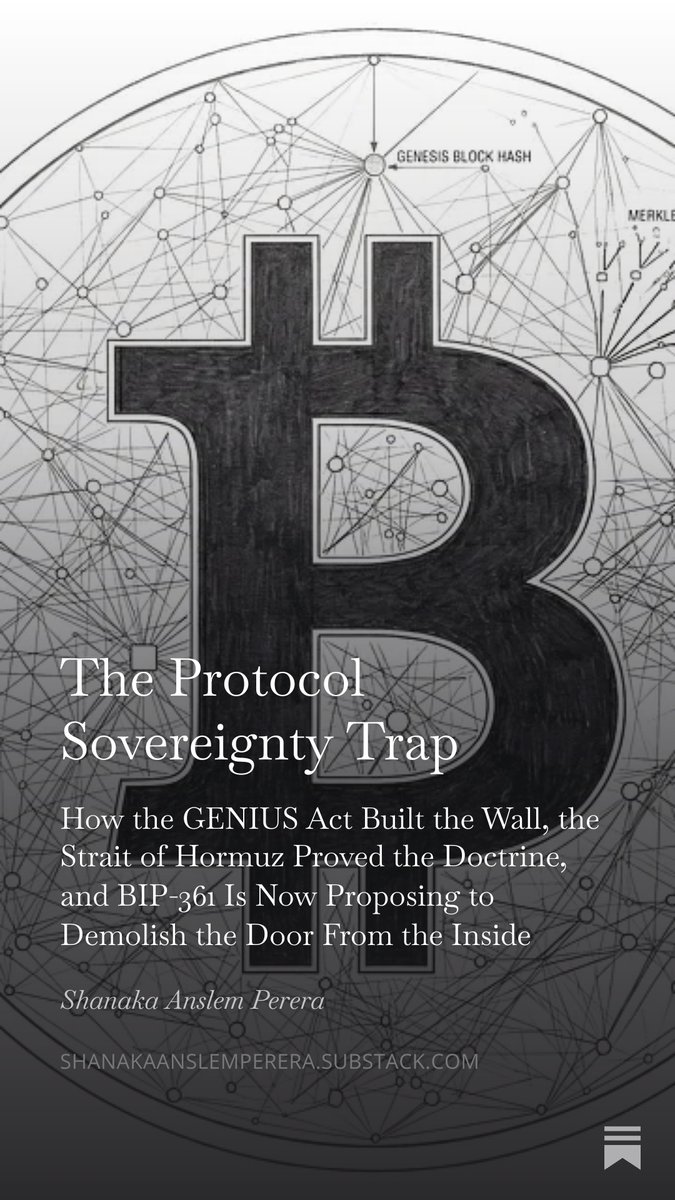
On April 14, 2026, Bitcoin's own developers formally published a proposal to freeze $420 billion of their own money supply, including the 1.1 million coins attributed to Satoshi Nakamoto himself. The world has not yet processed what happened in the fourteen days before that https://t.co/mYR0lp43yx
02:00 PM·Apr 16, 2026
The Bitcoin BIP-361 proposal builds on concerns around quantum risk. Both ECDSA and Schnorr signatures, which Bitcoin currently relies on, remain theoretically vulnerable to quantum attacks. In particular, early P2PK outputs from 2009 to 2011 present the highest risk because their public keys are already visible on the blockchain. This makes them a direct target once sufficiently powerful quantum computers become available.
Recently, advances in quantum research, including work published by Google Quantum AI, have increased the urgency of these discussions. Importantly, Bitcoin BIP-361 follows BIP-360, which was merged earlier in 2026. BIP-360 introduced a quantum-resistant Pay-to-Merkle-Root (P2MR) address format as the first step in Bitcoin’s long-term post-quantum roadmap.
However, BIP-360 remained optional. By contrast, BIP-361 introduces enforcement measures. Without such enforcement, developers estimate that around 1.7 million BTC in the most exposed early P2PK addresses remain at direct risk. More broadly, legacy address exposure could affect up to 34% of Bitcoin’s supply, creating a potential systemic threat to market confidence if these coins were ever stolen.
Historically, Bitcoin has never frozen existing coins through a protocol upgrade. For example, upgrades such as Segregated Witness (2017) and Taproot (2021) introduced new capabilities without invalidating older signatures.
Authored by cypherpunk Jameson Lopp and five quantum security experts BIP-361 proposes a three-phase migration plan that would activate through a soft fork.
First, Phase A, beginning three years after activation, would block any new inflows into legacy address formats. However, users would still be able to spend existing funds from those addresses. Next, Phase B, beginning five years after activation, would invalidate legacy ECDSA and Schnorr signatures entirely. At that point, any coins that remain in vulnerable formats would effectively become frozen.
Finally, Phase C leaves room for a future recovery mechanism. Under this framework, legitimate holders could potentially reclaim frozen funds using zero-knowledge proofs or similar cryptographic verification systems. Consequently, the proposal aims to create strong incentives for users to migrate funds into quantum-resistant P2MR outputs well before the sunset deadline.
The proposal has already sparked intense debate across the Bitcoin community. Supporters argue that the network must prepare now to prevent a future quantum-driven theft event that could release large dormant balances into circulation and damage trust in Bitcoin’s security model.
On the other hand, critics argue that freezing coins directly challenges Bitcoin’s core principle of immutability. In particular, many have raised concerns that dormant holdings, including wallets linked to Satoshi-era miners, could become permanently inaccessible.
Our Crypto Talk is committed to unbiased, transparent, and true reporting to the best of our knowledge. This news article aims to provide accurate information in a timely manner. However, we advise the readers to verify facts independently and consult a professional before making any decisions based on the content since our sources could be wrong too. Check our Terms and conditions for more info.


Bitcoin Quantum Debate Deepens as Hoskinson Flags BTC at Risk
Drift Protocol Relaunches with $150M Tether Partnership
Rhea Finance Exploited for $7.6M via Fake Token Attack
Bitcoin BIP-361 Targets Legacy Wallets in Quantum Security Push
Bitcoin Quantum Debate Deepens as Hoskinson Flags BTC at Risk
Drift Protocol Relaunches with $150M Tether Partnership
Rhea Finance Exploited for $7.6M via Fake Token Attack
Bitcoin BIP-361 Targets Legacy Wallets in Quantum Security Push


