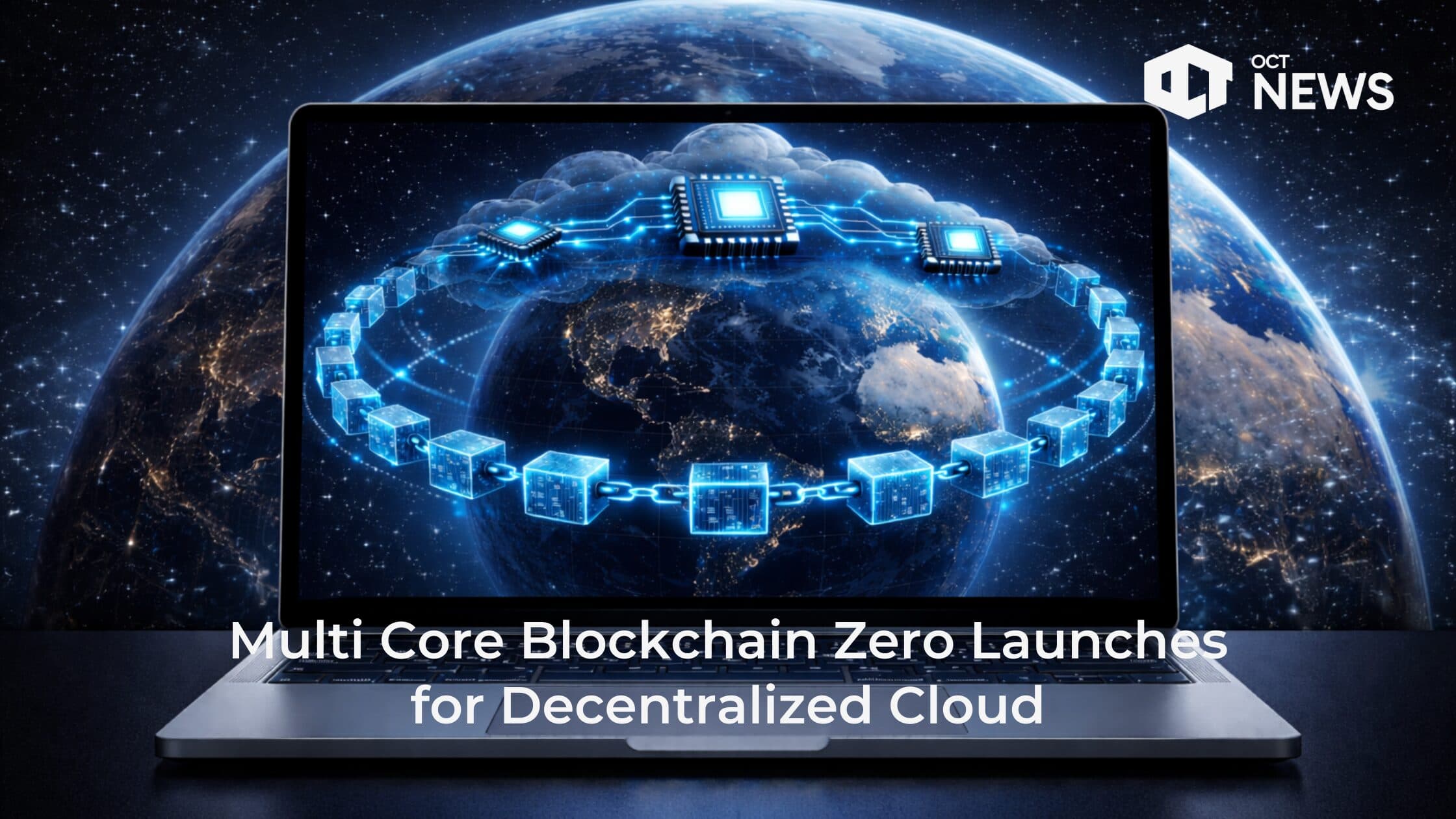
Zero launches its mainnet with a multi core blockchain using zero knowledge proofs to separate execution and verification for scaling.

Author: Akshay
January 13, 2026. Zero has launched its mainnet, introducing what it describes as the first multi core world computer built on a decentralized Layer 1 blockchain. The architecture separates execution from verification using zero knowledge proofs, enabling a heterogeneous validator set and horizontal scaling across multiple Atomicity Zones.
High Signal Summary For A Quick Glance
Zero, developed by LayerZero Labs, is a decentralized multi core Layer 1 blockchain using zero knowledge proofs to separate execution from verification. The architecture allows parallel processing across Atomicity Zones with up to 2 million transactions per second per zone. Key backers include Citadel Securities, ARK Invest, Tether, ICE, DTCC, and Google Cloud, highlighting strong institutional support ahead of a wider rollout in late 2026.
The project addresses scalability limits in chains like Ethereum and Solana through QMDB storage, FAFO scheduling, Jolt Pro proving, and SVID networking. Prior teasers built anticipation, but the combination of technical ambition and major institutional involvement marked a significant milestone for high throughput decentralized computing.
Zero’s launch builds on trends from previous high TPS L1s like Cosmos, Polkadot, Avalanche, and Solana, which focused on scalability, modularity, and attracting institutional support. Each aimed to solve bottlenecks while fostering ecosystems with multi chain or high throughput designs.
Market reactions to these projects included sharp token surges followed by corrections, driven by hype and adoption. Cosmos, Polkadot, Avalanche, and Solana all saw massive initial gains, then fell during bear markets. Zero’s multi core AWS alternative model is new, but it follows the pattern of ambitious, institution backed L1 launches.
Timeline: LayerZero’s Evolution from Cross-Chain Protocol to Zero Blockchain
Bryan Pellegrino, Ryan Zarick, and Caleb Banister found LayerZero Labs, focusing on omnichain interoperability infrastructure.
LayerZero raises $6 million in initial Series A funding from Multicoin Capital and Binance Labs.
The LayerZero V1 protocol and Stargate bridge go live, enabling native asset transfers across multiple chains.
LayerZero extends its Series A, raising $135 million at a $1 billion valuation from a16z, Sequoia, and others.
The company raises $120 million in Series B funding, reaching a $3 billion valuation.
Development of the Zero blockchain architecture begins, laying the foundation for a vertically integrated cross-chain network.
LayerZero V2 is released with improved security, configurability, and cross-chain messaging enhancements.
The $ZRO token goes live, introducing governance and ecosystem incentives.
LayerZero acquires Stargate Finance for approximately $110–120 million, consolidating its cross-chain liquidity infrastructure.
The protocol surpasses $150 billion in cumulative cross-chain transaction volume.
A governance proposal to introduce protocol fees does not pass, highlighting active community oversight.
25.71 million $ZRO tokens unlock, representing approximately 6.36% of circulating supply.
LayerZero unveils the Zero blockchain with institutional partnerships including Citadel, ARK, DTCC, and ICE, alongside strategic $ZRO investments.
An additional 25.71 million $ZRO tokens are scheduled to unlock for core contributors.
A renewed governance vote on protocol fees is planned following the failed 2025 proposal.
The Zero blockchain mainnet is expected to launch with initial zones covering EVM compatibility, payments, and trading.
Remaining $ZRO token vesting completes, concluding the scheduled unlock cycle.
Past high performance L1 launches like Cosmos, Polkadot, Avalanche, and Solana showed early price surges, strong community engagement, and later volatility. Cosmos and Polkadot gained traction from interoperability and parachains, Avalanche from DeFi adoption, and Solana from listings despite outages.
Crypto Twitter sentiment moved from cautious optimism to bullish hype. Ecosystem growth, TVL increases, and partnerships followed, while technical issues and market downturns caused corrections. These launches demonstrate high reward potential but significant volatility for early investors.
Comparison of Zero blockchain launch with major Layer 1 scalability upgrades
Zero’s February 10, 2026, announcement sets the stage for key milestones including the February 20 ZRO token unlock, the June protocol fee vote, and the likely September mainnet launch. Readers should track validator onboarding, testnet performance, and integrations with partners like Citadel, DTCC, and Google Cloud to gauge readiness.
Risks include technical execution of the multi-core architecture, regulatory scrutiny, and token volatility from unlocks. Positive outcomes like smooth launches or new partnerships could boost adoption, while delays, failed votes, or competition from other L1s may limit growth.
Our Crypto Talk is committed to unbiased, transparent, and true reporting to the best of our knowledge. This news article aims to provide accurate information in a timely manner. However, we advise the readers to verify facts independently and consult a professional before making any decisions based on the content since our sources could be wrong too. Check our Terms and conditions for more info.