March 6, 2026 — PEI Licensing has filed a trademark infringement lawsuit against Pudgy Penguins in a U.S. federal court, accusing the crypto native brand of using apparel marks that allegedly mimic the long established penguin logo of the Original Penguin. The complaint claims the NFT project’s merchandise could mislead consumers by creating confusion with Original Penguin’s trademark, which the company says has been in use since 1956. The legal action follows a cease and desist notice sent in October 2023 and marks one of the latest clashes between traditional fashion trademarks and expanding Web3 consumer brands.
High Signal Summary For A Quick Glance
- PEI Licensing, parent company of Original Penguin, has filed a trademark lawsuit against Pudgy Penguins.
- The complaint alleges Pudgy Penguins’ apparel branding could mislead or confuse consumers.
- Original Penguin has used a penguin trademark since 1956.
- A cease-and-desist letter was previously sent to Pudgy Penguins in October 2023.
- Pudgy Penguins NFT brand and its growing merchandise business.
- PEI Licensing and the Original Penguin apparel brand.
- Retail partners and distributors selling Pudgy Penguins merchandise.
- NFT projects expanding into consumer products and apparel markets.
Background of the Pudgy Penguins Lawsuit
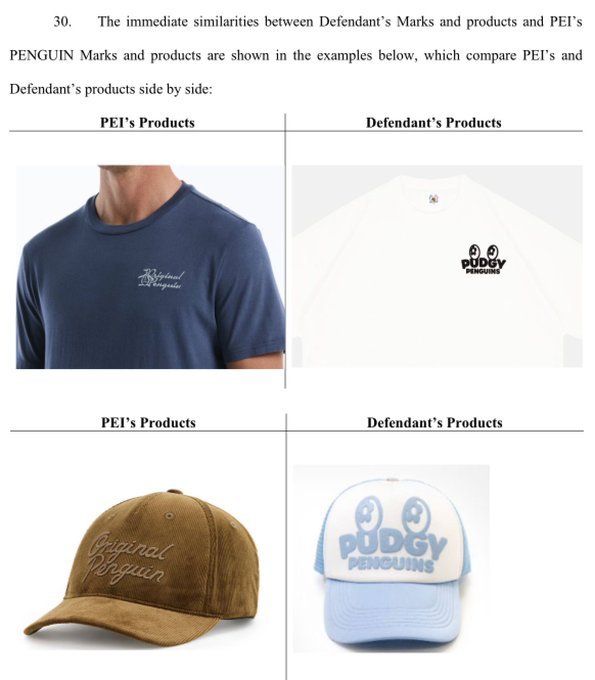
The lawsuit was filed by PEI Licensing against Pudgy Penguins in the U.S. District Court for the Southern District of Florida. PEI alleges that Pudgy Penguins used penguin themed names and designs on merchandise such as clothing, accessories, and toys that could confuse consumers with the long established trademarks of the Original Penguin. The company says its penguin logo has been used in apparel since the mid 1950s, giving it long standing trademark priority.
The dispute developed over several years before reaching court. Initially, PEI reportedly sent a cease and desist letter to Pudgy Penguins in October 2023, asking the project to stop using the contested branding. However, merchandise sales continued. Additionally, the project filed further trademark applications. As a result, the conflict escalated into a formal federal lawsuit seeking damages, injunctions, and the removal of allegedly infringing products.
Similar trademark disputes in the NFT industry
Comparable legal disputes have emerged as traditional brands moved to protect intellectual property from NFT projects. One prominent case involved Hermès suing digital artist Mason Rothschild over the “MetaBirkins” NFT collection in 2022. The court ruled in favor of Hermès in 2023, finding the NFTs infringed the company’s trademark rights and awarding $133,000 in damages. The decision signaled that digital collectibles tied to recognizable brands could still fall under traditional trademark law.
Another example occurred when Nike sued StockX in 2022 over NFTs linked to Nike branded sneakers. The case later settled out of court, but it raised broader concerns about brand ownership and digital representations of physical products. These disputes highlighted growing legal scrutiny around NFTs and encouraged projects to pursue licensing agreements or stricter branding strategies.
Legacy apparel brand vs Web3-native IP expansion
Market reactions in similar NFT trademark disputes
A comparable case occurred when Hermès sued Mason Rothschild over the “MetaBirkins” NFT collection in 2022. Before the lawsuit, the collection generated over $1 million in sales with floor prices reaching the mid four figure range. After the legal action and marketplace delistings, prices fell sharply, and following the $133,000 damages ruling in 2023, floor values dropped further as trading activity declined.
Another case involved Nike suing StockX over NFTs tied to Nike sneakers. Prior to the dispute, StockX’s NFT linked assets traded for hundreds to thousands of dollars each, but volumes dropped after the lawsuit raised authenticity and trademark concerns. The broader NFT market was also under pressure at the time, with many blue chip NFT floor prices falling 20–50% during the 2022 market downturn.
<<-chart-pudgy-penguins->>
What to Watch Next in the Pudgy Penguins Lawsuit
Attention will now turn to the legal timeline following the lawsuit filed by PEI Licensing against Pudgy Penguins. The defendants are expected to file a formal response within about 21 days, placing the first legal deadline around late March 2026. Early court hearings or settlement discussions could emerge in April to May 2026, while a full trial if pursued could extend into 2027.
Market observers will also monitor how the dispute affects Pudgy Penguins’ broader ecosystem, including its NFT brand expansion and merchandise sales. The project has generated more than $13 million in retail toy sales through partnerships and maintains an NFT floor price around 12 ETH, making brand licensing a key revenue driver. Any injunction restricting merchandise could impact growth plans, while a settlement or branding compromise could allow the project to continue expanding into mainstream consumer markets.