Bittensor full decentralization

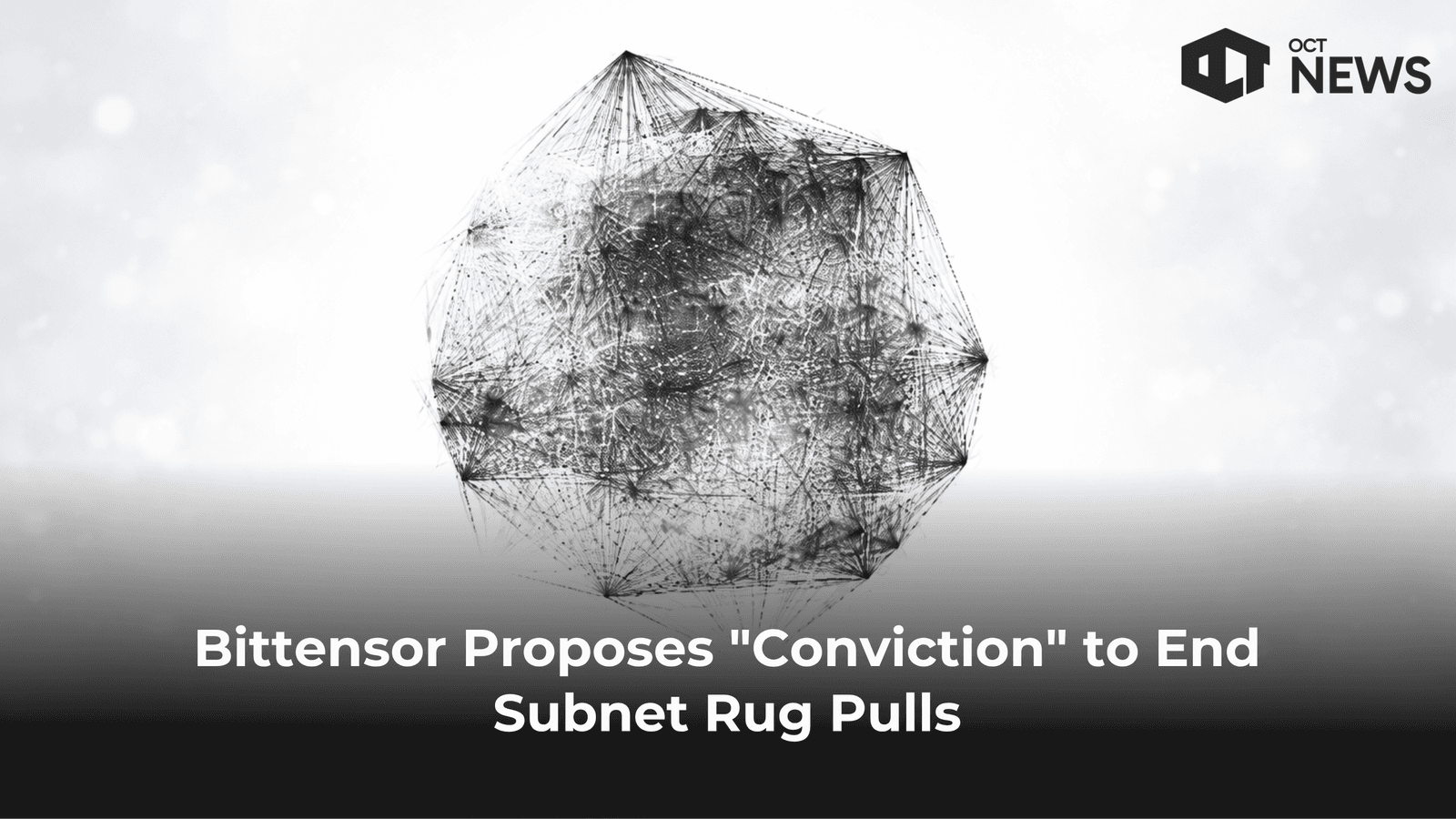
Bittensor Full Decentralization as OpenTensor Steps Down

February 18, 2026. Bittensor full decentralization marks a historic governance transition, with the OpenTensor Foundation fully relinquishing control of the network. The network now operates entirely under on chain governance, featuring a triumvirate ratification system, veto rights for validators and subnet owners, and elimination of privileged roles. The founder has moved to a standard subnet builder role, and the former CEO has stepped down. The market responded immediately, with $TAO surging 18.5% to $193 in the 24 hours following the announcement.

High Signal Summary For A Quick Glance

  • $TAO has transitioned to fully decentralized onchain governance.
  • A triumvirate ratification system with validator and subnet veto powers is now live.
  • The Opentensor Foundation has relinquished control, and executive leadership roles have stepped down.
  • $TAO surged 18.5% to $193 within 24 hours following the announcement.
  • $TAO holders participating in onchain governance decisions.
  • Validators and subnet owners with new ratification and veto authority.
  • Developers building subnets within a non-privileged framework.
  • Investors reassessing decentralization risk and protocol sustainability.
🟢 Short term: Market confidence reflected in strong price momentum
🟡 Long term: Structural decentralization may strengthen protocol resilience
đź”´ Key risk: Governance complexity could slow coordination or upgrades

Bittensor Achieves Full Decentralization

Bittensor (TAO) is a decentralized AI network where miners build models, validators score them, and rewards flow through the $TAO token. In mid February 2026, the Opentensor Foundation stepped back, completing full decentralization with on chain governance, a triumvirate ratification system, validator veto rights, nominated proof of stake nodes, and direct infrastructure funding from fees.

Leadership changes included the CEO stepping down and a co founder moving to a non privileged subnet role, reinforcing Bittensor full decentralization. Earlier upgrades like dTAO and halved emissions prepared the network for this shift. Market reaction was positive, with $TAO surging 18.5% to $193, signaling confidence in improved security, reduced centralization risk, and Bittensor’s evolution into a self governing decentralized AI network.

Past Steps Toward Bittensor Decentralization

Bittensor made several moves toward decentralization before 2026, though none matched the full governance shift. The dTAO upgrade in February 2025 moved the network to a market driven model with performance weighted rewards, permissionless subnets, and alpha tokens. Subnets grew from 32 to over 100, market caps rose from $4 million to $690 million, and staking yields stabilized. $TAO surged 65% on the whitepaper release, signaling market confidence in decentralization.

The first TAO halving in December 2025 cut daily emissions by half, boosting scarcity and staking demand. The price dropped initially but recovered within a week. Combined with earlier upgrades like the 2021 Nakamoto fork and the 2023 blockchain pivot, these steps set the stage for the 2026 shift, completing Bittensor’s evolution into a self sustaining, fully decentralized network.

Timeline: Bittensor from Early Centralization to Full Decentralized Governance

JAN 2021

Network launch with Proof-of-Authority

Bittensor launches using Proof-of-Authority consensus for early stability, retaining centralized elements in validation and governance.

FEB 13, 2025

Dynamic TAO (dTAO) upgrade

The dTAO upgrade shifts emissions to market-driven, stake-weighted subnet performance. Alpha tokens launch, the 32-subnet cap is removed, and foundation influence over emissions materially declines.

DEC 14–15, 2025

First TAO halving event

The first emission halving reduces daily TAO issuance by 50%, reinforcing scarcity dynamics and accelerating network self-sustainability with a majority of supply staked.

FEB 12–13, 2026

Full decentralization milestone achieved

Opentensor Foundation relinquishes control as on-chain governance launches via a triumvirate ratification system. Validator and subnet owner veto mechanisms activate, chain nodes transition to nominated proof-of-stake, executives step down from privileged roles, and transaction fees fund infrastructure directly.

2026 (ONGOING)

Subnet expansion and competitive scaling

The subnet cap expands toward 256, fostering higher competition, performance-based incentives, and the emergence of durable, utility-driven subnets.

LATE 2026 & BEYOND

Governance maturation and enterprise adoption

Further governance refinements, real-world API integrations, and ecosystem monitoring reinforce credible neutrality and long-term structural resilience.

Key Bittensor Milestones and Market Reactions

The Dynamic TAO (dTAO) upgrade in February 2025 sparked a 65% surge in $TAO and bullish sentiment on Crypto Twitter. It expanded active subnets from 32 to over 100, introduced alpha tokens with liquidity pools, and emphasized merit based rewards. This drove ecosystem growth, capital inflows, and stronger network decentralization, laying the foundation for continued innovation.

The first TAO halving in December 2025 caused a short term 20% price drop but recovered as supply effects materialized. Staking rose to nearly 75% of supply, concentrating capital in high performing subnets and pruning low utility ones. It also boosted institutional adoption, reduced inflation, and reinforced efficiency driven rewards, further maturing Bittensor’s decentralized AI ecosystem.

Comparison of 2026 Full Decentralization vs. dTAO Upgrade and First Halving

Metric
2025 dTAO Upgrade / 2025 Halving
2026 Full Decentralization
What Is Better
Economic expansion (dTAO) and scarcity boost (Halving)
Complete removal of foundation control ↑
Governance Maturity
Foundation-guided upgrades and emissions reforms
On-chain triumvirate governance + PoS transition ↑
Network Resilience
Rapid subnet growth and staking lockups
Eliminates single points of failure ↑
What Is Weaker
Clear execution path under foundation oversight ↑
Untested governance may cause gridlock ↓
Decision Speed
Centralized coordination for rapid upgrades ↑
Slower community ratification process ↓
Complexity
Primarily economic adjustments
Adds structural and governance layers ↓
Core Focus
Emissions reform and supply reduction
Structural autonomy and governance overhaul →
Mechanism Type
Market-driven emissions + scarcity model
Nominated PoS + veto-based ratification →
Narrative
Growth and scarcity milestone
“Self-sustaining organism” thesis →
Expectations
Met growth and scarcity targets ↑
Fulfills long-promised decentralization roadmap ↑

What Readers Should Watch Next for Bittensor ($TAO) Post Decentralization

Following Bittensor’s February 2026 decentralization, with the foundation stepping back and on-chain governance launching, readers should track subnet growth, governance proposals, and adoption. Key items include 2026 subnet cap expansion, potential Grayscale TAO Trust or ETF updates, and partnerships. Early votes and ideathons will show community engagement and the network’s ability to manage upgrades via the triumvirate system and validator vetoes.

Confirmations to watch include smooth node operation, transaction fee funding, and staking above 70%. Risks remain from governance bugs, subnet stagnation, regulatory scrutiny, and market volatility. Broader AI developments or centralized breakthroughs could shift sentiment, while poor integrations, low quality subnets, or leadership influence could weaken the decentralization story.

Frequently Asked Questions

What happened in Bittensor’s governance transition?
Bittensor completed full decentralization, with the OpenTensor Foundation relinquishing control and eliminating all privileged roles.
What is the new governance structure?
The network now operates under fully onchain governance through a triumvirate ratification system. Validators and subnet owners hold veto rights, and nominated proof-of-stake secures the chain.
What role do validators and subnet owners now play?
Validators and subnet owners can ratify or veto governance proposals, giving economic participants direct influence over protocol upgrades and coordination decisions.
What happened to the founder and CEO?
The founder transitioned into a standard subnet builder role without special privileges, and the former CEO stepped down as part of the decentralization process.
How did the market react to the announcement?
The $TAO token surged approximately 18.5% to $193 within 24 hours, signaling strong investor confidence in the governance overhaul.
Why is full decentralization significant for Bittensor?
Removing foundation control reduces centralization risk, reinforces credible neutrality, and positions the network as a self-governing decentralized AI protocol.

Leave a Comment

Your email address will not be published. Required fields are marked *