
Introduction
Many people struggle with how to sell altcoins in profit even after making the right buy. The price goes up, but instead of confidence, uncertainty takes over, some sell too early and regret it, while others hold too long and watch profits disappear. This happens because most traders focus on buying and never learn how to exit properly.
This guide is designed to solve that exact problem. It explains how to sell altcoins in profit using a clear, structured process that removes guesswork. You will not need advanced trading knowledge or complex tools. The focus is on making deliberate decisions and executing them correctly.
You will learn how to identify a reasonable profit level, choose whether to sell fully or partially, and place sell orders correctly on an exchange. You will also understand common mistakes that cause people to lose profits even when the trade was initially successful.
What Is Selling Altcoins in Profit?
Many people struggle with selling altcoins even after making the right buy. The price goes up, but instead of confidence, uncertainty takes over. Some sell too early and regret it. Others hold too long and watch profits disappear. This happens because most traders focus on buying and never learn how to exit properly.
This guide is designed to solve that exact problem. It explains how to sell altcoins in profit using a clear, structured process that removes guesswork. You will not need advanced trading knowledge or complex tools. The focus is on making deliberate decisions and executing them correctly.
You will learn how to identify a reasonable profit level, choose whether to sell fully or partially, and place sell orders correctly on an exchange. You will also understand common mistakes that cause people to lose profits even when the trade was initially successful. The goal is clarity. When you finish reading, you should feel confident about when to sell, how to sell, and what to expect from the process.

Why It Matters
In crypto, buying is only half the job. Most losses happen after a good entry, not before it. Traders watch an altcoin move into profit, hesitate to sell, and then hold as the price reverses. What was once a winning trade slowly turns into a missed opportunity or a loss. This happens because exits are emotional. When price is rising, greed pushes people to wait for more. When price starts falling, fear freezes action. Without a clear sell plan, decisions are made too late.
Learning how to sell altcoins in profit fixes this problem. It allows you to secure gains before market conditions change. It reduces emotional reactions because your decision is already made. Each successful exit builds confidence and reinforces discipline. Locked profits also give you fresh capital that can be used for new trades instead of being trapped in one position.
Selling is a form of risk control. Altcoins are highly volatile and can reverse quickly. When your exit is planned in advance, price swings feel less overwhelming. You stop reacting to every candle and start executing with intent. This is not about constant trading. It is about knowing exactly what to do when the market moves in your favor.
Step by Step Instructions
Step 1: Know Your Buy Price and Fees
Open the platform where you bought the altcoin.
Examples:
- Binance: Wallet → Spot → Order History
- Coinbase: Assets → Select coin → Transaction history
- Bybit / OKX / KuCoin: Assets → Spot account → Trade history
- MetaMask: Activity tab, then cross-check buy price on the DEX used
- Trust Wallet: Token history combined with DEX transaction details
Look for:
Buy price
Quantity purchased
Trading or gas fees
Without these numbers, profit calculations are incomplete.
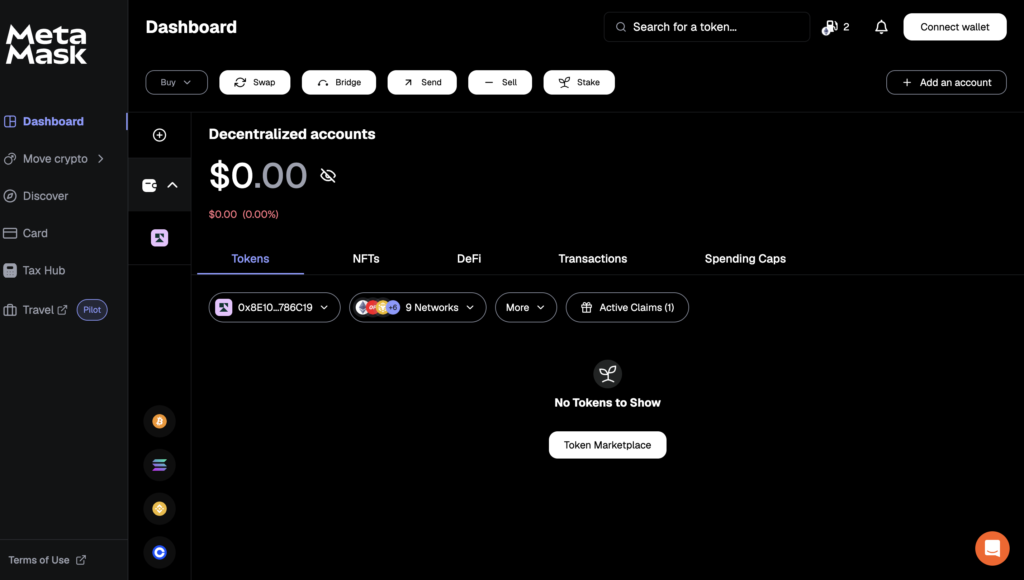
Below is the image showing MetaMask Activity Tab
Step 2: Set a Realistic Profit Target
This step happens before placing any sell order.
Examples of where traders usually decide targets:
- TradingView: Use price levels to mark targets
- Binance chart / Bybit chart / OKX chart: Use simple price levels
- DEX Screener: For low-cap altcoins and memecoins
Common choices:
- 20 to 30 percent for short-term trades
- 2x or more for longer-term holds
Pick one target and commit to it before moving forward.
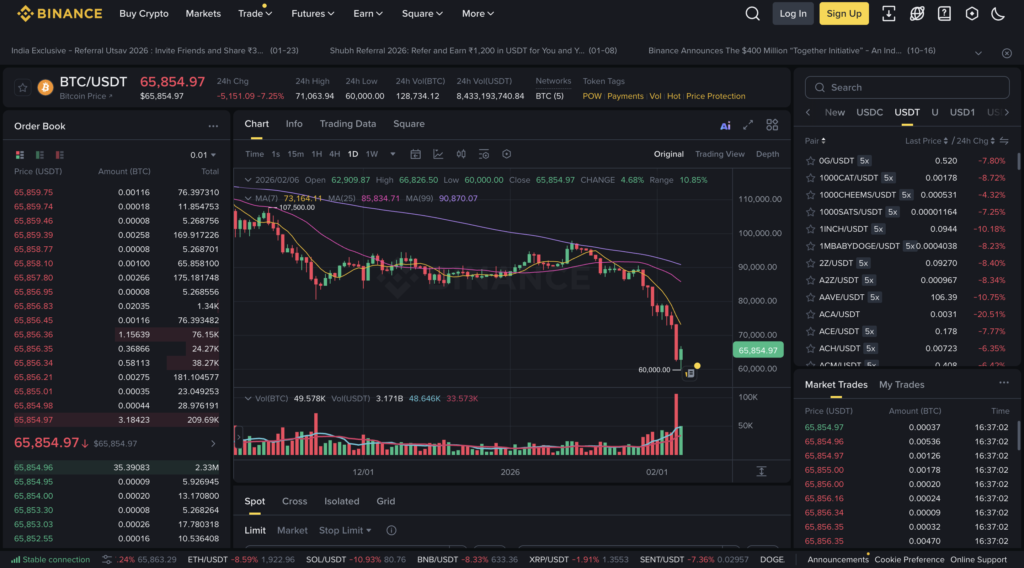
Below is the image showing Binance Chart
Step 3: Decide Between Full or Partial Sell
Decide how much of your holding you want to sell.
Examples:
- Binance / Bybit / OKX: Use percentage slider to sell 25%, 50%, or 100%
- Uniswap / PancakeSwap: Manually enter token amount
- MetaMask swap: Choose exact token quantity
Partial sells are often used for volatile altcoins. Full sells are common for short-term trades.
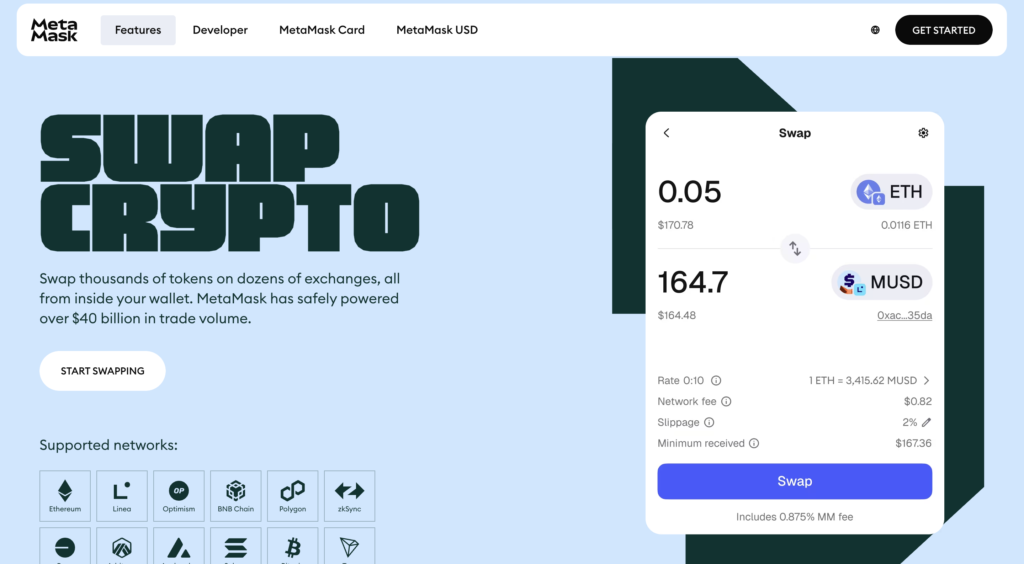
Below is the image showing Uniswap Token Page
Step 4: Open the Sell Screen on Your Exchange
Navigate to the correct trading or swap interface.
Examples:
- Binance: Trade → Spot → ALTCOIN/USDT → Sell
- Coinbase Advanced: Trading → Select pair → Sell
- Bybit / OKX / KuCoin: Trade → Spot → Select pair
- Uniswap: App → Swap → Token → Stablecoin
- PancakeSwap: Trade → Swap → Token → BUSD or USDT
Confirm the trading pair matches your asset.
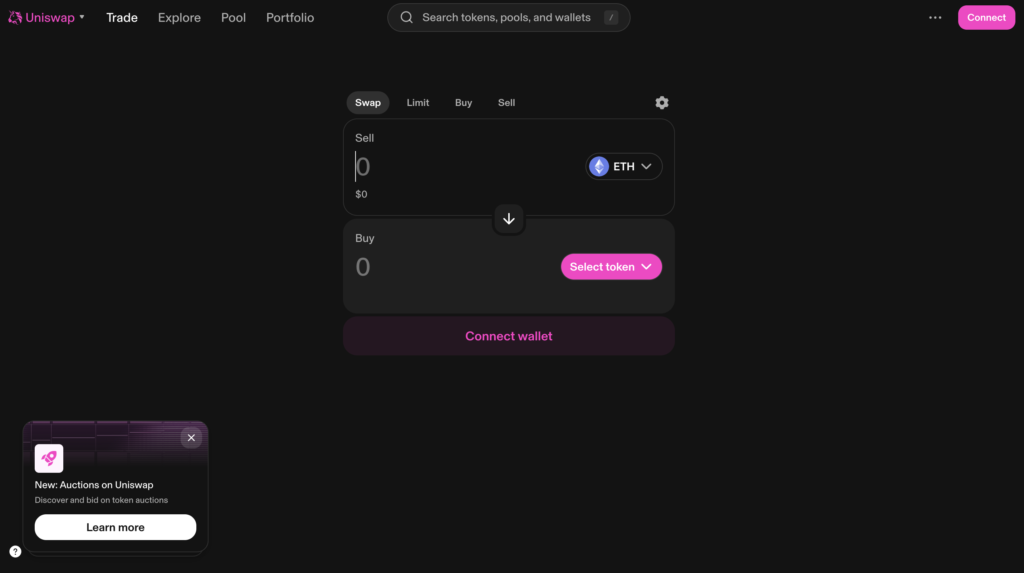
Below is the image showing Uniswap Trading Page
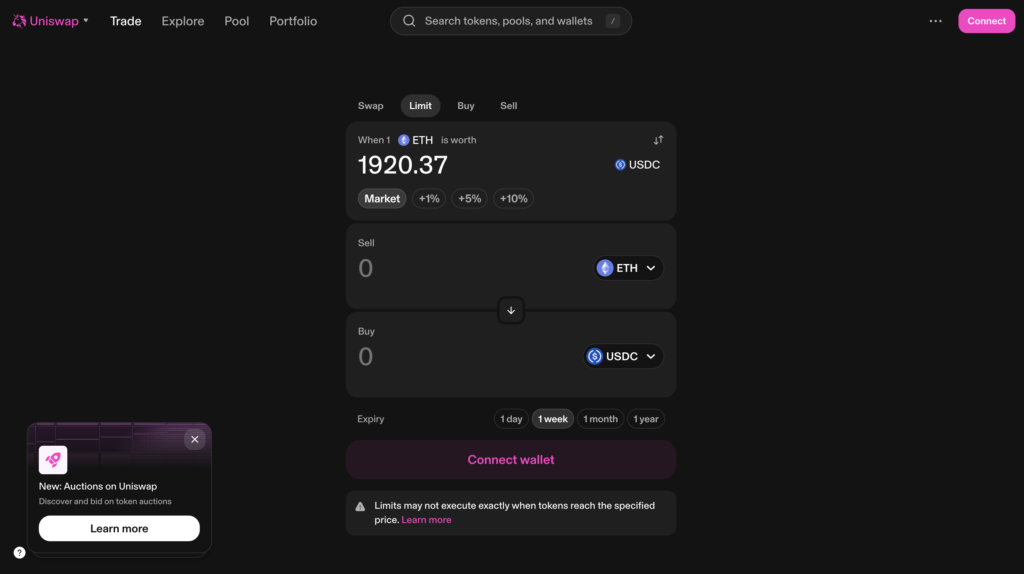
Step 5: Choose the Correct Order Type
Use a limit order when available.
Examples:
- Binance / Bybit / OKX / KuCoin: Choose Limit order
- Coinbase Advanced: Limit sell
- DEXs like Uniswap or PancakeSwap: Set price impact and slippage carefully
Limit orders let you control the exact sell price. Market orders execute instantly but may fill lower during volatility.
Enter:
Target price
Amount to sell
Confirm the order
Below is the image showing Uniswap Limit Order Page
Step 6: Confirm the Order Is Active
Always verify that the order is live.
Examples:
- Binance / Bybit / OKX: Open Orders tab
- Coinbase Advanced: Orders → Open
- Uniswap / PancakeSwap: Check transaction status in wallet
- MetaMask: Activity → Pending or Confirmed
If the order is visible, it is active. Once price reaches your target, the sell executes automatically. At that point, profit is locked and no longer exposed to market swings.
Common Mistakes and How to Avoid Them
Best Practices
Plan Your Sell Before You Buy
Before entering any altcoin trade, decide where you will sell. This includes your profit target and how much you plan to exit. When the plan is made in advance, emotions have less control once price starts moving.
Use Partial Profit Taking on Volatile Altcoins
Altcoins can move fast in both directions. Selling a portion of your position at predefined levels locks in gains and reduces pressure. It allows you to stay in the trade without risking all unrealized profit.
Avoid Selling During Low Liquidity Hours
During low activity periods, prices can spike or drop unexpectedly. This increases slippage and poor order execution. Selling during high volume hours gives you better price accuracy.
Review Filled Orders With Screenshots
Take screenshots of completed trades. This helps you review execution quality and timing later. Over time, this habit improves decision making and discipline.
Track Every Trade You Make
Maintain a simple record of entries, exits, and outcomes. Patterns become clear after multiple trades. This data helps refine future exits and builds consistency.
Frequently Asked Questions
Is it better to sell altcoins all at once or in parts?
Do I need advanced charts to sell in profit?
What is the safest order type for beginners?
Should I sell as soon as I see green?
How often should I take profits?
Can I sell altcoins directly to my bank?
Follow these steps patiently, scale out gradually into strength, secure profits in stages, confirm trend weakness across multiple indicators, and use our website guides to exit altcoins strategically and protect your gains.