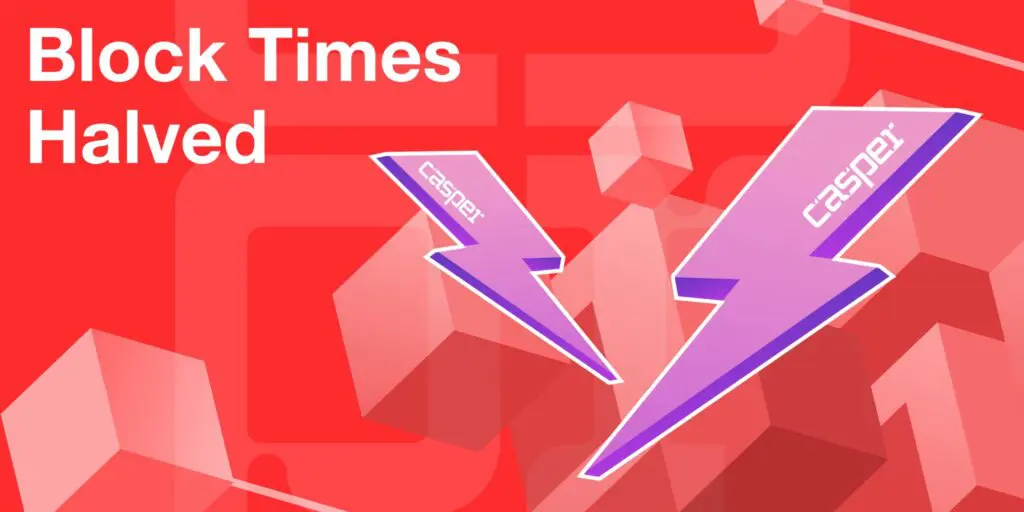
December 10, 2025. Casper Network will activate its 2.1 upgrade tomorrow, delivering two major improvements designed for high performance enterprise adoption. Block finality will drop from sixteen seconds to about eight seconds, improving responsiveness for payments, audit trails and asset tracking.
Key Takeaways
- Casper Network 2.1 activates tomorrow with 8 second finality and full fee burning.
- Upgrade strengthens enterprise grade performance for payments and regulated assets.
- Fee burning introduces deflationary pressure on CSPR while maintaining stable rewards.
- Market anticipates renewed institutional interest and stronger RWA positioning.
From Academic Foundations to Enterprise Grade Evolution
Casper Labs launched the Casper Network mainnet in March 2021 using the Correct by Construction specification and the Zug consensus architecture developed at Cornell University. The network focused on predictable gas, upgradeable contracts and stable throughput for institutional use cases. Early milestones included partnerships with IPwe and a Chainlink integration.
Subsequent upgrades added account abstraction and resource based pricing to support developers and regulated pilots. By 2024 Casper had active RWA engagements with governments and financial institutions. Version 2.1 reflects four years of work to create a secure and predictable Layer 1 tailored for enterprise needs.
Market Impact and CSPR Outlook After the 2.1 Activation
Casper Network 2.1 positions the chain as a strong choice for sectors that require fast settlement and regulatory clarity. Eight second finality brings it closer to traditional payment networks while keeping full decentralization. Fee burning creates transparent economics that help institutions evaluate long term sustainability.
CSPR has already risen nine percent to 0.018 dollars with daily volume above twenty five million dollars. Analysts expect a twenty to thirty five percent rally as the upgrade takes effect and deflationary mechanics increase interest. Enterprise pipelines in MENA and Europe may also expand as organizations seek public blockchains with predictable performance.
Casper 2.1
Hedera
XDC Network
Hyperledger Besu
Casper’s Enterprise Finality Breakthrough
Casper Network’s 2.1 upgrade, activating December 11, 2025, halves block finality from 16s to ~8s while introducing full fee burning delivering the fastest deterministic finality among permissionless Layer 1s with upgradeable contracts. Built on Cornell’s Correct by Construction research and four years of enterprise pilots (IPwe, Chainlink, governments), it positions Casper as the go to chain for regulated payments, audit trails, and tokenized real world assets requiring sub 10 second settlement.